

🍽️ Order Up! A Conversation with Brett Dupree, Dinner Coach, Recipe-Redo Believer, and Mom of 2
The food blogger and What's for Dinner?: The Summit host on why the hardest part of dinner usually isn't the cooking.

Small Bites: 🍽️ Signups are open for What’s for Dinner?: The Summit, the free 3-day event from Brett DuPree, our Order Up! guest this week. August 17–19, 25+ food experts, and a whole lot of permission to stop white-knuckling the weekly meal plan. 👉 Read our whole interview with Brett below, and grab your free ticket today!
🥔 One Potato is a reader-supported newsletter - Subscribe for weekly Order Up! interviews delivered to your inbox!
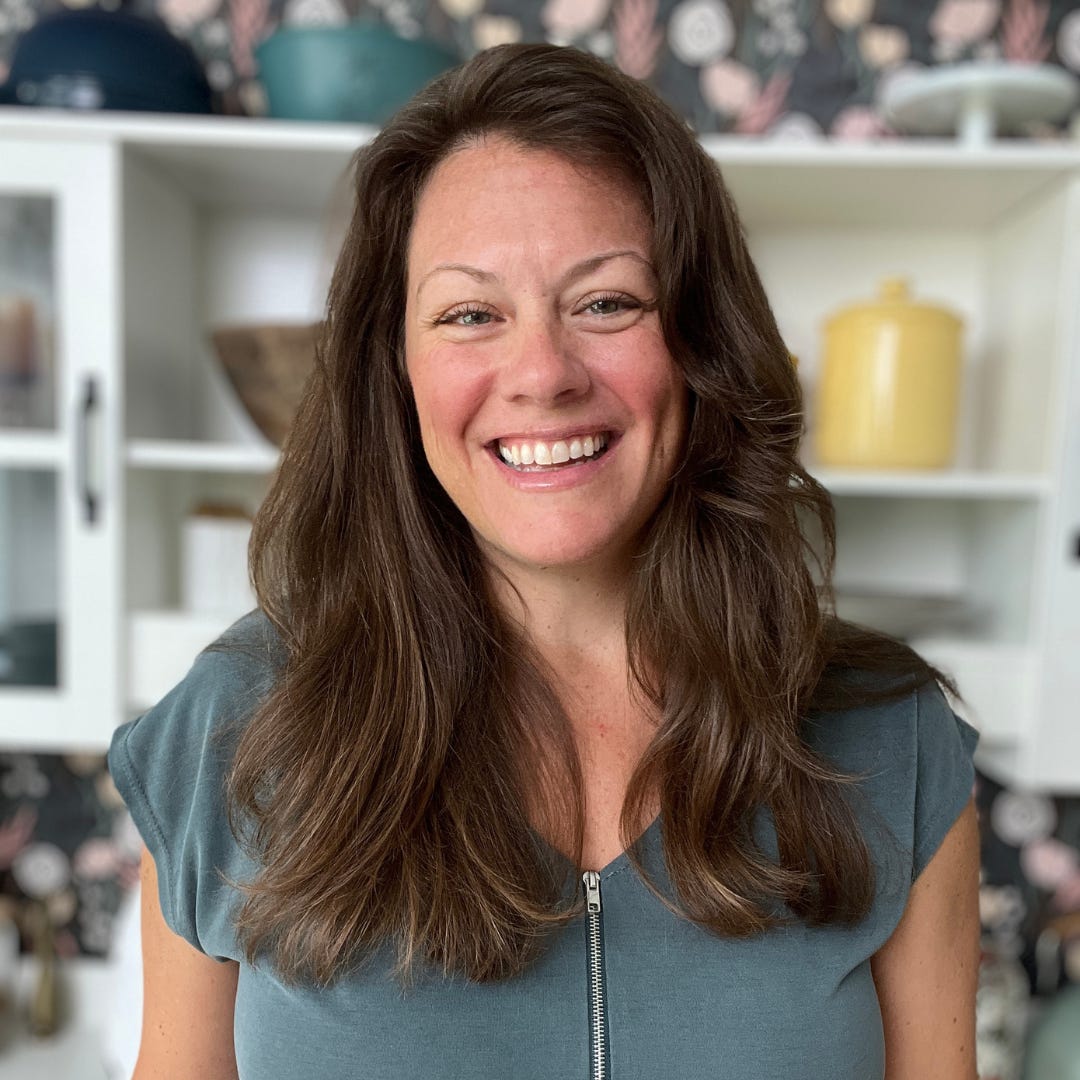
A Better Rhythm: Brett DuPree on Weeknight Dinner, Picky Eaters, and Real Life
Brett DuPree’s mother never wrote her recipes down. Not even the dressing, the one the whole family lived on for decades, the one they still can’t recreate six Thanksgivings after she passed. What her mom handed down wasn’t a recipe at all. It was a way of standing in front of an open cabinet and making something out of nothing.
That idea shapes everything Brett does now. She’s a food blogger, the host of What’s for Dinner?: The Summit, and a mom of two boys in Birmingham, Alabama. In a former life she worked as an immigration attorney, and then as an international adoption program manager for a nonprofit; international travel is still where her heart is. Her husband Greg, a food photographer, is a two-time cancer survivor, which is part of why food, and gathering around the family table, means what it does to her. They’re the husband-wife duo behind Freaking Delish.
Brett calls herself a dinner coach, not a chef, and she means it. Her whole approach starts from the idea that the hardest part of dinner usually isn’t the cooking. It’s the planning, the remembering, the invisible weight of being the one everyone looks at when they ask the well-known refrain, “what’s for dinner?”.
She talks with us about the year her mother’s cooking became her own, teaching a husband who couldn’t boil water (no joke!), why no-cook meals are the gateway drug to real cooking, and how she finally took a step back to notice she’d been carrying the invisible weight of dinner planning by herself when she didn’t need to be. Now, she helps other families come to that realization, and figure out the real, honest part of thriving around family meals.
A special note from Brett Dupree & our friends at What’s for Dinner: The Summit:
A Better Rhythm for Weeknight Dinner
Most meal plans fall apart the second real life shows up: the practice that runs long, the kid who suddenly won’t touch what they ate all last week, the night nobody has it in them to cook. That’s not you failing the plan. Brett DuPree built What’s for Dinner?: The Summit around that exact reality, because a plan only helps if it can survive an actual week.
It’s a free 3-day event (Aug 17–19) with 25+ food experts, each taking on a different piece of the puzzle: budget dinners, freezer prep, picky eaters, and building a dinner rhythm you can actually keep. Every speaker is live in the chat for the first half hour of their session, so you can ask a real question about your own family and get a real answer. 👉 Grab Your Free Ticket
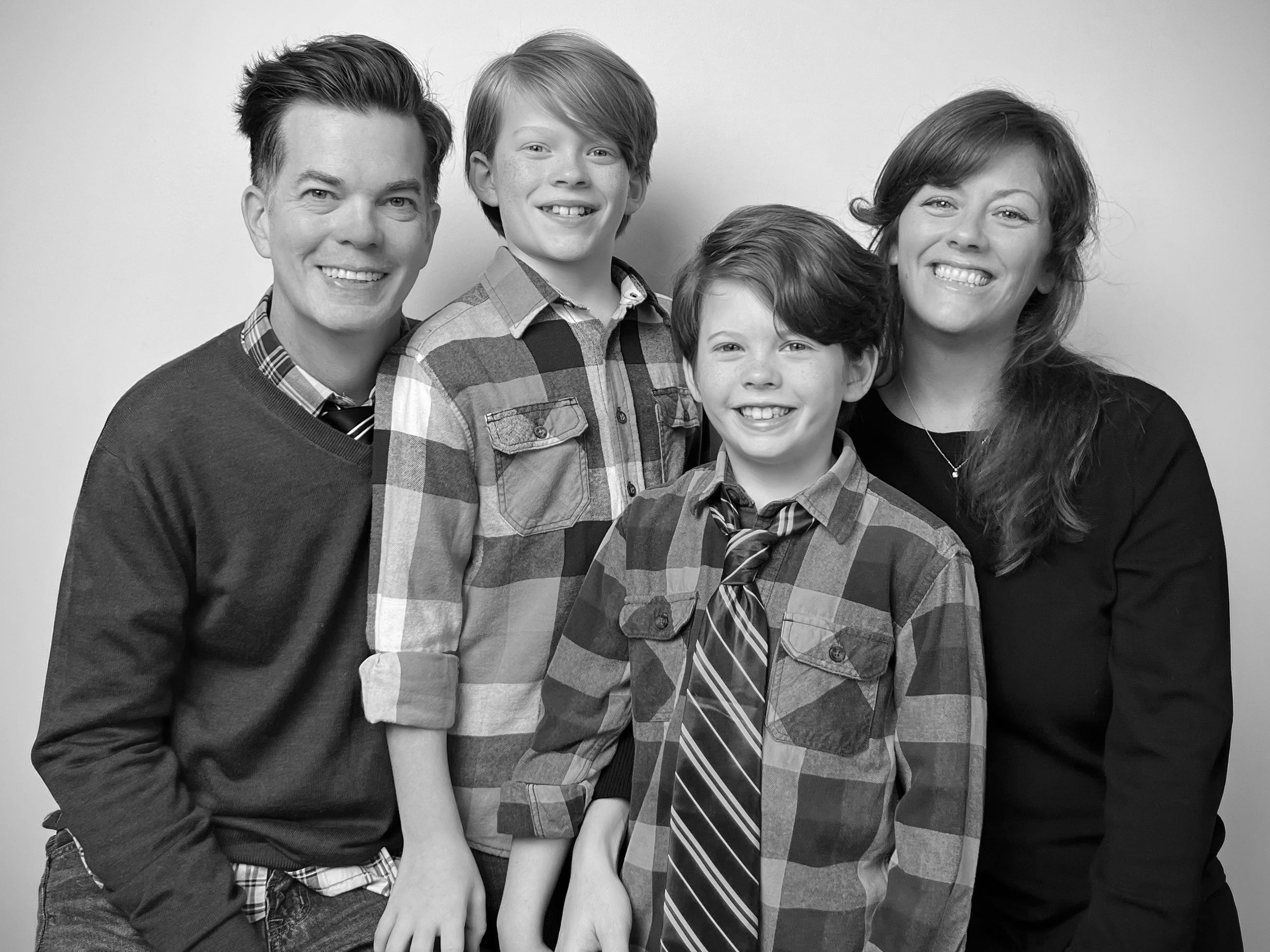
A Conversation with Brett Dupree, founder of Freaking Delish
Introduce Yourself: I’m Brett Dupree, food blogger & creator behind Freaking Delish, host of the What’s For Dinner? Summit. My boys are 11 and 13, and my husband is a food photographer.
My husband is also a two-time cancer survivor; he’s had two different cancers over the past ten years, so that’s been a big part of our world.
First things first, tell us about What’s for Dinner: The summit. What is it, and why should our readers sign up?
I love this thing, it’s my baby. What’s for Dinner?: The Summit runs August 17th through 19th, and it’s free. It lives in August on purpose, right as back-to-school hits and everyone’s trying to get their game face on. It’s a one-stop shop for the mom who’s a little bit of everything, a little farm-to-table, a little freezer meals, a little quick-and-easy, depending on the day. This year the theme is: a better rhythm for weeknight dinners.
My whole focus is that it’s useful and actionable that night. You watch one session and you can go do the thing that same evening. We cover it all: what to actually feed your student athlete, how to use seasonal squash, how to make fresh bread, budget dinners, the mental load, picky eaters, freezer prep. It’s a little food court. You come sample everything and walk out with whatever speaks to where you are right now. And I run the whole thing myself, so I really do love it.
Let’s get to know you. What was dinner like growing up? Is there a dish or a memory that stays with you?
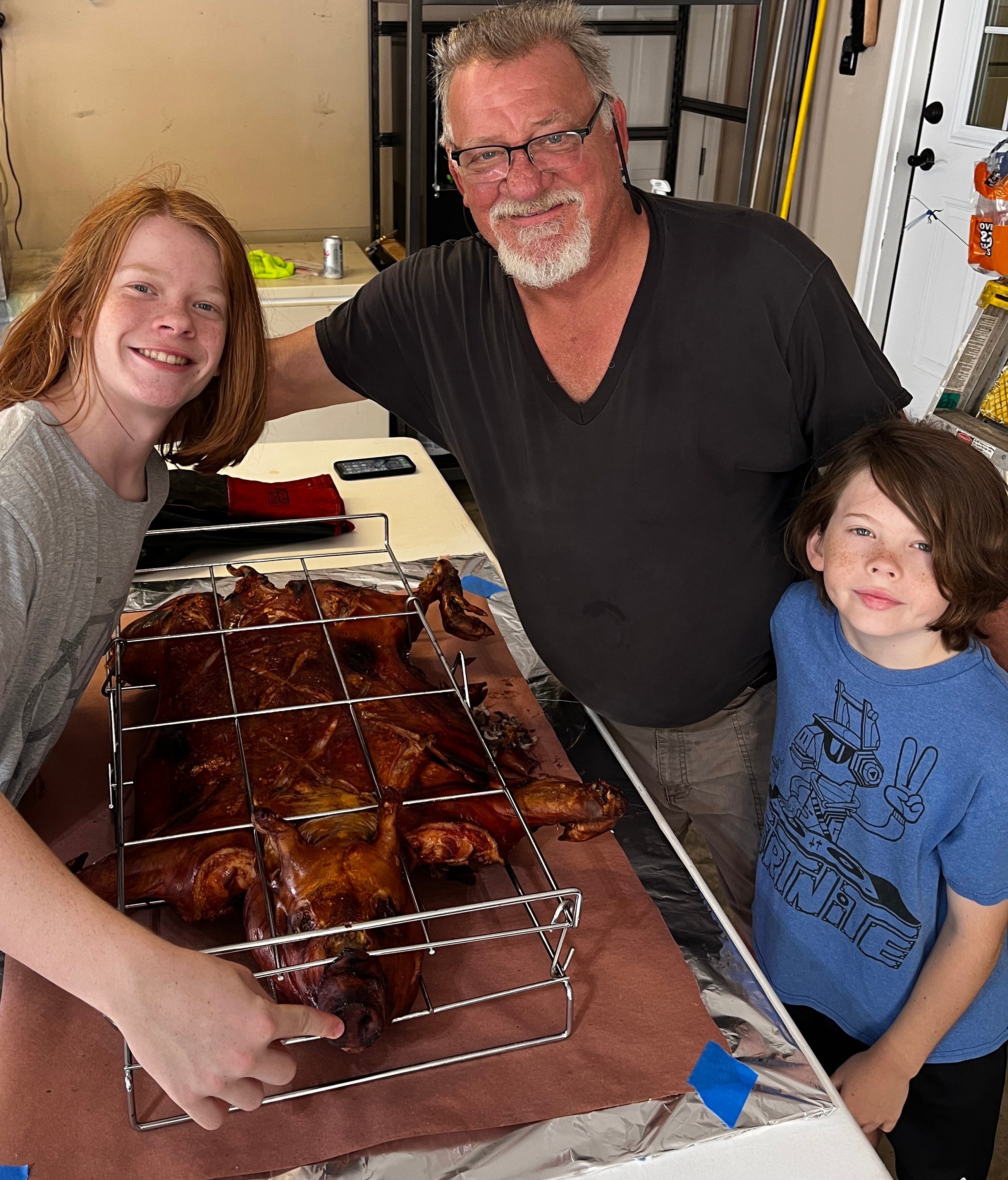
Growing up, food was everything in our house. We communicated through food. I’m a Southern girl from Atlanta, so barbecue is huge; my dad’s a pit master and a chili cook-off champion, a competitive foodie.
But it was my mom who really laid the foundation for how I cook with my kids today. The funny thing is she couldn’t cook a thing when she and my dad met! He taught her, and then she became the one who could make something out of nothing. She’d open the cabinet, and it didn’t matter what was in there, she could turn it into dinner. That one idea shapes everything I do: you don’t have to run back to the store, it doesn’t have to be perfect, no ingredient is sacred.
She never wrote anything down, though. She passed the year before COVID, and even her famous dressing, the one our whole family lived on, isn’t written down anywhere. We’re six or seven years out and we still haven’t managed a Thanksgiving that tastes like hers. If there were one recipe I could have back, it would be that one.
Going back to work, you were surprised to find you were still the one getting asked “What’s for dinner?”. When did you realize you didn’t have to carry that mental load alone?
It really hit when the kids were around preschool age. You step into this role as a mom and for a minute you forget everything else. For me that was doubled down, because I was also the caretaker at home. Then you come out of it and go, oh, right, I’m a whole independent person, and this whole household isn’t mine to carry alone.
There’s a saying I love: a marriage is never 50/50, it’s more like 30/70, and which way it tips depends on the season you’re in. When I started building the business, a lot of it was about separating myself from just being mom and getting back to Brett. And here’s the thing: I like to be cooked for, too. If someone makes me something, especially my husband, that’s the tops for me. Being taken care of matters to me just as much as taking care of everyone else.
You call yourself a dinner coach rather than a chef. Why does that word matter to you?
I definitely don’t think of myself as a chef. Any actual chef would look at me and go, no, ma’am. I like “coach” because so much of this isn’t the cooking. It’s the psychology of it, the mindset, the feelings, the roles everybody plays in your home. My philosophy is that it’s fine however you chop the onion. It’s fine if you don’t have that exact type of pasta. I don’t care what olive oil you use. It’s less about the recipe and more about getting everyone back around the table, and making it accessible enough that your partner can do it for you too.
That’s why no-cook meals are such a big part of my membership at Freaking Delish. I call them the gateway drug to real cooking, because anybody can walk into your kitchen and make them. If it’s you after a long day, if it’s your partner who swears he can’t cook, if it’s your teenager who can only work the microwave, that’s okay. They can still make dinner. They can still take on that mental load.
What do you mean by no-cook meals? Your free starting point is a set of no-cook rush hour recipes. For someone skeptical that no-cook can mean a real dinner, what does a no-cook night actually look like at your house?
Tacos. Honestly, pulled pork tacos. The protein is the hardest part, so if you’ve got that pre-done, you’re most of the way there. I don’t see it as a cheat, I see it as being strategic, looking at your real week instead of setting yourself up to fail. It’s like starting a workout. You’re not going to crush it hard every day for thirty days when you haven’t been moving at all. Let’s just walk this week.
So I buy the pre-cooked proteins (that’s a no-cook part!) and a sauce, and it goes over pasta, over rice, into a taco or a quesadilla. Everything can go in a quesadilla as far as I’m concerned. You heat the meat, throw on some salsa and cheese and whatever toppings, and it’s done. That satisfies me every single time.
You’ve said your husband legitimately couldn’t boil water. How did that change?
He couldn’t, no! He’s an incredible food photographer, he shoots for a publishing house that does Real Simple and Food & Wine, gorgeous stuff. But he was the golden boy growing up, taken care of, and he just never took cooking on as a skill. So we started at square one. The rule in our house now is everybody cooks. My youngest learned to make guacamole when he was ten, and now he’s the king of guacamole. We make omelets, we do the whole thing. These boys are going to know how to cook.
And my husband was 100% on board from the start, because he loves food. He made some wild mistakes early on, but he had his one clutch recipe, a seared pork tenderloin with a reduction that he was so proud of. Now he’s the king of tacos and makes a great chicken salad.
So much of your work is about the planning and the remembering, not just the cooking. How do you help a parent recognize that mental load?
The biggest part is just acknowledging it’s there. Putting a name to it. For so long I couldn’t even name it myself, this invisible weight that was just sort of there all the time. So I say it out loud, over and over, and I tell people: you’re not new at this, and you’re not bad at it. We’ve all felt this. And it still circles back around, so you might be fighting this one for a while.
You’ve said dinner can be a real source of stress on a marriage, which people don’t say out loud. Once you renegotiated who owns dinner, what changed between you and your husband?
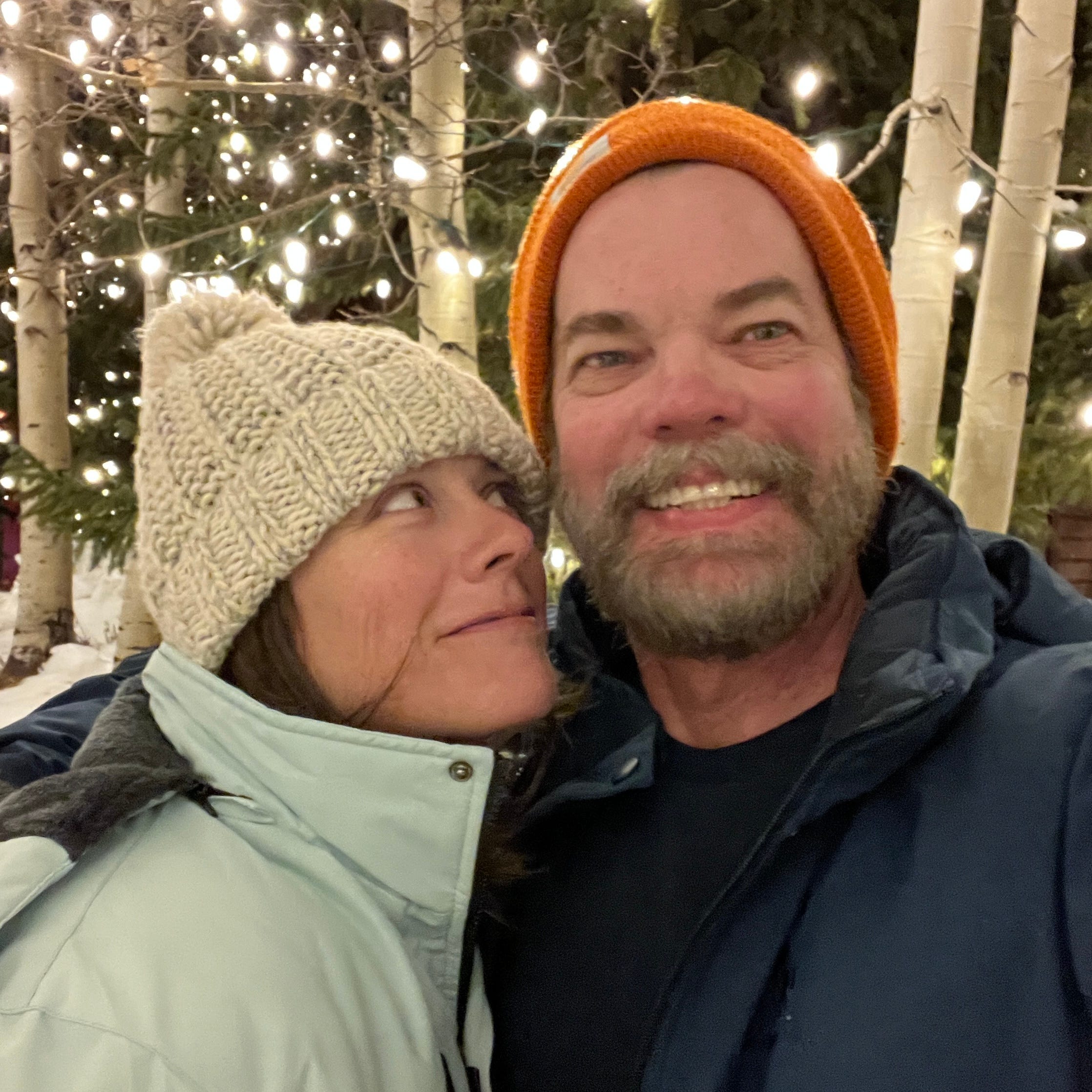
Honestly, it was really him getting it. Being able to say, oh, that mental load is actually a lot. Even just the question, what do we have in the refrigerator? He knows not to ask me that anymore, because I don’t keep a catalog of the fridge in my head, and being expected to is its own weight. When he sat in that and thought, why would I ask her to hold all of that, the shift was so lovely. You feel seen. He gets it.
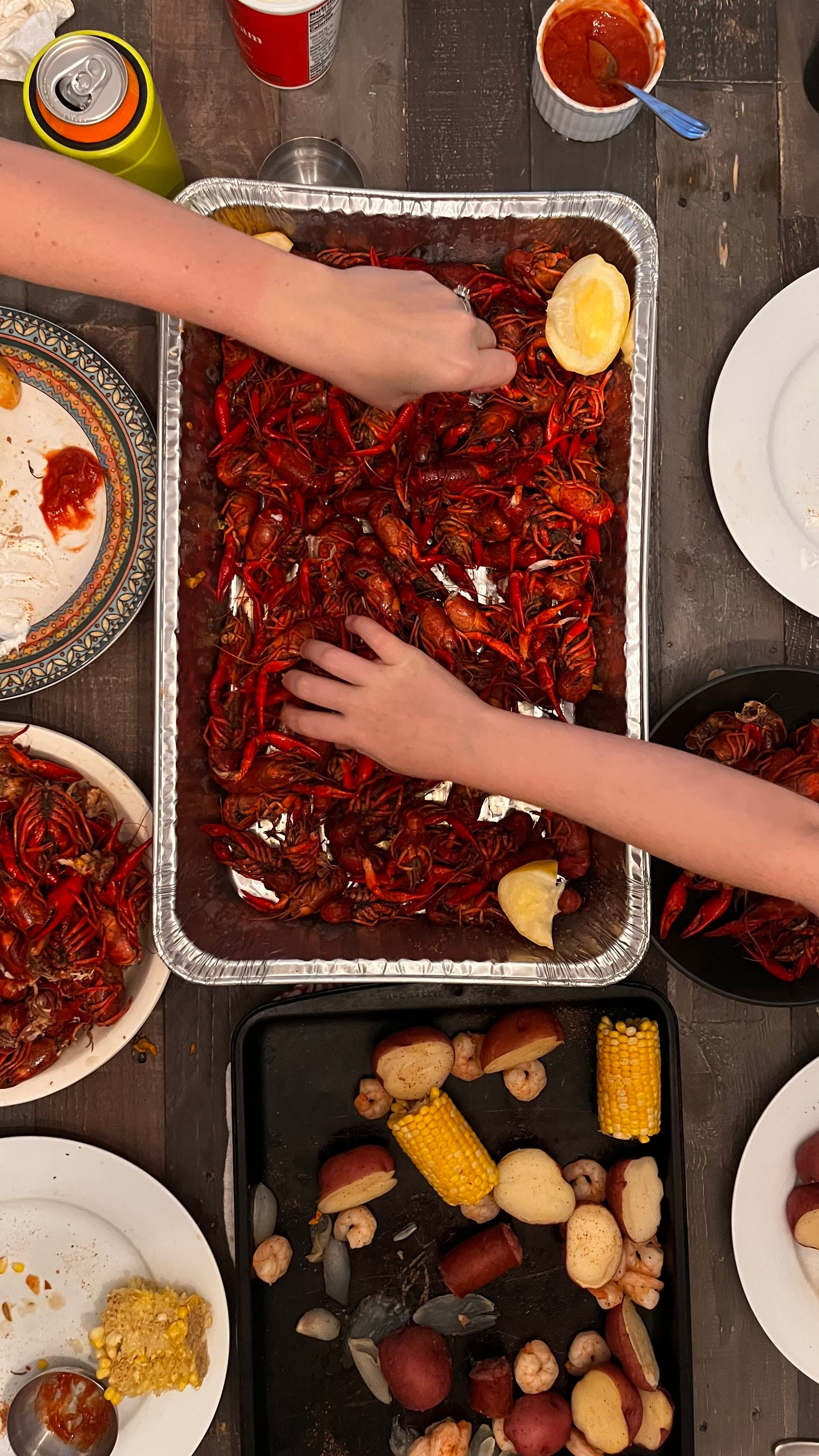
You’ve said the Etsy meal plans and Pinterest boards and cookbooks aren’t failing busy parents by accident. What do most of those tools get wrong?
My problem with the one-off plan is that it’s just more. It’s one more thing, one more download sitting in a folder that I never opened, one more little failure. So my whole approach is the opposite: less is more, and you can use what you already have. That’s an angle I lean into hard at What’s for Dinner: The Summit. You don’t have to ditch your family favorites to beat the boredom. You’ve got a great place to start, so start there.
I have a whole recipe redo philosophy, and it comes straight from how my mom cooked. New recipes are great, and here are some, but let me also show you how to redo the ones you’ve already got. You don’t need thirty new recipes for the month. I never want to add to the weight we’re already carrying. I want to lighten it and make it a little more fun.
When a parent joins your supper club, what shift are you really after: the recipes, or something bigger?
It’s the habit. I’ve had people tell me they’re embarrassed by how long it’s been since they actually cooked for their family. What helps them is the mindset that it doesn’t have to be all or nothing. Maybe this week you find two recipes and put them on the list, and that’s what happens. Then you wash, rinse, repeat next week, and maybe add a third. I don’t cook seven days a week either. It’s about getting back into the habit, it and building from there.
You talk about failure walks and ditching perfectionism. For a parent who feels like they’re failing at dinner, what do you most want them to hear?
That you’re going to feel like that a lot, and that’s just the gig. I don’t think there’s a way out of it, so the move is to embrace it. Sit with it. Some nights dinner is a bust, and you let it go and move on to the next thing. The biggest piece is not letting one bad night decide what tomorrow looks like.
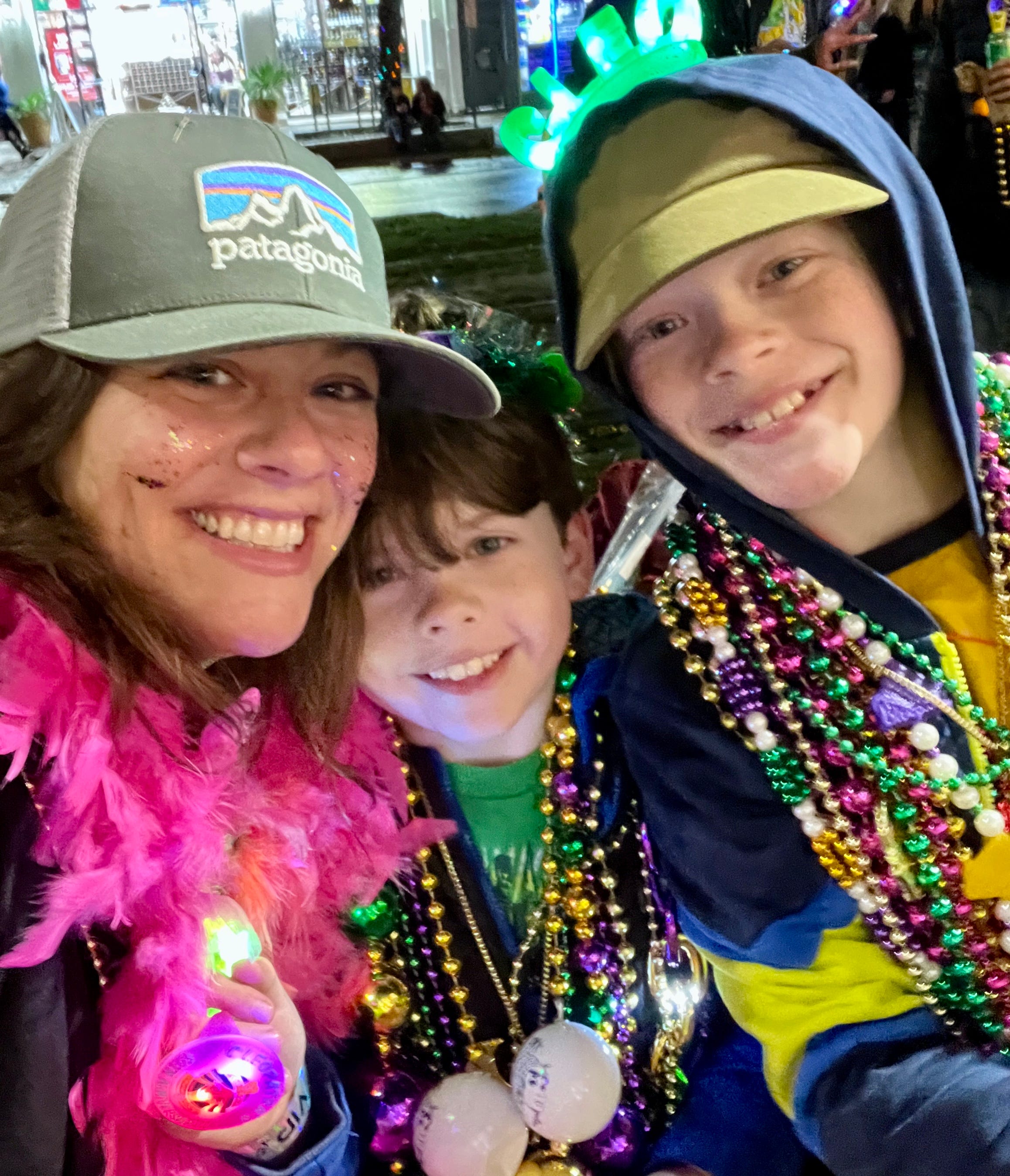
Your boys are growing up in a house where dinner is genuinely shared. What do you hope they carry into their own homes someday?
Two things. First, my kids aren’t afraid to try anything, and I love that. Our house is a revolving door of neighborhood kids, and a lot of them will only eat a few specific things. I try not to frame it as picky, I just tell my boys that only letting yourself eat five things makes your world really small, and I don’t want that for them. They love to travel like I do, and for me the whole point of travel is the food. I want them in someone’s kitchen, eating something authentic, coming home to tell me they had the best fried rice of their life.
The second thing is that cooking and carrying the load is just normal for them. Not mom’s job, not something they should feel guilty about skipping. Baseline, it’s their responsibility too, and they’re lucky if they find someone to share it with.
Is there a cooking skill you use all the time that you think every home cook should know?
Two, and they compete because I lean on both constantly. One is the grill. If you can grill, especially proteins, you can batch cook so easily. I love cooking on the grill because there’s nothing else to clean up, which in summer is everything. The other is knowing how to cook one good skillet meal, a one-pot dinner where every single piece can swap out: the protein, the carb, the sauce. Master one of those and you can make it a hundred different ways.