

🥔 Order Up! A Conversation with Crystal Wahpepah, Chef, Mom, and Indigenous Food Warrior
Food Is Medicine: Chef Crystal Wahpepah on Hope, Seasonality, and Raising the Next Generation

We’re honored to share this conversation with Crystal Wahpepah — Indigenous chef, food sovereignty advocate, and founder of Wahpepah’s Kitchen — whose new cookbook releases this week.
While we often spotlight communities during Heritage months, identity isn’t seasonal. Native foodways are not just part of our history: they are living, evolving, and present. Crystal’s work reflects that truth, preserving tradition while nourishing the next generation.
Small Bites:
Get your copy of A Feather and a Fork: 125 Intertribal Dishes from an Indigenous Food Warrior by Chef Crystal Wahpepah!
Raising Healthy Families “How can we help you be the intentional parent you want to be today?” That’s the question behind Raising Healthy Families — a new home for trusted programs from Katie Kimball and our favorite Kids Cook Real Food programs. Their new website makes it even easier to find the life skill and course that’s right for your family, including Kids Cook, Teens Cook, Healthy Parenting, Life Skills, and Picky Eating. It’s a thoughtful place to explore support that meets your family right where you are.
🥔 One Potato is a reader-supported newsletter - Subscribe for weekly Order Up! interviews delivered to your inbox!
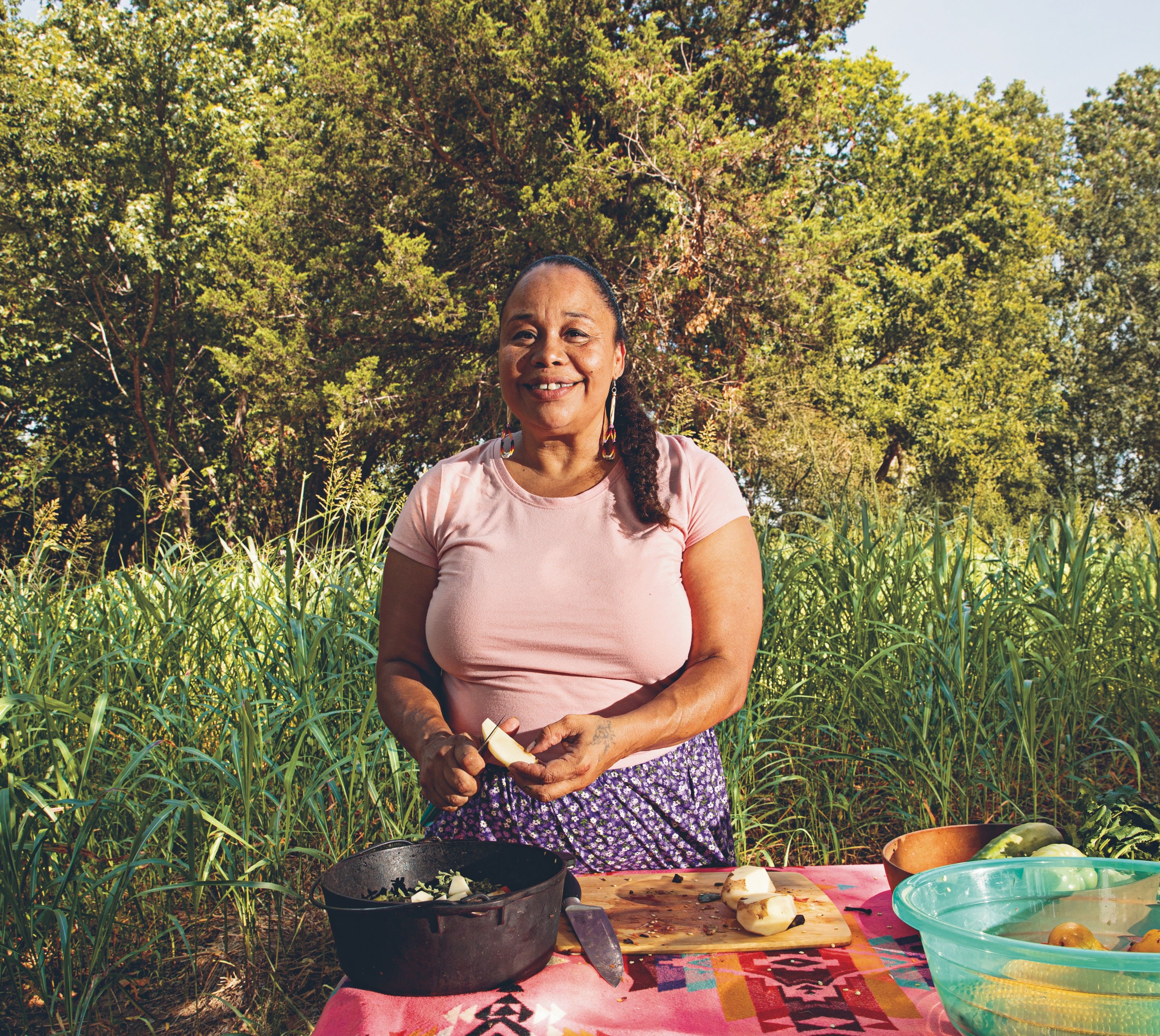
Chef Crystal Wahpepah on Feeding Community, Feeding Family
Chef Crystal Wahpepah — owner of Wahpepah’s Kitchen, the first Native woman-owned restaurant in Northern California — doesn’t just cook. She restores. She reconnects. She reminds us that food is medicine, memory, and responsibility all at once.
A registered member of the Kickapoo Nation of Oklahoma, Crystal was born and raised in Oakland on Ohlone land, surrounded by a vibrant, multi-tribal urban Native community. Whether working in her restaurant kitchen, at the White House Hunger Conference with the James Beard Foundation, or as a 2022 James Beard Award finalist, Crystal always centers on one essential truth: when we reconnect to Indigenous foodways, we reconnect to ourselves.
Crystal’s newly published cookbook, A Feather and a Fork, feels like an extension of her kitchen: generous, seasonal, rooted, and quietly powerful. With 125 recipes developed in collaboration with ethnobotanist Linda Black Elk, the book explores Indigenous ingredients like blue corn, wild rice, maple, berries, bison, and acorn — while gently challenging our modern dependence on processed, monoculture foods.
In this conversation, Crystal talks about:
What food sovereignty actually means at the family dinner table
Why seasonal eating doesn’t have to be complicated
How Indigenous foodways transform generational trauma into strength
And how parents can nourish their children without shame or perfection
Crystal’s message is steady and clear: start small. Plant something. Visit a farmers market. Learn whose land you’re on. Let your kids touch the ingredients.
Hope, she reminds us, begins in the kitchen.
A special note from our friends at Raising Healthy Families:
Support for Real Life Parenting, from Real Life Parents
Most of us are trying to raise capable, confident kids while juggling dinner, school schedules, work, and everything else life throws into the week. Raising Healthy Families, created by Katie Kimball, is built around that exact reality: helping families build life skills in the kitchen, strengthen food confidence, and make everyday routines feel a little more doable.
The new Raising Healthy Families website brings together their most trusted programs in one easy place to explore, including Kids Cook, Teens Cook, Healthy Parenting, Life Skills, and support for navigating picky eating. Whether you’re looking for practical cooking skills for your kids, a little more calm around mealtimes, or tools that help the whole family participate, it’s a thoughtful resource designed to meet families where they are. Get started by exploring their Free Chores System That Actually Works

A Conversation with Chef Crystal Wahpepah, A Feather and a Fork
Introduce Yourself: I’m Crystal Wahpepah, chef and owner of Wahpepah’s Kitchen. I’m a Kickapoo Tribe of Oklahoma tribal member, and I’m also a mom to three wonderful daughters — who actually work alongside me in the restaurant.
We practice Native foodways together. We talk about food sovereignty at the dinner table. We cook. We grow. We pass it on. For me, that’s the most important part: making sure this knowledge moves to the next generation.
What are some of your earliest memories of food?
I grew up here in the Bay Area, in a strong, multi-tribal Native community centered around the Intertribal Friendship House in Oakland. That building has been there since 1955, when the Relocation Act brought Native families from all over the country to urban areas. And ever since then, every Wednesday, they’ve served a free community dinner.
Different tribes would come together — Navajo, Lakota, Dakota, Apache, Kickapoo — and everyone brought their traditional foods. It was a celebration.
One of my earliest memories (I must have been about seven) was helping a woman named Sarah Poncho cook in that community kitchen. She let me make little fry breads. We cooked squash. I remember feeling something spark in me, and that was the first moment I realized I was drawn to Native foods.
I also traveled back and forth to Oklahoma when I was young. I remember picking blackberries and falling in love with that feeling, the feeling of harvesting something yourself. Later, living in Humboldt County, I was surrounded by berries again. From a young age, I understood that these foods were special. I also noticed we didn’t see them in schools or in grocery stores the way we should. I mean, we didn’t see them as grown in their native environment. That made me hold onto them even tighter.
How did that multi-tribal experience shape the way you cook today?
Truly, it shaped everything. Because we were urban Native families, people brought food from all over. Hand-harvested wild rice. Dried corn. Traditional game meats. Maple syrup. There was an Indigenous food trade happening right there in Oakland long before people used that language.
That sharing made me who I am. It taught me that food is culture, but it’s also connection. It’s exchange. It’s ceremony.

Did becoming a mother change your relationship with food?
Absolutely! When my daughters were little, I exposed them to traditional foods early. They knew what dried corn was. They knew venison — I always say I come from a deer background, we just call it venison now. My grandfather was both a hunter and a gardener, so I grew up with those foods, and I made sure my daughters did too.
But they’re also California Natives. So they grew up with seaweed, with acorn, with what grows here. I wanted them to understand where they are and where they come from. Motherhood deepened my responsibility, and it made everything more intentional for me.
Food sovereignty can sound abstract. How do you explain it to families just trying to get dinner on the table?
I always say food sovereignty is a university word. At home, it’s much simpler: food is medicine. That’s it.
It’s how we approach it. It’s eating in season. It’s paying attention to how food makes us feel. In winter, that might mean soups, stews, squashes. In spring, strawberries and greens. Those seasonal shifts affect our mood, our energy, our health.
We’ve lost that mindset. We stopped seeing food as medicine. But it very much is.

What does reclaiming Indigenous foodways look like in everyday cooking — not just activism?
For me, it’s about harvesting, preserving, and respecting food the way our grandparents did.
Drying corn. Pickling vegetables. Making jam. Saving seeds. Drying elderberries for winter tea. Rendering tallow instead of buying processed oils.
My grandma used to keep bacon grease in the fridge. We can do that with healthy fats too. We make our own bison tallow. These practices aren’t radical; they’re traditional and they belong to everyone.
We have to move away from heavily processed foods. I’ve lost family members to diabetes and cancer. I teach pre-med students at Cal Poly Humboldt in the Food Sovereignty Lab, and I tell them: when you approach community health, start with nutrition. Start with seasonal foods. Start with antioxidants. Start with berries.
It’s not complicated. It’s about returning to what always worked.
Wahpepah’s Kitchen begins by acknowledging the land. How can families engage with that idea without feeling overwhelmed?
It’s actually very simple. Ask yourself: Whose land am I on? And what grows here?
Here in Oakland, we’re on Ohlone land. Acorn is the staple here — not corn. If you’re in Minnesota or Wisconsin, think wild rice. If you’re in Massachusetts, think maple. In Oklahoma, peaches and watermelons.
You don’t need a food science or sociology degree, just curiosity.
Look it up. Visit a farmers market. Ask questions. Let your kids touch the seeds, hold the squash. The more you interact with food, the more connected you become to it. That’s how it starts. Planting seeds — literally and figuratively.

For families living in cities, how can they reconnect with land and food origins?
Even cities are on ancestral land. Figure out whose land you’re on. Look up what they ate. Then go to a farmers market and find it. It’s more accessible than people think.
You’ve described your kitchen — and now your cookbook — as a portal. What do you hope people walk away with?
Hope. Everything might feel broken in our food system. But I want people to leave knowing we can restore Native foodways. We can restore food sovereignty. We can start with ourselves and our families.
Eat in season and pay attention to how you feel. See the difference.
How has cooking become a tool for social change in your life?
It comes naturally because I see the possibility. If you’ve ever fed your community, you know what that feels like. It doesn’t take one person, it takes community. But if you plant a strawberry with a child, and they watch it grow, you’ve already done your job.
At the restaurant, I have youth who have never grown food before. When they harvest something themselves, it shifts their relationship to eating. That’s change.

How can families start eating more seasonally?
Start small. You can plant a strawberry, even on a balcony. Grow mint. Grow rosemary. Visit a farmers market and see what’s there. That’s free education.
If berries are in season and affordable, buy extra and freeze them. Use every part of your ingredients. Save seeds. Think ahead, just a little bit.
Seasonal eating doesn’t have to be perfect. It just has to begin.
What was the journey to writing your cookbook?
Timing is everything.
I always wanted to write a book, but it didn’t feel right until now. Opening a restaurant and writing a book at the same time was a lot. But I stepped back and realized I wanted to take people on my journey, from working in community kitchens to feeding the public.
During COVID, I created a wild rice maple bar that supported me and my daughter when I was a single mom. I received letters from all over the U.S. and Canada. People said it helped them feel connected during the isolation of the pandemic.
That’s when I knew this book wasn’t just about recipes. It was about connection, healing, and hope.
I want culinary schools, universities, health programs — everyone — to see Native foodways as essential knowledge.

Many parents feel stuck between convenience and “doing it right.” How can they reframe nourishment without shame?
First — let go of perfection.
Second — look at what’s in season. Seasonal food is often more affordable and more flavorful. That helps.
Yes, sometimes you have to meal plan. I don’t always love it either. But buying extra berries and freezing them? That’s a small step. Using the whole squash, even the skin when you can? That matters.
We save our squash seeds at the restaurant and return them to Native farms to plant again. We’re going into our seventh year of doing that. It can be done. Just start where you are.
What are you most excited about right now?
Meeting people. Seeing how they respond to the book. Hearing what they take from it. I love interacting with community. That’s what fuels me.
What’s one cooking technique home cooks should practice?
Touch your food. I mean that.
Feel the texture of dough. Hold the squash. Pay attention to how it transforms. Cooking isn’t just about following instructions… it’s about grounding yourself in the ingredients.
When you connect with your food, you cook differently. And when you cook differently, you nourish yourself, your community, and your family differently.