

🥦 Order Up! A Conversation with Jennifer Anderson, MSPH, RDN founder of Kids Eat in Color and mom of two
Jennifer talks about raising two kids, navigating extreme picky eating, and why “putting the food on the table” is the real parenting win.

March is National Nutrition Month! We’ve been featuring interviews with food industry experts who are parents with a focus on healthy, nutritious goodness for feeding our families. To close out the month, we’re talking with Jennifer Anderson of Kids Eat in Color, sharing a thoughtful, reassuring take on feeding kids that meets real families where they are.
Pre-Order Jennifer’s New Book! Feed Them Well - available Sept. 8, 2026!
Small Bites:
🍽️ Dinner looks different in every family, and that’s exactly the point. The Peas & Hoppiness Meal Guides & Meal Planning App makes it easy to plan meals that flex around dietary needs, preferences, and picky eaters without starting from scratch every week. Use code ONEPOTATO30 for a 30-day trial. You can also download the Free Peas & Hoppiness Meal Planning Template
🥔 One Potato is a reader-supported newsletter - Subscribe for weekly Order Up! interviews delivered to your inbox!

Feeding Kids Without the Pressure: Jennifer Anderson of Kids Eat in Color
If you’ve spent time looking for guidance around picky eating, chances are you’ve come across the colorful plates and practical advice from Jennifer Anderson, founder of Kids Eat in Color. What began as a personal search for answers while feeding her own children has grown into one of the most trusted resources for families navigating kids, nutrition, and the daily challenge of getting dinner on the table.
Jennifer is a registered dietitian with a Master of Science in Public Health from Johns Hopkins Bloomberg School of Public Health; but despite her professional training, feeding her own kids wasn’t simple.
When her first child began falling off the growth chart as a baby and her second showed early signs of extreme picky eating, Jennifer found herself facing the same uncertainty many parents experience: Why is feeding kids so much harder than we expect? And why does so much of the advice out there feel confusing, conflicting, or impossible to follow in real life?
What followed was years of learning, experimenting, and sharing the strategies that worked. Today, Kids Eat in Color supports families with everything from everyday picky eating to more complex feeding challenges, offering evidence-based guidance rooted in empathy for the realities of parenting.
In this conversation, Jennifer talks with us about why feeding kids has become such a source of stress for modern parents, what “good enough” nutrition actually looks like, and how stepping away from food battles can sometimes be the most powerful shift at the dinner table. And for parents who feel like they’re failing because their child didn’t finish dinner? Jennifer offers a simple reframing: your win happens when the food reaches the table.
A special note from our friends at Peas & Hoppiness:
Peas & Hoppiness Meal Planning That Flexes With Your Family
There’s a lot more to dinner than just nutrition. Between picky eaters, shifting schedules, cravings, and the cost of groceries, most families are juggling more than one variable at the table. The Peas & Hoppiness Meal Guides, created by our friend Ann Kent, was built with that full picture in mind.
Each week, you get a flexible, plant-forward meal plan that you can adjust to fit your family’s real preferences, dietary needs, and rhythms. You can swap recipes, change servings, and build a grocery list that actually reflects how you shop and cook. There’s even a quick Meal Planning Style Quiz to help you find a system that works for you, whether you plan everything or take it day by day. If you’re looking for a way to make dinnertime feel more manageable (and a little less like guesswork), you can explore it here 👉 Sign Up Now: Use Code ONEPOTATO30 for a free 30-day trial
A Conversation with Jennifer Anderson, Kids Eat in Color
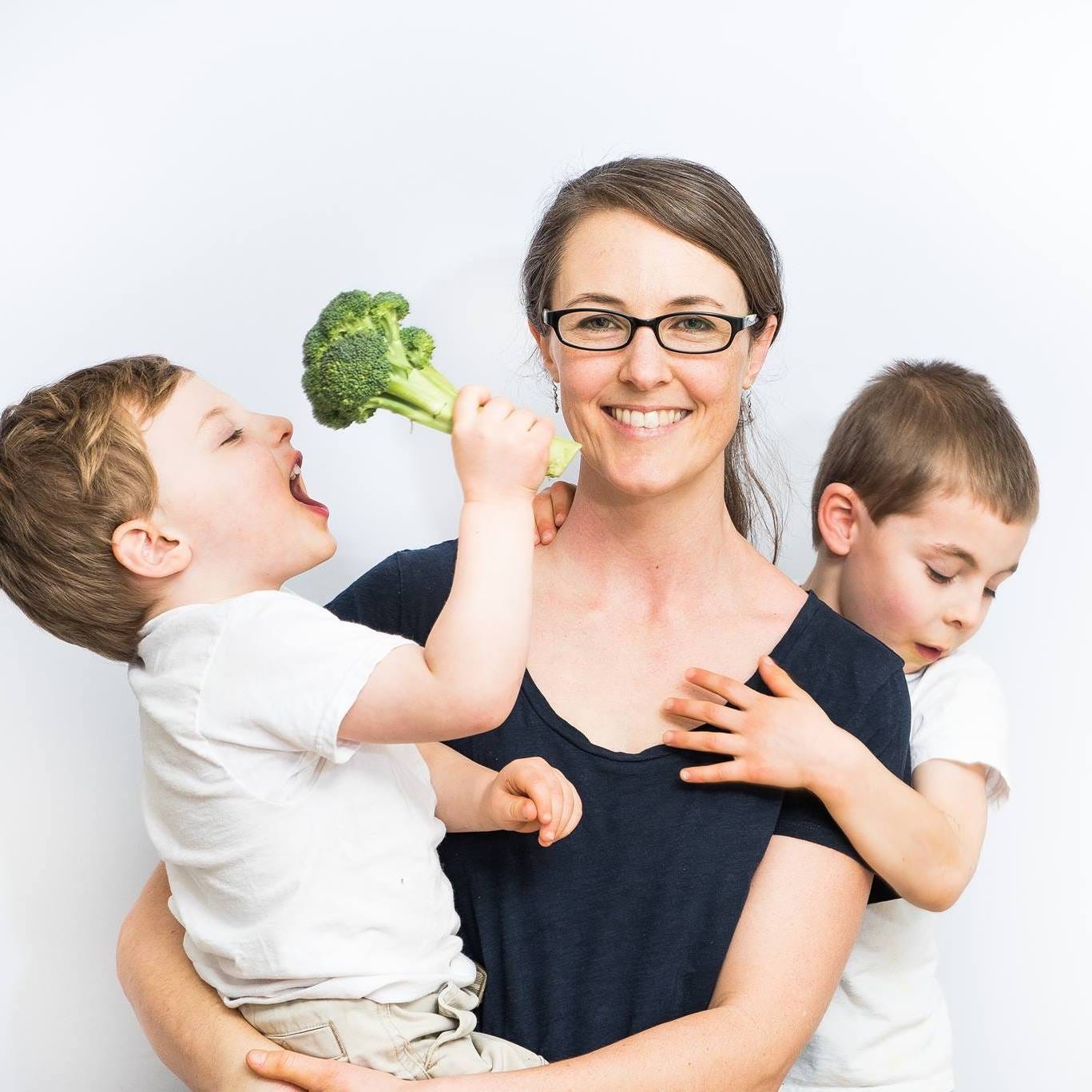
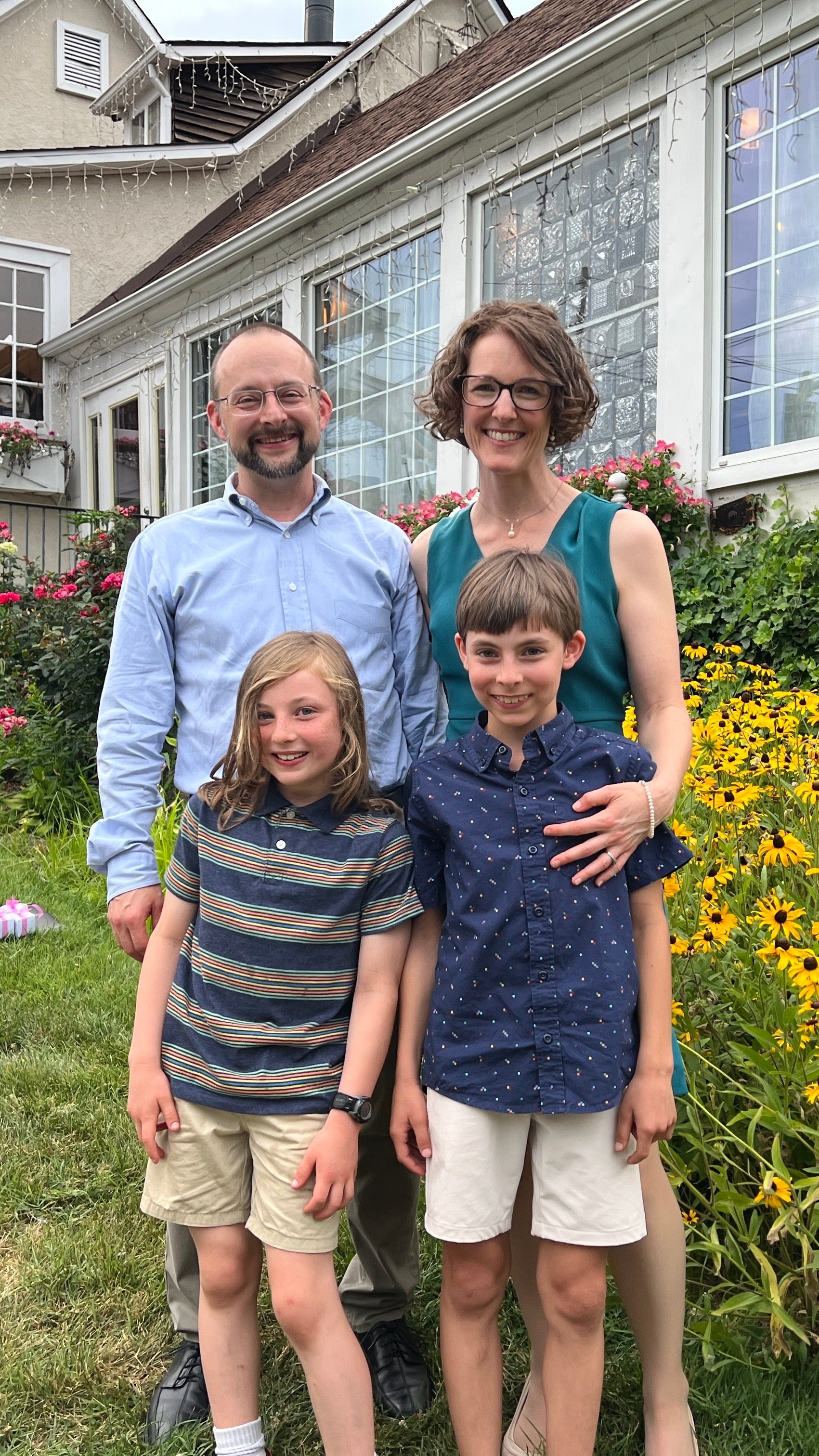
Introduce Yourself: My name is Jennifer Anderson. I’m a registered dietitian and the founder of Kids Eat in Color. My husband and I have two kids, who are 10 and 12.
Kids Eat in Color is a comprehensive resource for families who are trying to help their kids eat a wider variety of foods, especially vegetables, or who are dealing with more complex feeding challenges like extreme picky eating or ARFID (Avoidant/Restrictive Food Intake Disorder). I have a Master of Science in Public Health from the Johns Hopkins Bloomberg School of Public Health.
You’ve shared that your first child falling off the growth chart was a turning point for you. What did that experience teach you?
At first it was really personal. My oldest child had started falling off the growth chart as a baby; around nine months old the pediatrician told us he wasn’t gaining weight. Eventually we got him back on track, but then my second son came along and I started noticing early signs of extreme picky eating. Because of my training I was able to recognize what was happening, but it was still overwhelming.
When my kids were about one and three years old, I remember thinking: I cannot be the only parent struggling this much with feeding my kids.
At the time I was making these little bento-style lunches to try to capture my son’s attention at mealtime. Someone suggested I post them on Instagram, and I thought maybe if I shared what I was doing, it might help another parent. Even helping one person would make the experience feel meaningful and less isolating.
Over time, parents started reaching out with questions. They were asking for specific help and resources, and that’s really how Kids Eat in Color grew: by community, and by listening to what families actually needed.
Were you already a dietitian when this was happening?
Yes, I had just finished my public health training and my dietetic internship, so I had all the latest research in my head; I assumed that meant feeding my kids would be easy. I thought I knew exactly what to do. But kids don’t care what your job is!
Suddenly I had one child who wasn’t eating enough and another who was starting to show signs of picky eating. I realized pretty quickly that the theory and the reality of feeding kids can look very different.
That experience pushed me to learn more and more about child feeding. Over time I’ve gone deeper into this topic: researching, working with families, and developing programs for kids with extreme picky eating or ARFID, which still doesn’t have enough resources available for parents.

Why do you think feeding kids has become such a source of stress for parents?
There are a lot of reasons, but one big one is the sheer volume of conflicting advice.
Parents are constantly hearing that there’s only one right way to feed a baby or a child. If you don’t do baby-led weaning, your child will become picky. If you do baby-led weaning, then they won’t. You’re told to pressure kids to eat, and also never pressure them. It’s confusing.
At the same time, the environment around food has changed. Many families now have two working parents, which affects how much time there is for cooking and food preparation. We also live in a world where highly processed foods are designed to be extremely appealing, and diet culture is everywhere. Kids absorb all of that messaging very early.
Parents are trying to navigate a much more complicated food environment than previous generations did.
Even with all those changes, shared meals still come up as an important tradition. What role do family meals play?
Eating together is one of the most powerful things families can do for their kids’ relationship with food. When kids see other people eating, they’re learning what it looks like to eat different foods. That exposure helps with everything from picky eating to sensory sensitivities. It also creates connection.
Now, I always add an important caveat: just because something is considered best practice doesn’t mean it’s right for every family at every moment. Some families simply can’t make regular family meals work because of schedules, or sometimes dinner has become so stressful that everyone needs a break, and that’s okay.
But when it’s possible, eating together can be incredibly valuable.
For me personally, it was something both my husband and I grew up with. Our families always ate dinner together, so when we had kids it felt natural to continue that tradition. We’ve built a lot of our routines around making that happen.

When a parent is staring at a half-eaten plate and feeling like they failed, what does good enough feeding actually look like?
The first thing I tell parents is this: your win is not when your child eats the food.
Your win is when you put the food on the table. That’s your job as a parent. Your child’s job is to decide whether and how much they eat.
If we tie our sense of success to whether our child eats the food, we’re setting ourselves up to feel like we’re failing multiple times every single day. And that’s not sustainable. When we zoom out and look at nutrition from a big-picture perspective, the most important things are actually quite simple.
Is your child getting enough calories? Are they getting enough protein? Are we avoiding food safety issues and managing allergies?
Those big foundational needs matter far more than whether your child is eating 30 different vegetables or the latest “superfood.” Once those basics are covered, then we can talk about variety, colors, and all the other details. But sometimes parents are drowning in nutrition headlines and losing sight of what matters most.
What’s one common feeding struggle that parents try to fix but actually doesn’t need fixing?
A child saying, “I don’t want to eat that.”
Parents understandably take that personally. They just spent time buying or cooking that food, so the instinct is to push back and insist the child take a bite. But the moment that happens, the child pushes back too and now you’re in a battle.
What I’ve found is that if you simply don’t engage in the battle, things often resolve themselves. You can say, “Okay, you don’t have to eat it. You can still sit with us.” If you take that approach, there’s nothing for the child to push against.
Often they end up eating something anyway because they’re hungry. They might start with bread or another food on the table, and then suddenly the other food, the one they initially didn’t want, doesn’t seem so scary. When we step out of the conflict, kids often move forward on their own.
At what point does picky eating move beyond a normal phase and become something to address more intentionally?
First, it’s important to know that picky eating doesn’t have a strict scientific definition. However, when parents notice their child consistently refusing many foods or sticking to a very limited range, it’s worth paying attention.
That doesn’t mean it’s immediately time to panic, it just means to be aware and be intentional.
Start focusing on routines like shared meals, positive exposure to foods, and creating a relaxed environment around eating. Those strategies can make a big difference.
However, there are also signs that a child may be at risk for more serious feeding challenges. For example:
picky eating that lasts for more than a couple of years
very limited food variety that affects nutrition
eating that interferes with daily life or social situations
signs of extreme restrictive eating such as ARFID
In those cases, a child could need additional support services. If parents are wondering about their child's eating challenges, they can take our new Pediatric Screener for ARFID and Extreme Picky Eating (PSA-Eat) and get more information about their child's eating.

Kids Eat in Color is known for rejecting the idea of labeling foods as “good” or “bad.” Why is that important?
For one thing, it’s simply not kind. When we call certain foods bad, we’re often criticizing foods connected to someone else’s culture or family traditions.
Food is one of the ways people connect with each other. If children learn to judge other people’s food, they can easily carry that attitude into school and social settings where it becomes teasing or exclusionary.
There are also real health concerns with rigid “good food vs. bad food” thinking. Some children are already prone to very black-and-white thinking around food. For kids with eating disorders including conditions like ARFID, those messages can actually make their situation worse.
Food is more complex than a simple category system. A single food can be nourishing in one context and dangerous in another; think of something like nuts, which are nutritionally dense but can be life-threatening for someone with an allergy. Teaching kids to think flexibly about food helps them develop a healthier relationship with eating over time.
What does compassionate nutrition guidance look like for families with different budgets or resources?
Compassionate nutrition advice recognizes that families are working with very different circumstances. It also means recognizing that all forms of food can be valuable. Fresh, frozen, canned, and dried foods can all be part of a healthy diet.
When we created programs designed for families living on tight food budgets, the goal was to build meals that were affordable but still flavorful and culturally inclusive. That meant bringing in dietitians with a variety of culinary traditions so the food would actually taste good. Budget-friendly food shouldn’t mean bland food.
How has your work with Kids Eat in Color influenced your own family life?
One thing I’ve learned is that feeding kids is always evolving. You never know what challenge your child might throw your way, and what works in one season of life might not work in another.
Over time my perspective has become much more flexible. Early in my career I might have said that every family should have family dinners without exception. Now I understand that what works for one family might not work for another. At the same time, I’ve seen firsthand that many of these approaches really do help.
Like I mentioned, one of my children showed early signs of extreme picky eating, and we worked hard to support him using the strategies we teach. I don’t consider him a picky eater anymore. He can go anywhere and enjoy a variety of foods. He knows how to politely decline foods and how to try new foods. Seeing him develop those skills over time has been incredibly rewarding.
What’s one cooking technique that home cooks should know?
I’m a big proponent of steam roasting. You put your vegetables or protein on a sheet pan, season them, and cover the pan tightly with foil before roasting in the oven.
That trapped steam keeps the food tender while still allowing it to develop roasted flavor. The result is food that’s easier to chew and less likely to dry out, which is especially helpful for kids, toddlers, or anyone with braces or dental issues.
It’s also a forgiving way of preparing food. It’s harder to burn or overcook things when you’re steam roasting. For busy families, it’s a simple technique that works for everything from broccoli to chicken.