

🍽️ Order Up! A Conversation with Joan Nathan, award-winning cookbook author & food writer, mother and grandmother
The renowned authority on Jewish cuisine shares her deep appreciation for food, family, and tradition.

Spring brings a season of gathering, reflection, and celebration. However you and your family mark the moment — Easter, Passover, Eid al-Fitr, or simply the shift into longer, brighter days — we’re wishing you a warm and meaningful start to the season.
Small Bites:
Raising Healthy Families “How can we help you be the intentional parent you want to be today?” That’s the question behind Raising Healthy Families — a new home for trusted programs from Katie Kimball and our favorite Kids Cook Real Food programs. Their new website makes it even easier to find the life skill and course that’s right for your family, including Kids Cook, Teens Cook, Healthy Parenting, Life Skills, and Picky Eating. It’s a thoughtful place to explore support that meets your family right where you are.
🥔 One Potato is a reader-supported newsletter - Subscribe for weekly Order Up! interviews delivered to your inbox!

The Heart of Jewish Cooking: Connecting Generations Through Food with Joan Nathan
Joan Nathan is a legendary voice in Jewish cooking and the author of more than a dozen cookbooks. She has noted time and again that Passover is her holiday. Few people have spent more time thinking about, and sharing, the recipes, stories, and memories surrounding the traditions of the holiday, which is why this week (during Passover!) is a perfect time to share her reflections. Joan has devoted her life to preserving and sharing the Jewish foodways that tie generations together. In her book, My Life in Recipes: Food, Family and Memories, she turned that lens inward, tracing her own family’s journey through the food that shaped it, from postwar kitchens in New York to tables across Israel, Paris, and Washington, D.C.
At One Potato, we often talk about food as a bridge between generations, and Joan embodies that idea in its fullest form. From sharing memories of her own childhood meals to the meals she cooks and shares with her own grandchildren, this interview reminds us that the way we cook and eat together today becomes the story our families tell tomorrow. And if you’re looking for the perfect place to start celebrating Jewish holidays with your own kids in the kitchen, Joan’s cookbook A Sweet Year is filled with approachable recipes, hands-on activities, and thoughtful ways to make holiday cooking feel both meaningful and doable at home for children and adults alike.
In our conversation, Joan reflects on the significance of Jewish holidays like Passover as anchors for memory and identity. She shares why traditions matter more than perfection, how even small rituals — setting the table, asking thoughtful questions, cooking side by side — can become lasting touchpoints, and why recreating these moments year after year is what allows them to truly take hold.
A special note from our friends at Raising Healthy Families:
Support for Real Life Parenting, from Real Life Parents
Most of us are trying to raise capable, confident kids while juggling dinner, school schedules, work, and everything else life throws into the week. Raising Healthy Families, created by Katie Kimball, is built around that exact reality: helping families build life skills in the kitchen, strengthen food confidence, and make everyday routines feel a little more doable.
The new Raising Healthy Families website brings together their most trusted programs in one easy place to explore, including Kids Cook, Teens Cook, Healthy Parenting, Life Skills, and support for navigating picky eating. Whether you’re looking for practical cooking skills for your kids, a little more calm around mealtimes, or tools that help the whole family participate, it’s a thoughtful resource designed to meet families where they are. Get started by exploring their Free Chores System That Actually Works
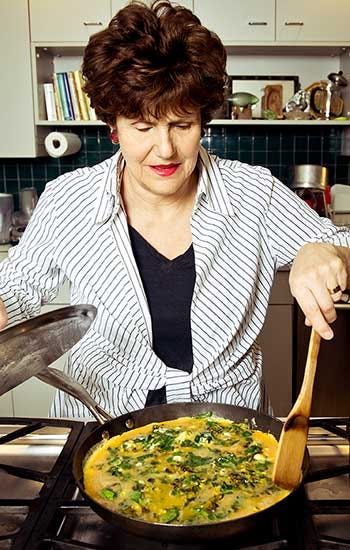
A Conversation with Joan Nathan, renowned Jewish cookbook author
Introduce Yourself: My name is Joan Nathan, and I’m the author of 12 cookbooks. I’m a proud mother of three and grandmother to three more, spanning from six months old to eight-year-old twins.
I come from an immigrant family like so many in the United States. My mother was a first-generation American; her family came from Hungary and Poland, and my father immigrated from Germany before World War II.
I grew up in Larchmont, New York, and later Providence, Rhode Island, in a home where meals really mattered. We always sat down to eat together at a nicely set table (no ketchup bottles in sight!). Gathering to eat wasn’t casual, everything was prepared with care.
Some of my most powerful memories are from my aunt’s house on Saturdays. We’d listen to opera with my grandfather and eat traditional German foods—tongue, sweet-and-sour dishes, even brains with capers. Those meals felt like stepping into another world, and I think that’s where my curiosity began.
For me, food has never just been about eating. It’s about culture, identity, and connection. Finding recipes that connect my readers and guests to their past excites me, even at 83 years old. I cherish breaking bread with others, inspired by my mother’s love for a beautifully set table.
As you became a parent—and now a grandparent—how have you carried that sense of connection and identity through food into your own family?
To me, holidays are everything. Jewish holidays, birthdays, life cycle events—they’re how we pass things down. Right now, I’m preparing for Passover; I’m thinking about how my grandchildren can connect with me and create memories over food. I always make multiple types of charoset—five or more—and this year we’ll chop apples together so they remember the experience, not just the food.
Their mother, my daughter, now has them make matzo balls because that’s what she did growing up. This year I’m planning to make a Pharoah’s cake, a cake shaped like a pyramid, with the twins. It’s about involving them so they feel part of it. When food is just brought in or catered, something gets lost. The connection isn’t the same. Traditions are crucial; they create memories and foster a sense of identity.

For parents trying to build those kinds of memories at home, what small rituals around the table matter most?
Conversation. Real conversation. At our Shabbat dinner table on Friday nights, my family has always asked the question, “What was the best and worst part of your week?” My children still do that with their kids. It’s a way to connect beyond just food.
Setting a proper table and involving kids in that process teaches manners and respect—not to be strict, but because it creates a shared experience, and makes the table inviting. Simple actions, like putting a napkin on your lap or using utensils properly, are important. I even have playful napkins to help make these lessons fun.
It’s about creating a warm and welcoming environment.
Do your grandchildren like to cook with you?
Absolutely, they love it! My eight-year-old twins are so much fun, and they’re always experimenting. They’ve experimented with eggs in the microwave, and creating their version of sous-vide eggs. I love making challah with them; I prepare the dough, and they help shape it. It’s all about creativity and fun, and it teaches them valuable skills. Sometimes, I prepare cookie dough ahead of time for them to bake while we adults enjoy our time together. They feel accomplished, and this strategy helps to balance the mess.
When you look back across your life, are there certain dishes that feel especially tied to your family’s story?
Yes. One dish I love is sweet and sour salmon with ginger; it really represents my family.
But I also recently discovered something incredible: a handwritten recipe in my grandmother’s cookbook for an apple dish from my great-great-great-grandmother. I had it translated, and each time I make it I feel like I am cooking through history. I’ve adapted it for modern tastes, but I always aim to honor those traditions.
And then there’s challah. I now top mine with different seeds—anise, sesame, nigella, caraway—to represent different parts of Jewish history. It’s one loaf, but it tells many stories.

Your work often shows how recipes evolve over time. How do you balance honoring tradition while allowing food to change?
I think about that a lot. I don’t want to change things just to be different. Traditions exist for a reason. I want to preserve those core recipes—like a good brisket—while allowing some room for creativity. Yes, I’ve done playful things, like the rainbow challah, but that’s not everyday cooking. I hope people experiment, but also return to the classics. Both can exist.
As both a mother and grandmother, how has your perspective on cooking for family changed?
Meals are simpler now, and that’s okay. We don’t need elaborate dishes every night. Dessert isn’t an everyday thing anymore either, I don’t think; it’s more special, which I think is a good shift.
But certain moments still matter. As I mentioned earlier, Shabbat, for example, is a big deal. I believe every culture has or should have a moment like that, a meal that stands apart from the rest of the week.

If a parent wanted to start exploring Jewish cooking with their kids, what are a few meaningful, approachable dishes?
Challah is a great place to start. People feel so proud when they make it.
Matzo ball soup is another, it’s simple and widely loved.
There are so many options across different cultures, but those are accessible and meaningful. And foods like hummus, which once felt unfamiliar, are now everyday staples.
You’ve spent years traveling and cooking around the world. What similarities have you noticed in how families gather around food?
No matter where you go, food brings people together. When I attend Friday night dinners around the world, the dishes may change, but the feeling is the same. There’s a shared sense of connection. If you don’t know your past, it’s harder to understand your future. Food helps anchor that.
What advice would you give families who want their children to grow up appreciating food, culture, and gathering?
Make the effort to create a warm, inviting atmosphere. Use special tableware and appreciate the beauty of a properly set table. It doesn’t have to be expensive; even simple flowers from your garden can enhance the experience.
What do you hope people feel when they cook one of your recipes and sit down to eat?
I hope they enjoy it! I remember another cookbook author once told me it’s my responsibility to ensure my recipes are good, and that’s something I take seriously.
After all these years, what still surprises or delights you about cooking?
I still find so much joy in it. Lately, I’ve found joy in experimenting and cooking for fun. I recently attended a dinner party featuring El Salvadorian cuisine, which was an amazing experience. It reminds me how food can connect us and be a gateway for celebrating our diverse traditions.

And finally, is there one cooking skill every home cook should practice?
Knife skills are essential. Even if they’re not perfect, they make cooking easier and more enjoyable.