

🥧 Order Up! A Conversation with Justin Burke, Pastry Chef, Queer Food Writer, and Author of Potluck Desserts
Happy Pride from One Potato! Justin talks to us about the story behind writing a cookbook for nervous bakers, chosen families, and the parts of queer life that happen at the everyday kitchen table.

We’re kicking off Pride Month with the first of our June Order Up! conversations — and we’re proud to feature a One Potato dad. Families come in all shapes, sizes, and colors, and One Potato has always been built around that truth: every family deserves a seat at the table, a place in the kitchen, and a spot in this newsletter.
Last June, we sat down with Chef Tatiana Rosana and Sako Gordon of Ayako & Family for Pride Month. This year, we’re starting it off with Justin Burke — pastry chef, queer food writer, and author of Potluck Desserts: Joyful Recipes to Share with Pride (it’s the one-year anniversary of his cookbook’s publication date!). He’s also a dad and husband writing into the parts of queer family life that food media so often leaves out.
Small Bites: We love #LifeSkillsNow! This free camp helps kids build true independence — the kind that comes from mastering a skill, not just keeping themselves entertained for a few hours. With topics like cooking, budgeting, gardening, and even managing big feelings, it’s like a mini life toolkit that’s easy to use (and fun). 👉 Learn more here
🥔 One Potato is a reader-supported newsletter - Subscribe for weekly Order Up! interviews delivered to your inbox!
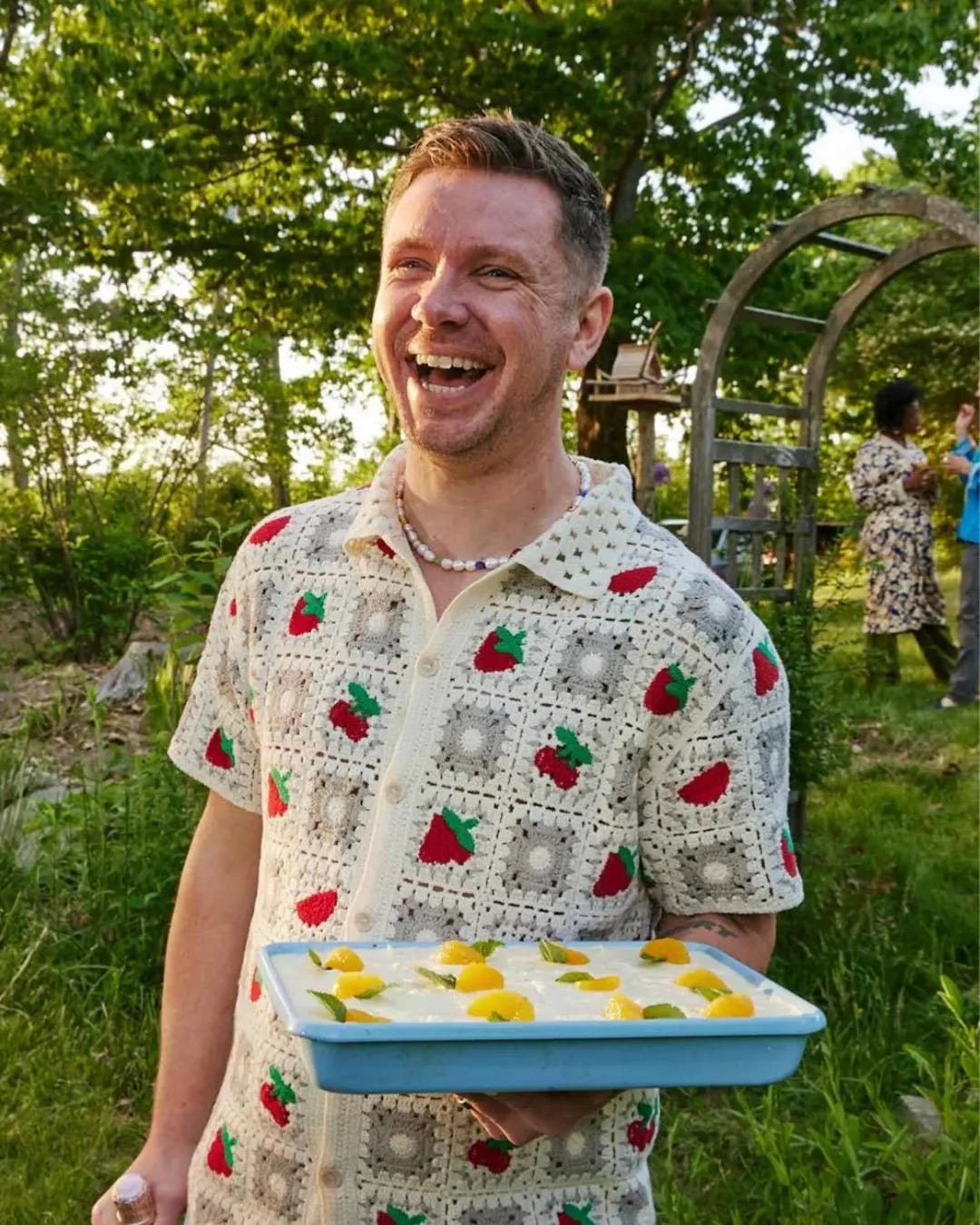
Folding in the Cheese: Justin Burke on Pastry, Pride, and Real-Life Queer Family
Justin Burke is a pastry chef, queer food writer, podcast host, and dad to almost-eight-year-old Jasper, who is co-parented across four dads and one very tolerant rescue dog. His debut cookbook, Potluck Desserts: Joyful Recipes to Share with Pride [Bookshop, Amazon], took ten years to land — ten years of agents and publishers who couldn’t square food with queerness, or queerness with the messy domestic reality of folding laundry and packing school lunches. If that sounds deep, you’ll want to continue reading for an incredibly thoughtful interview that touches on everything from nervous bakers, to chosen family, to queer life as it happens at the kitchen table on a Tuesday night.
Potluck Desserts is a book built for the person standing in their own kitchen for the first time, scared of failing. That includes a recipe by Jasper himself, Tastes Like Cookie Dough Fudge, one from his husband Louis, and a structure organized by baking pan because, as Justin points out, the hardest thing about a potluck is getting the thing from point A to point B (point A being your oven and point B being…someone else’s backyard?).
We talked about queer potlucks as oral history, why Jasper thinks they’re famous because they’re on Instagram, the rule his family has about tasting things you didn’t like last time, and the one cooking skill he wishes more home bakers got comfortable with — it involves a spatula and a Schitt’s Creek reference (IYKYK).
This conversation is for the parents teaching their kids that food is bigger than dinner, and for the nervous baker who reads a recipe like it’s a contract. Justin’s reminder is simple: you can live a full life anywhere, and you don’t have to wait for permission to start.
A special note from our friends at Raising Healthy Families:
All The Things Your Kids Are Capable Of…And More!
There’s a moment most parents recognize — the one where you realize your kid is way more capable than the version of them you’ve been working around. Maybe they pour their own cereal for the first time, or fold a fitted sheet without help, or save up for the thing you assumed you’d end up buying. #LifeSkillsNow is built around that moment, and built to make more of them happen.
Now in its fifth year, the free virtual camp from Katie Kimball at Raising Healthy Families is bigger than ever — 100+ brand-new workshops, more kid-and-teen teachers on screen than any year before, and a full week of programming that includes everything from gardening basics to building credit to what to do if you get pulled over. Camp opens June 8. Registration is free, and you can start exploring the early-access workshops right away.
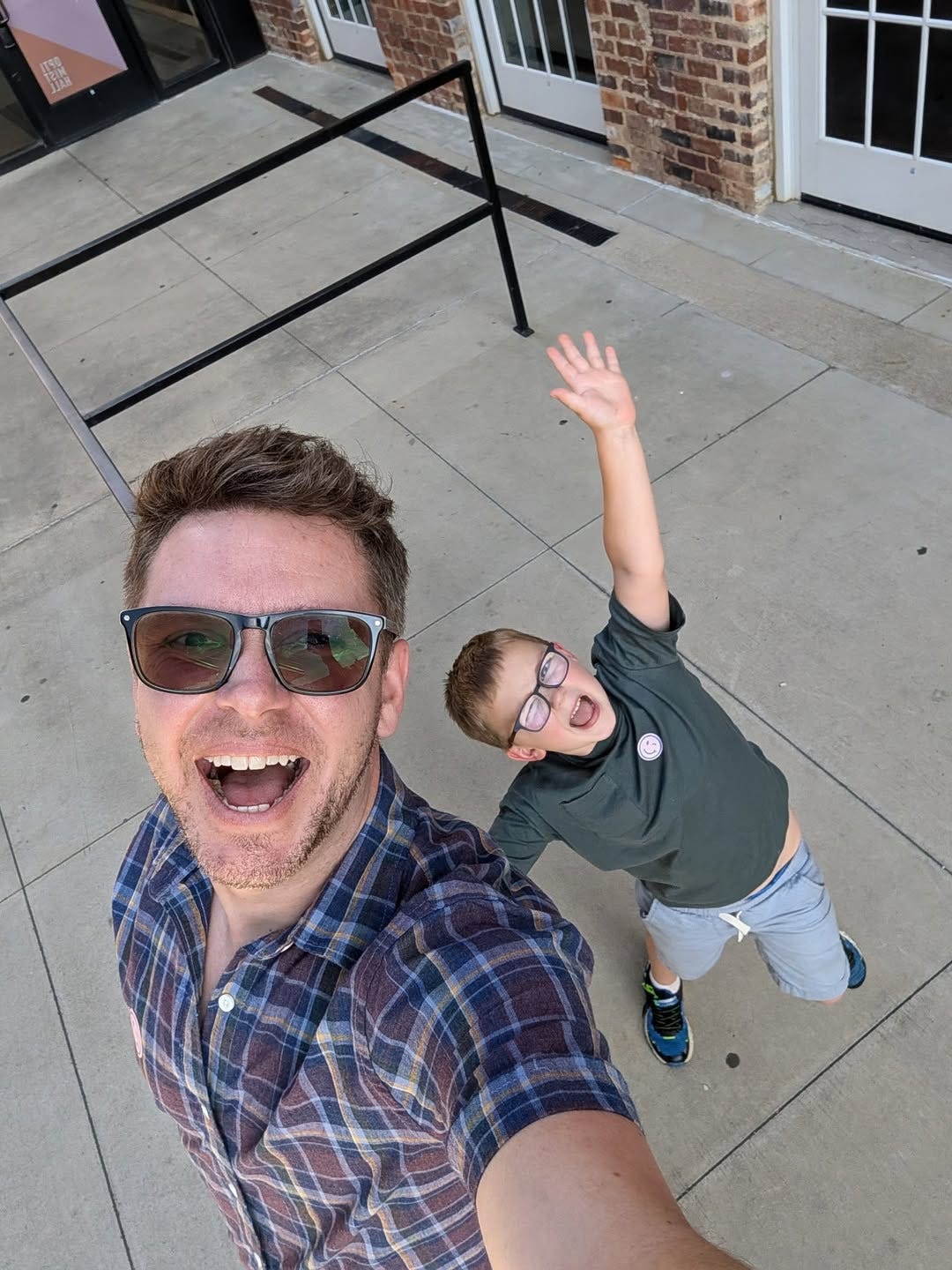
A Conversation with Justin Burke, Pastry Chef, Cookbook Author, & Queer Food Writer
Introduce Yourself: I'm Justin. I'm a pastry chef, queer food writer, recipe developer, and cookbook author. I host and produce a podcast called That Ate, and I do community organizing in the queer space.
My husband, Louis, and I have an almost-eight-year-old son named Jasper. We co-parent with my ex-husband and his husband, so Jasper has four dads. He's grown up with that since day one. It's just a very big, gay, happy family.
Let’s start with a very Pride-month question: You've said your first queer potluck changed your life. What shifted for you in that moment?
I was 18, living on my own, working at Disneyland. It wasn’t the potluck food that stood out to, but the people — I’d grown up in a small, conservative desert town. All these different races and cultures and genders in one room. I hadn’t been around anything like that before.
Food clicked for me later, after I’d moved around, gone to grad school for food policy, worked in nutrition with public schools. But to really understand the bigger picture, queer potlucks are doing something specific. Queer history is badly documented — we’re only now starting to capture it. Potlucks are how a lot of it survives. You eat something, you ask who made it, and you find out it’s the brownies that used to get made at HIV and AIDS clinics in the 80s. You’re learning legacy through food. You’re meeting your chosen family. For a lot of us, that’s where it all starts.
How did food go from background to career?
I quit a full-time job on impulse, walked into a restaurant, and said I wanted to be a pastry chef. That was the start. But the career really took off when my co-parent and I started building our family. Becoming a dad raised the stakes on everything, including what I wanted to put into the world about food. I didn’t force the food career. I let it come to me.
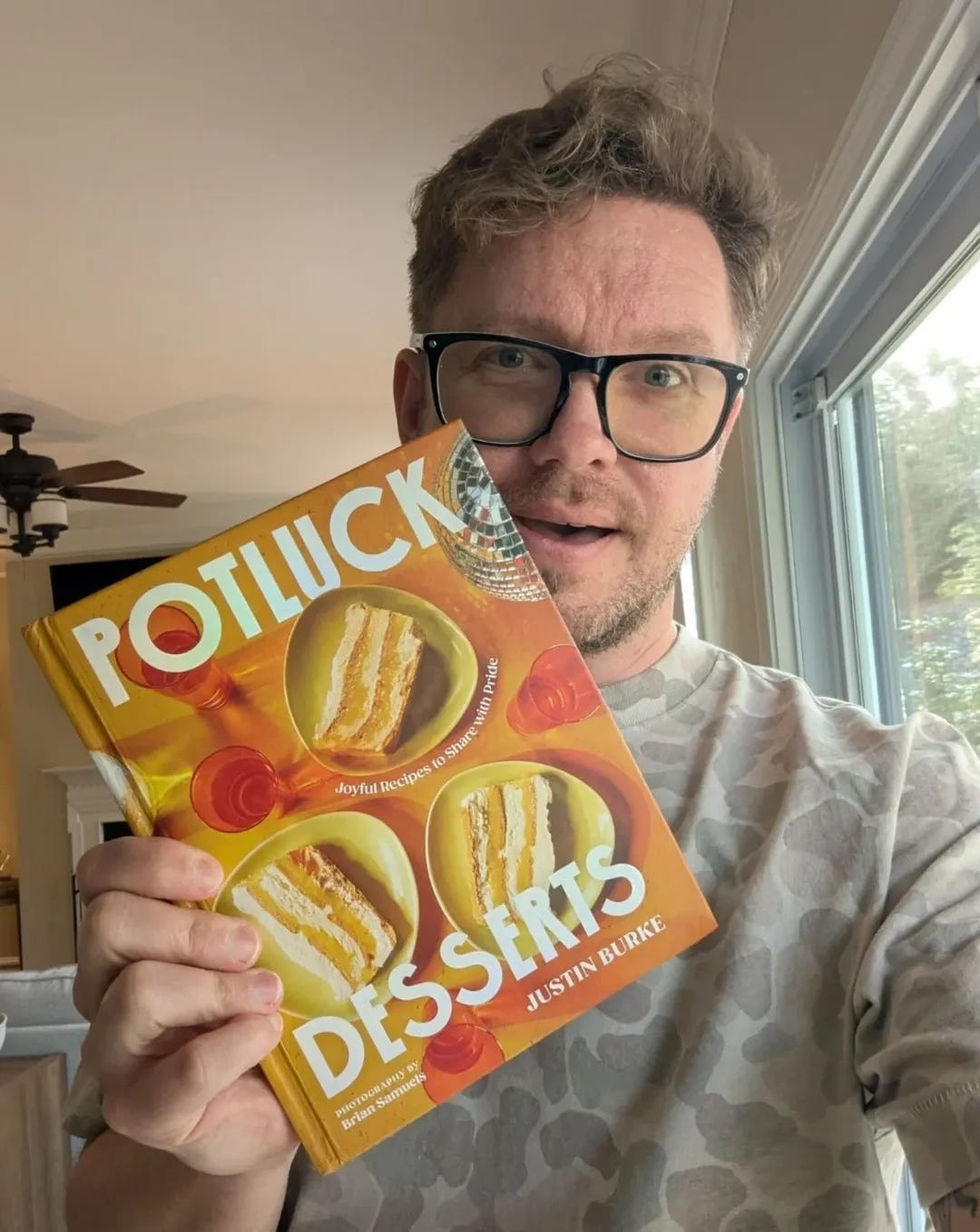
*Potluck Desserts: Joyful Recipes to Share with Pride.* That title is doing a lot of work. How did you land on it — and how did you fight to keep your husband and son in the book?
This book took me ten years. Ten years of doors closing because publishers and agents couldn’t see why being queer had anything to do with food. The kitchens I’d worked in had the same message — it’s not safe to be queer here, and if you are, you’re in pastry. I’m a living stereotype.
What I kept seeing in the queer cookbooks that did get published was one of two things. Either the author was queer and the book pretended that didn’t matter, or the queerness got flattened into a caricature for pop culture: drag queens, camp, very Instagram. Both versions cut out the parts that look like my life, that look like any day-to-day family life: a kid, a husband, school drop-off, dinner at home in Columbia, South Carolina.
When my agent Sally Eckus finally connected me Countryman Press, I cried in the pitch. I’d basically given up. They gave me full autonomy — the recipes, the voice, the visuals. My only hard rule was: do not put a rainbow on this cover. Potluck Desserts was a placeholder title for years. I kept thinking I’d come up with something more clever. When we got to print, they said, “No — that’s the name.” They were right.
Jasper came up with one of the recipe’s in the book? *Jasper’s Tastes Like Cookie Dough Fudge.*
Year two of writing the book, I hit a wall. I was convinced the recipes were bad, I was doing too much, I was doing too little. Jasper was three-ish at the time, and he grabbed my hand and basically said, let’s just make something. He’s a real empath. He could feel I was stuck.
I told him to grab whatever he wanted from the pantry. He came back with graham cracker crumbs, sweetened condensed milk, coconut, peanuts, chocolate chips, and marshmallows. I figured, fine, we’re making something for fun — it doesn’t have to be good. We dumped it all in a bowl, packed it into a loaf pan, let it set in the fridge.
That night we cut into it. He took a bite and said, “Mmm. Tastes like cookie dough.” I tried it. He was right. Louis tried it. Same reaction. I refined the quantities, and it went in the book. Jasper got me out of the rut. Louis has a recipe in there too.
Jasper doesn’t fully grasp the dedication yet, but when he sees the book in a store, he points and says, “That’s your book.” When he sees us on Instagram, he tells me we’re famous. I keep trying to explain that having social media doesn’t make you famous, but I’m losing that argument.
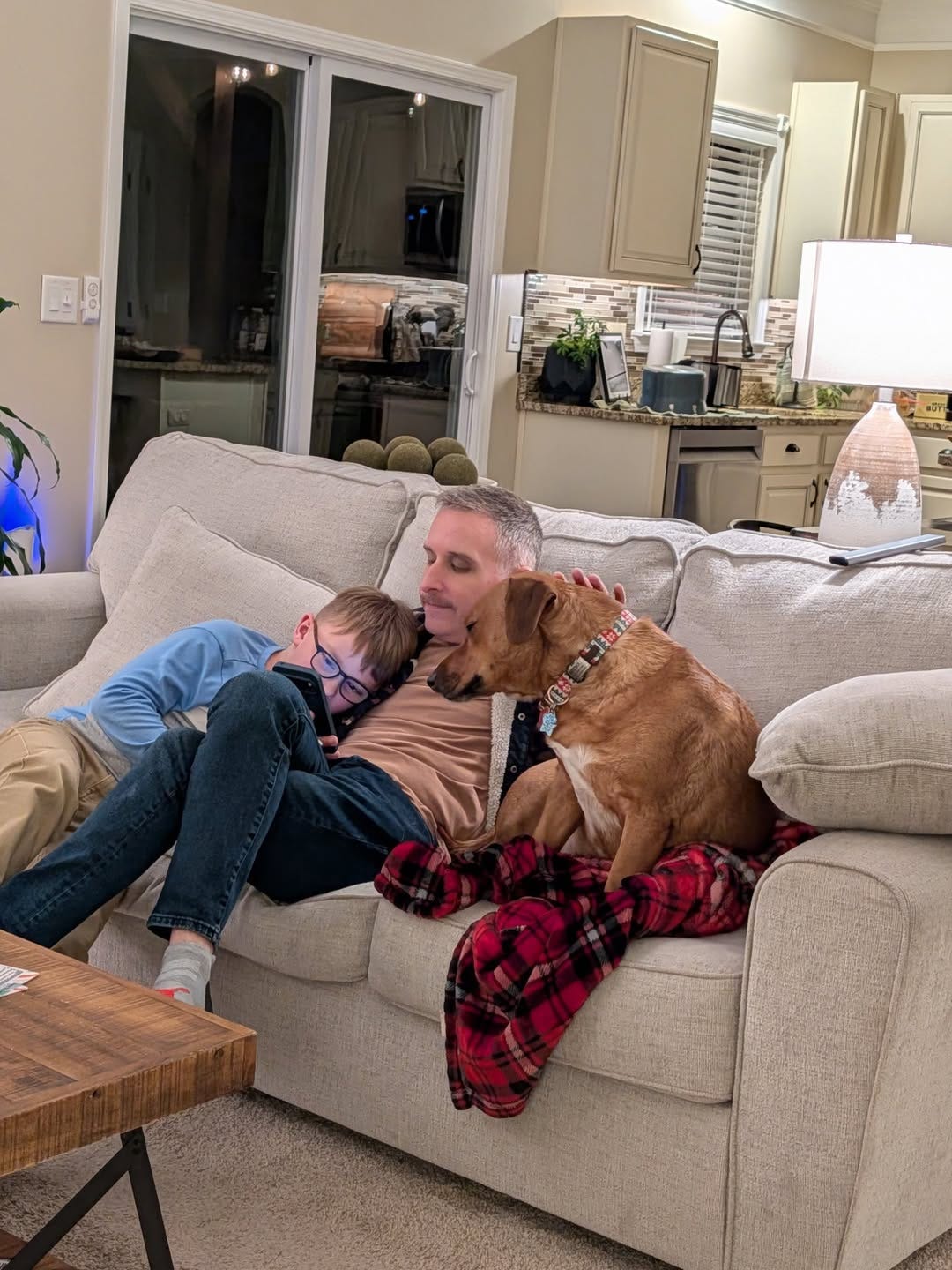
You’ve talked about queer domestic life — folding laundry, regular Tuesday dinners — being the part of queer food media that gets missed. Why does that matter so much to you?
Media has shown one slice of queer life: bars, restaurants, clubs, drag. Important spaces — but they’re not the whole ecosystem. We’re also working nine-to-fives, taking care of kids, looking after aging parents. We drive to the bar from our homes. We go back to those homes.
When I became a parent, I went looking for resources on queer family life and couldn’t find much. Friends were reaching out about surrogacy, and I had to keep saying, “I don’t know — we’re figuring it out together.” The home was missing from the picture. You don’t have to live in a brownstone in Boston or NYC to live a full queer life. You can live anywhere. I wanted the book to reflect that.
What has feeding Jasper on a normal night taught you that fifteen years in professional kitchens didn’t?
Jasper used to eat anything. Now he’s an opinionated almost-eight-year-old who suddenly doesn’t eat chicken tenders. Joke’s on us.
Our rule is: you have to try it. Every time. Even if you didn’t like it last time — palates change. And when something gets rejected, we don’t get angry or shame him. We ask why. What is it? Flavor? Texture? We want him to learn to describe what’s going on instead of defaulting to “I don’t like it.” Honestly, sometimes I have to remind the grandparents to do the same.
We co-parent, so Jasper isn’t with us every day. When he is, we eat at the table as a family. Louis does most of the cooking at home — I need a break from food work, and that trade is fair. When Jasper’s here, he has his stool. He’s been taught to use a knife and the induction burner. I decided early on not to be anxious around him in the kitchen, because kids absorb that. I’m sweating internally and acting calm externally.
You’ve said you didn’t want to write another elaborate pastry book that no one would actually cook from. Who did you have in mind when you were writing?
Me. The version of me that was new to baking, nervous, self-taught. I think we’ve forgotten that there’s always a beginner — there’s always a nervous baker. Most cookbooks ask the author to flex everything they know. People expected my first book to be French technique stacked on American comfort, all the flash. I wanted to meet the novice exactly where they were.
So I told the publisher up front: these are novice recipes. We’re building skill. I won’t call for a kitchen scale. Even a seasoned baker or a professional chef can pull something from it. I’m self-taught, so I break rules I never learned in the first place. If a recipe calls for a boxed cake mix, fine. We’ll put a homemade topping on it. The point is that you should be proud of what you bake, not embarrassed about how you got there.
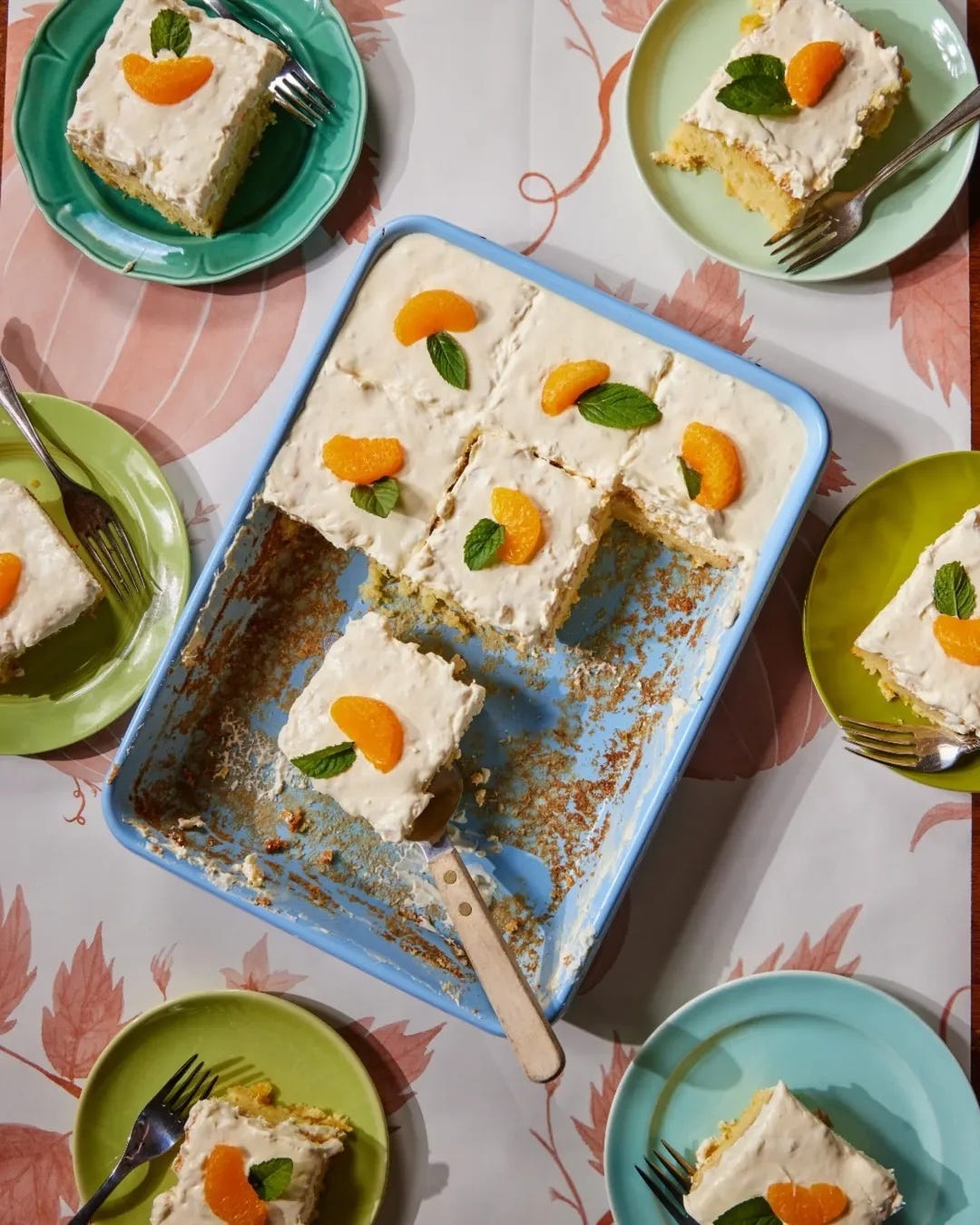
The book is organized by baking pan, with recipes tagged by time. Where did that structure come from?
I had too many recipes to sort into the usual categories — cakes, cookies, pies — and they didn’t divide evenly. I woke up in the middle of the night and realized the actual problem at a potluck isn’t what you made, it’s how you get the thing from point A to point B. It’s the vessel. So I built the chapters around that: sheet pan, casserole dish, loaf pan, and so on. People keep telling me they love it. (”Oh, I don’t have sheet pans” — okay, you should probably get one, but I won’t push it.)
For time, I used broad strokes: 30 minutes or less, an hour or so, better made the night before. When I first started baking, I would read a recipe like a contract. If it said an hour and I finished early, I figured I’d done something wrong. If I went over, I figured I was slow. Loose time ranges give a nervous baker room to breathe.
Tell us about *That Ate*, your podcast. Is there a conversation that’s stayed with you?
That Ate is a queer food podcast, brand new — we’re in season one. It’s an extension of what Potluck Desserts started: queerness and food and how they intersect with culture, race, gender, money, the whole thing. Potluck Desserts was my story. The podcast is everyone else’s.
The episode that sits with me most is episode two with Telly Justice, the chef behind Hags in New York — the trans-owned restaurant. I was always called “too sensitive” as a kid. She said the queer and trans community are beautifully sensitive people — sensitive because we’re kind, because we understand how brutal the world can be, and because we know how powerful it is to put a plate of food in front of someone and say, I hear you. Let’s eat. That stuck with me.
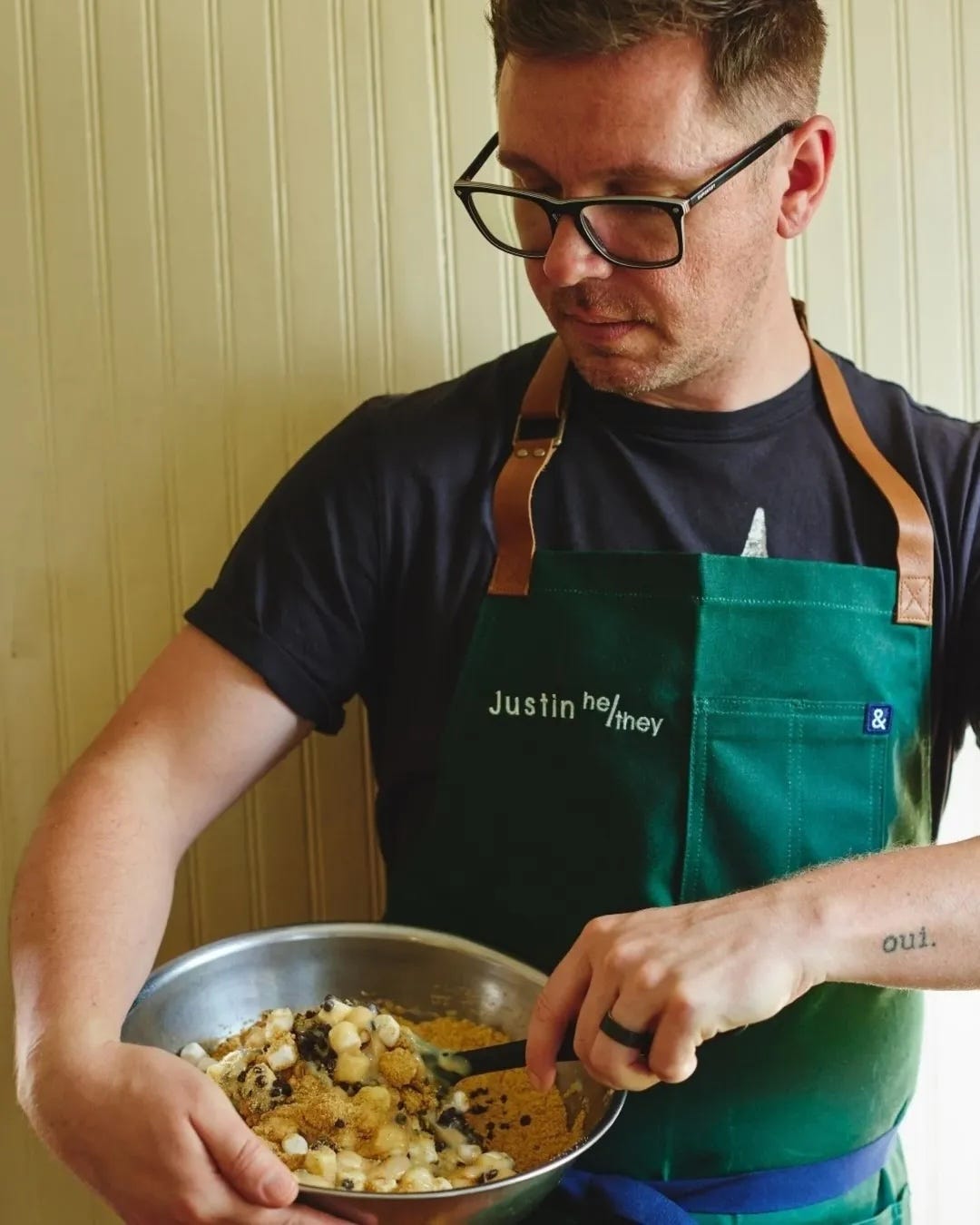
If a parent wants to help their kid see more of the world through food and storytelling, where would you tell them to start?
Cook with your kids in your own kitchen, and pick something that has a story behind it. A family recipe, something cultural. Take the benchmark off the table — don’t make it about whether they actually eat it. Just get them in there. Cookbooks have stories too — start there. If you have cultural food festivals nearby, take them. Kids have no barriers. They’ll absorb everything as long as you don’t put your own reactions in front of them. Jasper went to an empanada festival recently and came home schooling me on empanadas.
One cooking skill you think more home cooks should practice?
Folding. Specifically, the proper use of a rubber spatula. When a recipe says fold, people improvise — including my own mother — and the cake suffers for it. Take the spatula around the edge of the bowl like you’re going around the world, then flip everything from the bottom up to the top. Reverse and repeat. As Schitt’s Creek told us: fold in the cheese. David Rose was right.