

🔪 Order Up! A Conversation with Marc Forgione, Celebrity Chef, Restaurant Owner, and Father of Three
From Iron Chef kitchens to bedtime stories — on taking over Peasant, raising three kids, and rewriting what success means at 47.

If you are local to NYC, be sure to visit @PeasantNYC at 194 Elizabeth St, NY, NY. Read on for the story behind Peasant, and how Chef Marc Forgione views success as a dad and a chef.
Small Bites: 🍽️ Dinner looks different in every family, and that’s exactly the point. The Peas & Hoppiness Meal Guides & Meal Planning App makes it easy to plan meals that flex around dietary needs, preferences, and picky eaters without starting from scratch every week. Use code ONEPOTATO30 for a 30-day trial. You can also download the Free Peas & Hoppiness Meal Planning Template
🥔 One Potato is a reader-supported newsletter - Subscribe for weekly Order Up! interviews delivered to your inbox!
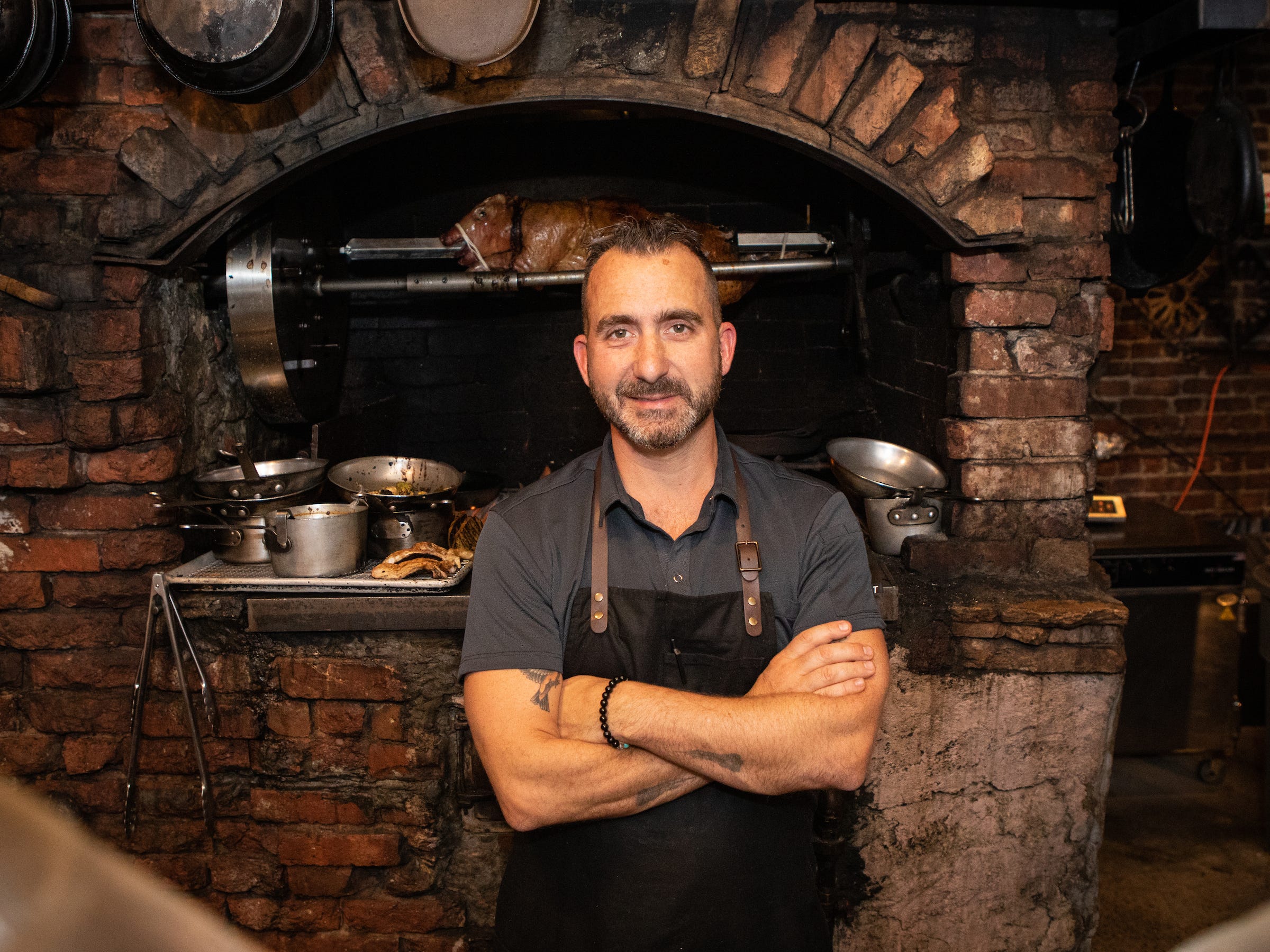
From Kitchen Confidential to bedtime stories: a chef on the slow work of becoming the parent he wanted to be.
When we were chatting with Marc Forgione, what stayed with us wasn’t the Michelin star or the Iron Chef title; it was how Marc Forgione talked about realizing, during COVID, that he’d been missing the first two years of his son’s life. Bedtime. The afternoon nap. Sitting in the bedroom for two or three hours. “I was moving too fast,” he says. “COVID slowed everything down and made me see it.”
Marc is a chef, restaurant owner, and the creator of Respect Hospitality, the group behind Forge in Tribeca and Peasant in Nolita, both in New York City. He’s married with a seven-year-old son, Sonny, and one-year-old twin girls. His restaurants are thriving. At 47, the definition of success he used to carry around — always on the line, always shaking hands — has shifted. Being home is the point now.
In this week’s Order Up!, Marc talks about growing up at the 5:30 dinner table in an Italian household where everyone cooked together, the speech at Peasant that led Frank DiCarlo to hand him the keys, and why he kept the name. He gets honest about the years he wasn’t present enough, what COVID taught him about being home, and why he named his restaurant group Respect Hospitality — not as a slogan, but as a practice that starts with the carrot you’re peeling and ends with the person standing next to you. If you’re a parent trying to sort out what “enough” looks like at work and at the dinner table, this one is worth sitting with.
A special note from our friends at Peas & Hoppiness:
Peas & Hoppiness Meal Planning That Flexes With Your Family
There’s a lot more to dinner than just nutrition. Between picky eaters, shifting schedules, cravings, and the cost of groceries, most families are juggling more than one variable at the table. The Peas & Hoppiness Meal Guides, created by our friend Ann Kent, was built with that full picture in mind.
Each week, you get a flexible, plant-forward meal plan that you can adjust to fit your family’s real preferences, dietary needs, and rhythms. You can swap recipes, change servings, and build a grocery list that actually reflects how you shop and cook. There’s even a quick Meal Planning Style Quiz to help you find a system that works for you, whether you plan everything or take it day by day. If you’re looking for a way to make dinnertime feel more manageable (and a little less like guesswork), you can explore it here 👉 Sign Up Now: Use Code ONEPOTATO30 for a free 30-day trial

A Conversation with Marc Forgione, Celebrity Chef, Owner of Peasant
Introduce Yourself: I'm Marc Forgione. I’m a chef and restaurant owner, a husband, and father to three kids: a seven-year-old son, Sonny, and one-year-old twin girls.
I'm the creator of Respect Hospitality, which is home to Forge in Tribeca and Peasant in Nolita. I'm also one of the chefs on CookUnity.
What did dinner look like when you were growing up?
Dinner was a big deal. It was at 5:30 — and even when I was old enough to go out and play without supervision, I still had to be home at 5:30. If you weren’t, you were in trouble.
We all sat at the table. I grew up with three siblings. My dad was usually at the restaurant during the week, so my mom was the cook — and she’s a great one. Meatballs, sausage with sauerkraut and potatoes, chicken cutlets. Everything from scratch. There was no TV in the kitchen. We sat down, we ate, we talked. It’s one of the biggest memories of my life.
Was cooking something you gravitated toward from the beginning, or something you came back to?
My last name is Forgione, so we were raised Italian. Even though my mom isn’t Italian, my dad and his dad are. In some houses, the women take care of everything. Not ours. Everyone was involved in cooking. I think that came down from my grandpa on my dad’s side. Whenever we’d go to my grandparents’ house, he was wearing an apron.
So I was always in the kitchen, but not to be trained as a chef. I was there to help cook. If my mom was making meatballs, you stood next to her and helped roll them. If she was making chicken cutlets, you helped bread them. It was just the rhythm of the house.
I’m trying to pass that on to Sonny. I don’t think anything brings a family together more than eating together and preparing the food together, too.
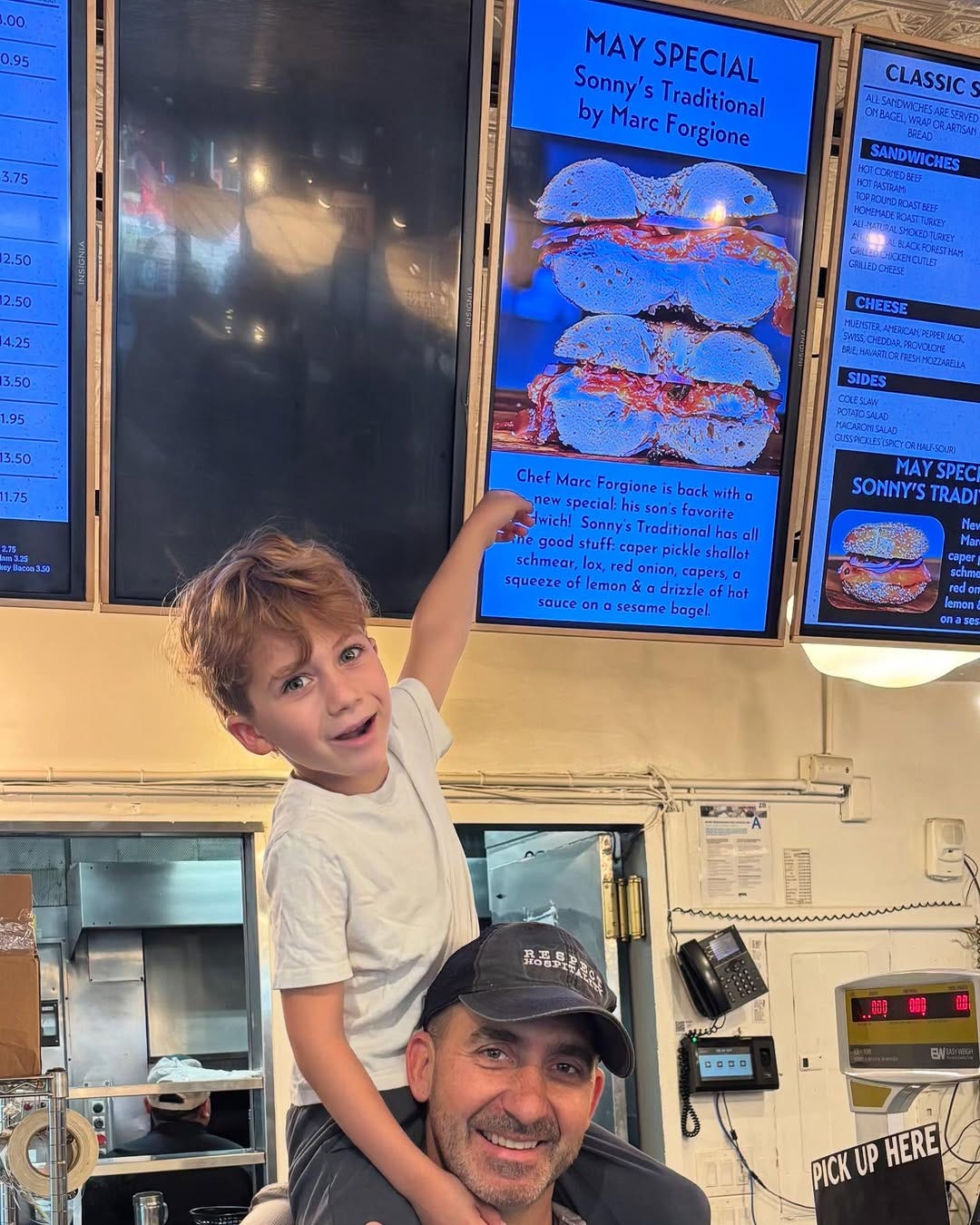
Does Sonny like to cook?
Since he was two or three, we’ve had this little foldable box he can stand on next to the stove so he’s at counter height. From the beginning, I’ve tried to involve him — flipping a pancake, getting his hands in the meatball mix. He loves making smoothies. He’s gotten a little more particular in the last year, and his sisters are following suit. But I’ve never forced anything on him.
We were at Bar Pitti on Sunday night and Violet (one of the twins) was sitting on my lap and I was feeding her tripe parmesan — she was loving it. Tonight the girls will have roasted chicken with potatoes, mirepoix, and broccoli. We don’t make them baby food. Sometimes they eat it, sometimes they don’t. That’s fine. I think that’s probably why Sonny has always been such a good eater.
That said, if we’re at a party and Sonny wants chicken tenders with the other kids, I have no problem with that. I don’t want to make him feel weird by saying he can’t have something.
Is there a family recipe you hope your kids remember?
I’ve started a book. When Sonny or my wife loves something, we try to write it down. My mom never had recipes written down. You’d ask her, “How do you make your meatballs? How do you make your chicken cutlets?” — and she’d just shrug. I’m trying to change that.
One of Sonny’s favorite nights — and honestly one of mine — is fish night. I buy fish at the farmer’s market on Saturday, and we cook it Tuesday. Whatever the guy has: cod, sole. Nothing fancy. Just a sauce meunière — lemon, capers, parsley, butter. He goes crazy for it.
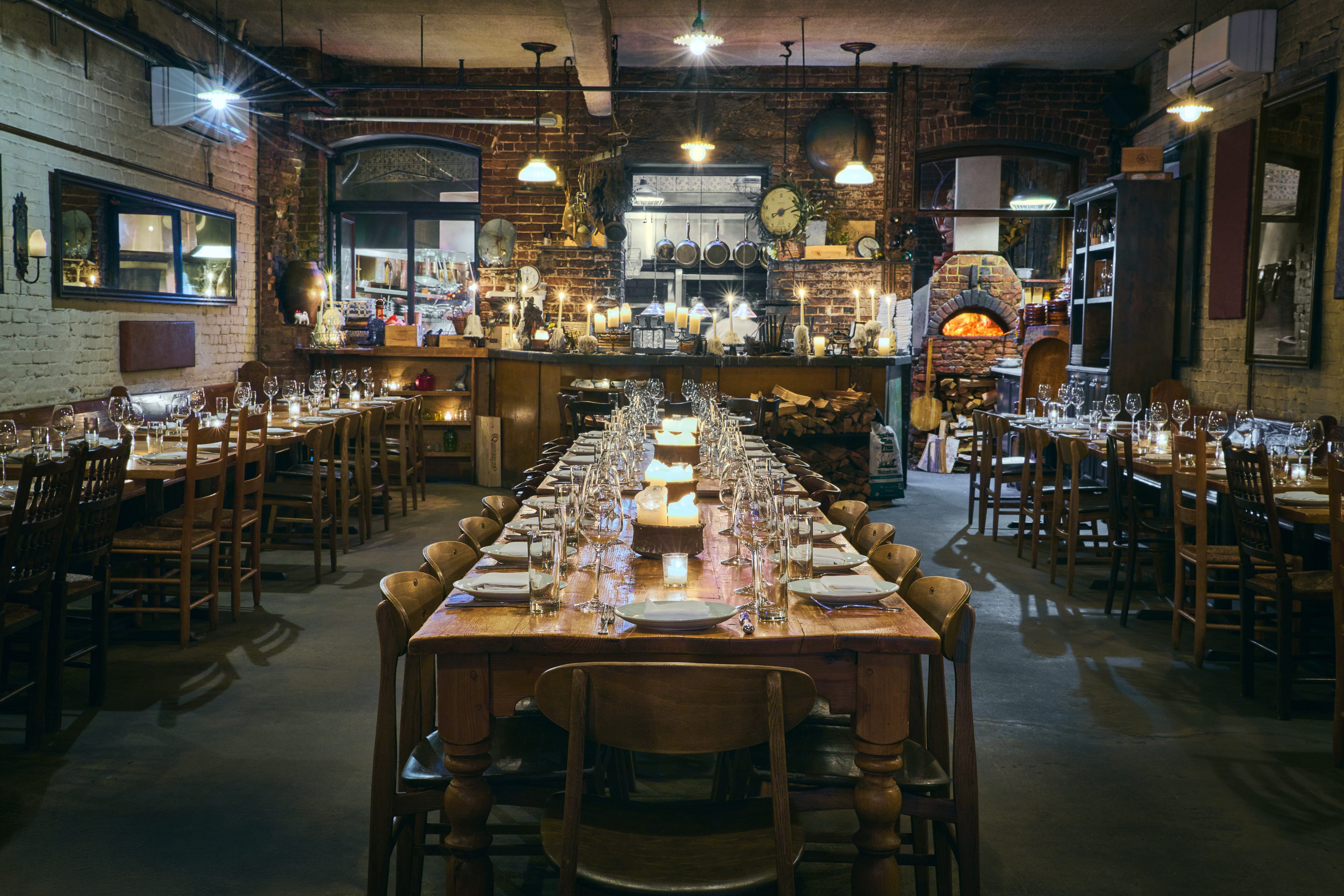
You’ve said Peasant was your favorite neighborhood spot before you took it over. What did it mean when Frank DiCarlo asked you to take it?
I still can’t believe it’s mine. I mean that.
The short version: I was hosting a dinner at Peasant in October 2019 for the New York Food & Wine Festival. I had to give a speech. It turned into a kind of love letter to Frank and to Peasant. I said they don’t make restaurants like that anymore. They don’t make chefs like Frank anymore. I was speaking from the heart.
I’d eaten there a lot. Frank and I were friendly — not friends, but we knew each other. Something about that speech landed. He already knew he was retiring; he just didn’t know what to do with the place.
When he called, he said, “You can do whatever you want with it. It’s your restaurant now. The reason I’m asking you is a lot of blood, sweat, and tears went into this place, and I don’t want it to go to someone who doesn’t appreciate that.”
He was actually surprised when I told him I wanted to keep the name. He said, “Why would you do that? It’s your restaurant now.” I said, I love New York City restaurants and the scene and the history of it. If it’s okay with you, I’d like Peasant to keep going. It should be one of those New York restaurants that keeps going — hopefully someone will take it when my lease is up, too.
We’re not serving any of Frank’s food — it’s my menu now. But the soul of Peasant — the wood-burning oven, the feel of the room — that’s what I wanted to protect.
How do you think about inheriting a restaurant versus opening one from scratch?
Frank had been there so long — and these were his words, not mine — a lot of his guests were either getting too old to come or dying. A change was going to happen anyway.
A bunch of his regulars came in the first month or two. When they saw things were different, most of them were done. There are still some who ate with Frank and eat with us now, but the majority were ready to move on.
The first couple of weeks were hard. People would ask for the mushroom risotto. I’d say, “I don’t have the mushroom risotto. I have these cordyceps raviolis if you want to try them.” I said it nicely. But I had a vision. I’d explain it this way: I’m not Frank. This is Peasant — but I’m not Frank. If you like it, great. If not, I’m sorry.
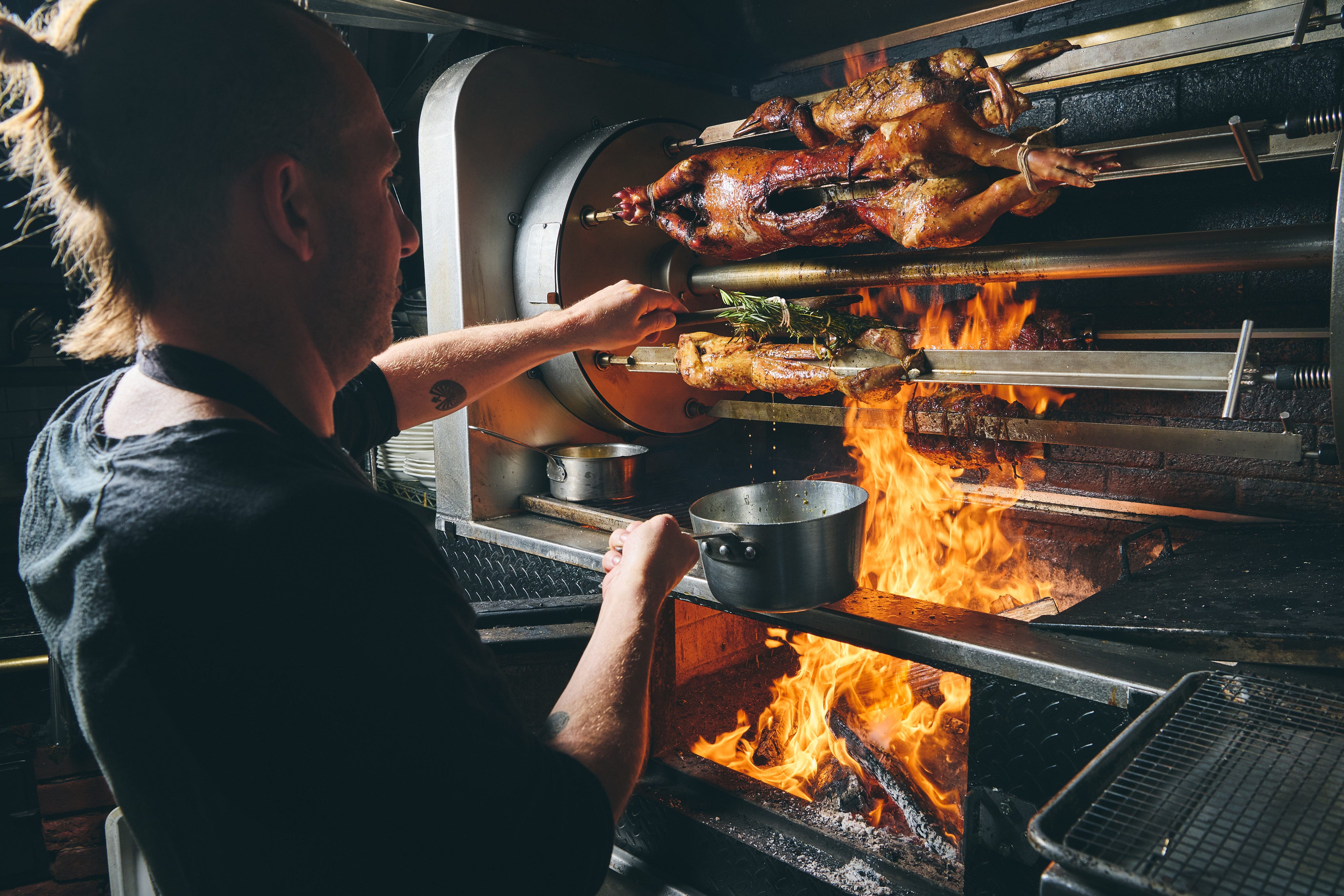
How are you feeling about that vision now?
Still getting there, in a fun way. The biggest shift was the grill and the rotisserie. At the old Peasant, they were combined, one level, no room to rest anything. I don’t know how Frank did it for twenty years.
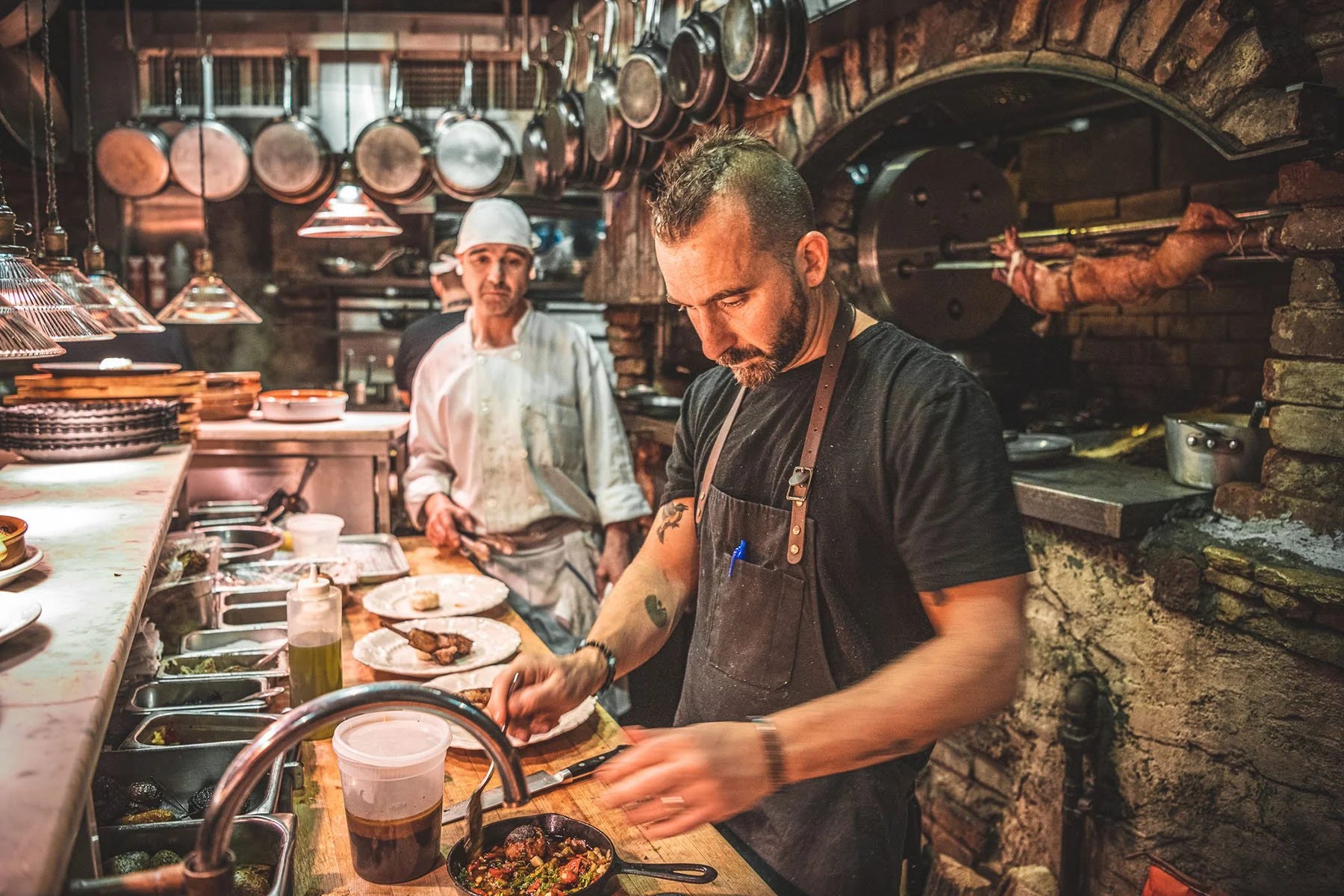
I wanted to lean into wood-fired cooking. So now we have a rotisserie with a plancha underneath, and a grill with four different levels for resting. We added more to the rotisserie too — whole ducks, whole rabbits, whole legs of lamb, alongside the pig that’s always been there. Where else in New York City can you get a whole rotisserie duck cooked over wood fire? Peasant. That’s been the most fun evolution.
A lot of our readers are busy parents trying to squeeze in family dinners between sports practice and everything else. How can a neighborhood restaurant help families feel part of something bigger?
I feel it when I go places with my kids. You can tell right away when the staff doesn’t want you there. You get the looks. You’re not going back.
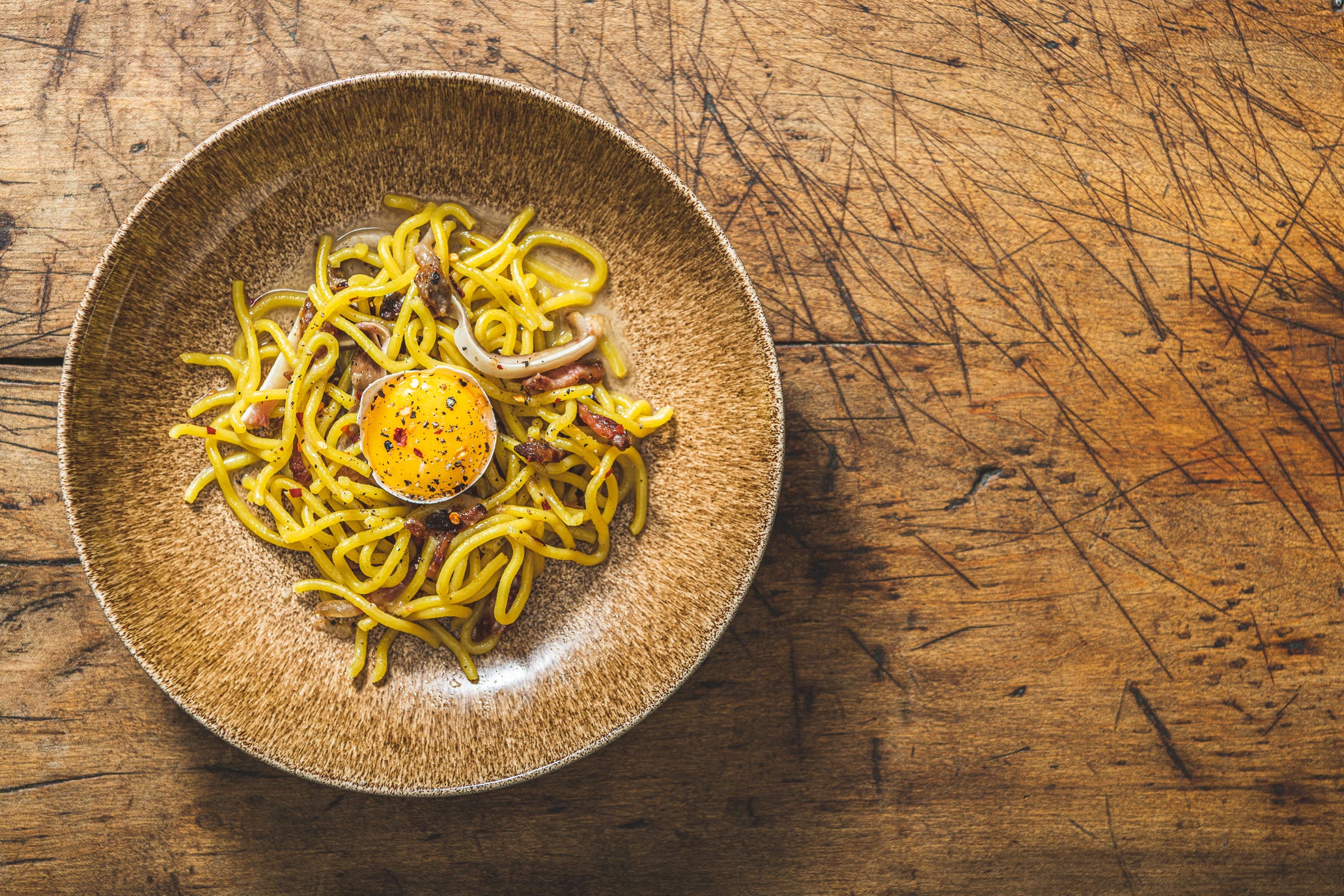
Then there are the places that feel welcoming. You’re usually out before 6:30 anyway because you’re with kids — which is an early dinner. We try hard to do that at both restaurants. The rule during first seating: if a table sits down with kids, fire the bread and butter before anyone even orders. I know how much those first few minutes at the table matter when you have kids. We have coloring pages too — kids color a lobster for the chili lobster. Little things like that.
What almost always happens next is that those parents come back on a date night. They remember how we treated them when they were with their family. It’s mutually beneficial.
Does building community through your restaurants feel different now that you’re a father?
Yeah. Before I had kids, I didn’t really notice any of it. That thing about firing the bread — I tell the staff, and the ones without kids are like, “What? Why?” And I’m like, “Just trust me. Fire the bread.”
I’ve evolved as a person since having children, and the restaurant has grown with me. Forge is coming up on 17, maybe 18 years. The 30-year-old version of me is very different from the 47-year-old version. Both restaurants have kept getting better and busier over time — I think because we’ve kept evolving instead of standing still.
You’ve done Iron Chef, Michelin, major reviews. Has becoming a father changed your definition of success?
I was just having this conversation with another chef down in Florida. I was telling him I have one-year-old twins, it’s been hard to get to the restaurants as much, but both are doing great. And he said, “That’s the dream. You’re 47, your restaurants are crushing it, and you get to be home with your family. That’s rare. That is success.”
The workaholic in me still feels guilty sometimes that I’m not working as much as I used to. Then I think — what is work, really? I still write the menus. I still talk to my chefs every day. I’m just not there shaking hands and, no pun intended, kissing babies the way I used to. And we live in a world now where I can get information to my team fast from anywhere. The 15 years of grinding before I was a dad made it possible for me to be a dad now.
I’ll admit it: the first couple years of Sonny’s life, I wasn’t really there. We’d just taken over Peasant. I was getting home at midnight and sleeping until 10. I really only saw him on weekends. Then COVID happened when he was just under two — and after a week or two at home with him, I realized how much I’d been missing. Bedtime. The afternoon nap. Just sitting in his room with him for two or three hours. I didn’t know it wasn’t cool, because I was moving too fast. COVID slowed it down and made me see it.
I also have — we’ll call them — daddy issues. My dad worked a lot. He was 24 when I was born. I was 39 when Sonny was born, I was more mature. I always wanted to be home more because of that.
What do younger chefs — or younger parents — get wrong about chasing what’s new versus building what lasts?
I want to say this carefully, because not everybody has the option to be as present as they want to be. You have to work. You have to provide. I get that.
But from what I’ve seen, and from hearing stories from people whose kids are teenagers now — kids notice when parents weren’t around. I think it’s a real thing. You don’t have to take them to Disney World. Just be there as much as you can. As much as you can. You’ll see the difference as they get older.
You named your restaurant group Respect Hospitality. What does respect actually look like in how you run your kitchens and your home?
The early part of my career was a little Kitchen Confidential — if you’ve read the book. I had an awakening, or whatever you want to call it, and I spent four or five years really trying to heal from those days. A lot of the work was meditative. It didn’t lead to the word “respect” exactly, more the action of respect.
Respect for how you look at your wife in the morning. Respect for the carrot you’re peeling. Respect for how your cutting board looks on your station. Respect for showing up on time. Respect for the person standing next to you. It kept expanding.
When I told my partners I wanted to name the group Respect Hospitality, they were like, “That’s going to put a lot on us — the press is going to watch.” I said, that’s the point. I need you to be as respectful as the employees. If I’m not respectful to them, the whole thing falls apart.
I try to live it at home too. I can’t tell you how many times I say to Sonny, “That’s not respectful.” I’m trying to pass it down.
If your kids described you someday — as a chef and as a father — what would you hope they understood?
I just hope they see how hard I try. It’s a lot. I hope all kids feel that way about their parents. And I hope they understand that everything I’m building, I’m building for them. If it was for me, I’d have a dive bar somewhere with my feet in the sand. That’s the truth. I hope they appreciate that.
One cooking skill every home cook should learn?
Sharpen your knives. I know it sounds weird, but I go to people’s houses and they hand me a knife and you can’t do anything with it. You can’t prepare food the right way without sharp knives.