

Order Up! A Conversation with Marta Rivera Diaz, Chef, Mom, and Author of Sense & Edibility
Marta gets real with us about cooking through grief, accessibility, cultural appropriation, and raising kids who'll try anything twice.

Small Bites: 👨🍳 Watching a kid run a recipe start to finish is the whole point, and Raddish Kids Cooking & Baking Subscription Boxes make it easy by mailing the recipe cards, the tool, and the lesson that goes with it every month. Designed by educators, built for kids 4 to 14. Free apron with a 6- or 12-month subscription. 👉 Learn more here
🥔 One Potato is a reader-supported newsletter - Subscribe for weekly Order Up! interviews delivered to your inbox!
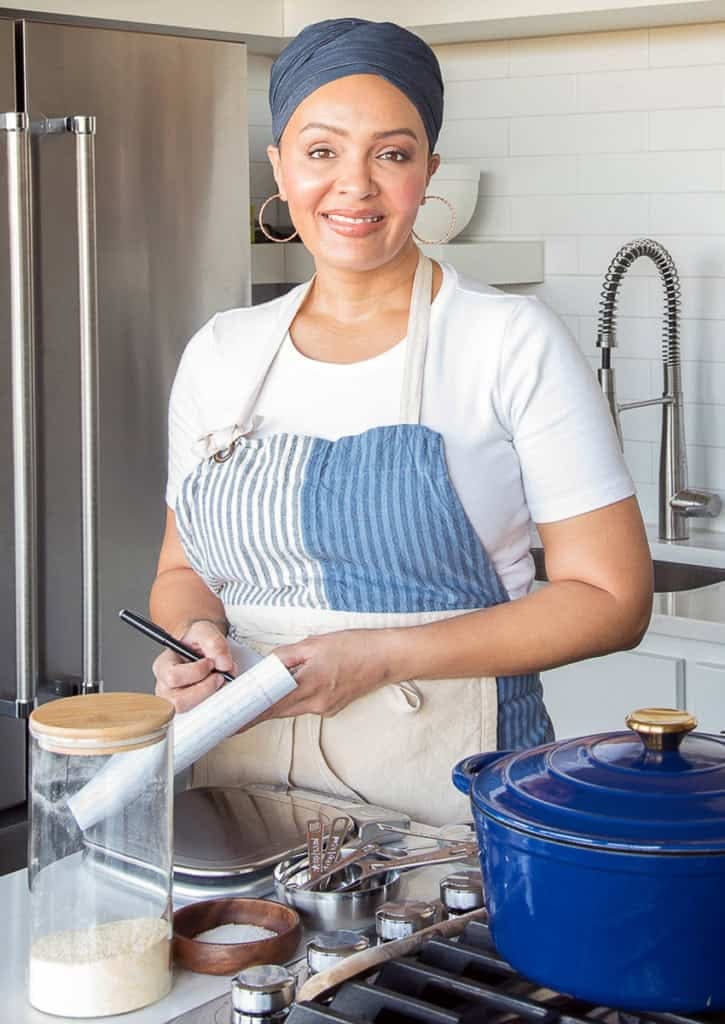
Real Beats Perfect: Marta Rivera Diaz on Cooking Through Scarcity, Grief, and a Lifetime of Unlearning Perfectionism
Marta Rivera Diaz still owns the Good Housekeeping cookbook she taught herself to cook from at nine. The lemon meringue pie page is unreadable now, smeared with stains from her first attempts. Her parents were both active-duty Air Force, the chores were non-negotiable, and somehow cooking dinner for a family of five became her job. That cookbook gave her the first rule she still hands every reader: read the recipe.
We’re running this conversation in July, which is Disability Pride Month — marking the month, in 1990, that the Americans with Disabilities Act was signed into law. It’s a time to recognize disability not as something to pity or “overcome,” but as a normal, valued part of human life. Marta is the fourth of five people in her family diagnosed with Multiple Sclerosis, and in 2024 a flare took the feeling in her left arm and hand. She now writes recipes for cooks whose hands don’t always cooperate and intentionally makes sure her recipes are mindful of all abilities — adding visual, sound, and sensory cues, alt text for screen readers, budget swaps, allergy substitutions — because she knows what it is to be the person a recipe writer forgot to think about. She’s vocal about that, the same way she’s vocal about cultural respect as a founding member of Eat the Culture, the nonprofit for Black culinary creators in food media.
And like all of us, Marta is more than any single part of her story. She’s a chef, a writer, a mom of twins, the wife of a disabled veteran, a New Yorker transplanted to San Antonio, a pastry chef who will happily argue for homemade adobo. A month on the calendar is a good prompt to pay attention, but people don’t live their identities one month a year — they carry every piece of themselves every day. We wanted to talk to Marta about all of it. [Find Marta on IG, YouTube, and TikTok at @senseandedibility]
What we wanted to ask wasn’t about her resume. It was about that long road from feeding a family on powdered milk to a kitchen where “I’m not cooking tonight” is sometimes the most honest answer at the table.
Our conversation moves through cooking under food insecurity, the gap between culinary school and a home cook’s reality, what changed after her 2024 MS flare, accessibility, cultural respect, and how she raised two kids who’ll try almost anything once.
A special note from our friends at Raddish Kids:
A Whole Cooking Lesson, Delivered
Teaching a kid to cook is one of those things most of us mean to do and rarely find time to plan. Raddish Kids does the planning for you. Every month a themed kit arrives at your door already filled with everything a cooking session needs: two or three laminated, illustrated recipe cards, a real kitchen tool, a hands-on activity, table-talk cards, even a game on the folder.
Here’s the part that sets it apart: each recipe comes with its own skill lesson, written by educators, that folds a little math, science, and reading into the cooking itself. You’re not pulling up a video or working through an online course — the lesson is right there in the box, ready for kids 4 to 14 to follow at their own level. Ingredients aren’t included, so you can shop from the emailed list and adapt anything for allergies or preferences. Right now a 6- or 12-month subscription comes with a free Raddish apron. 👉 Subscribe Here
A Conversation with Marta Rivera Diaz, Chef and Creator behind Sense & Edibility

Introduce Yourself: I'm Marta Rivera Diaz, chef and author of Sense & Edibility — a food site where I teach people everything they need to know about cooking, baking, and cocktail making.
I'm also the wife of a disabled veteran who served in the Army for 26 years, the daughter of two airmen who together served the Air Force for over 50 years, and the mom of fraternal boy-girl twins who turn 21 in July. They're basically my husband and me, reincarnated.
You started cooking dinner for your family at nine. What got you stuck with the job — and what did you actually learn?
In active-duty military families, chores are non-negotiable. For some reason, mine was meal prep for a family of five. I think my older brother and sister tanked their cooking on purpose, because I “showed proficiency” — which really meant I got stuck. My main teacher was the Good Housekeeping cookbook. I still have it. Open it to the lemon meringue pie page and it’s smattered with stains, because that was one of the first desserts I tried. I didn’t understand that a recipe isn’t a suggestion. I’d let egg yolks fall into the whites I was supposed to whip into meringue. The lemon curd flowed right out of the slice. I ate it anyway. It was disgusting. Now I can make a lemon meringue pie like nobody’s business, but the lesson I learned at nine is the one I still give every reader: please read the recipe. It’s written for a reason.
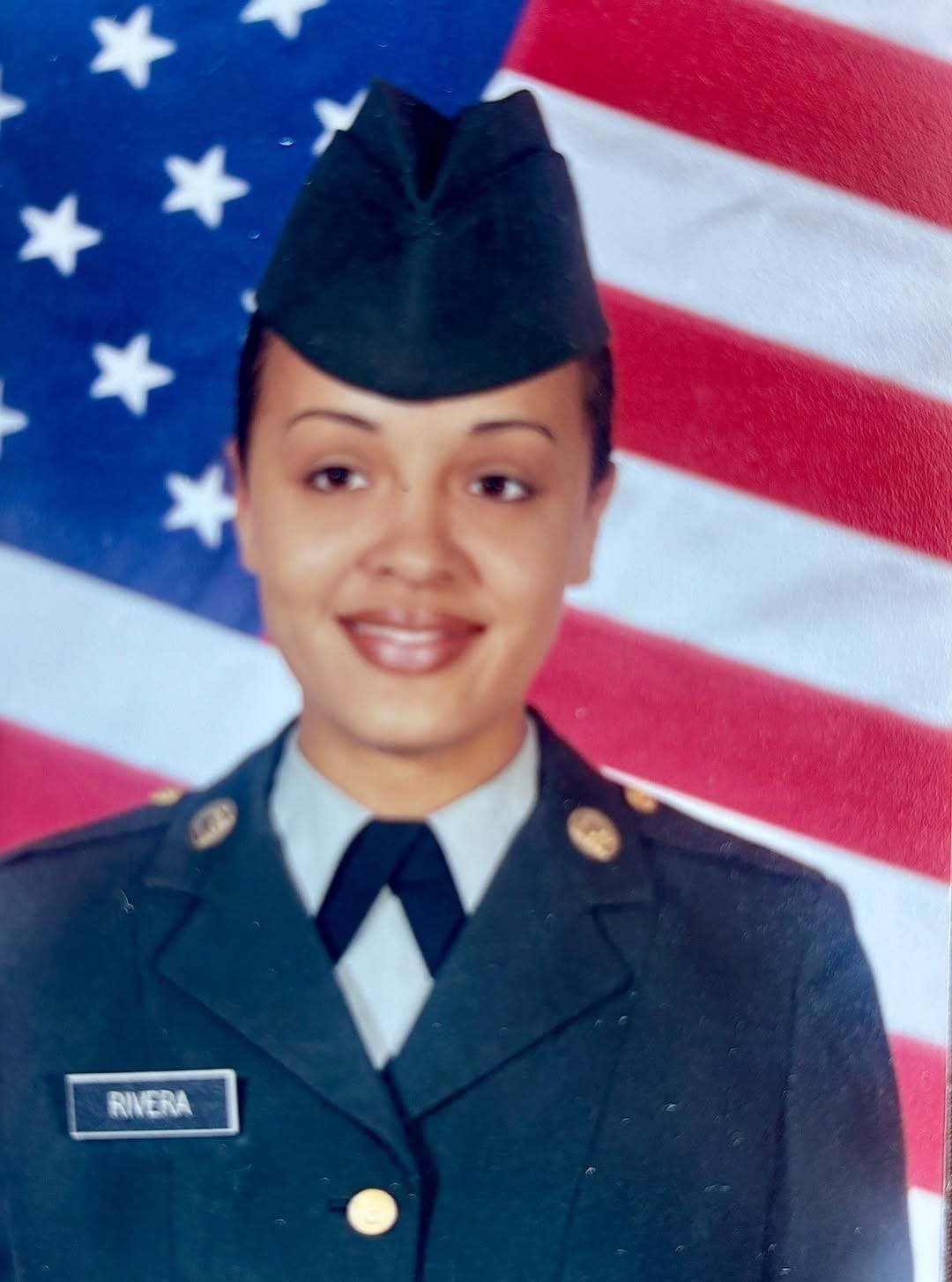
Both of your parents were active duty. How did food insecurity shape what dinner looked like at home?
A lot of people don’t realize the military is sometimes considered the working poor. The government tells you where to live, when to leave, how fast to get there — and the pay doesn’t always match. We were a family of five, and we ate accordingly. I learned to stretch a pound of ground beef. I learned powdered milk wasn’t pleasant but it would sustain you. I cooked with minimal fresh ingredients, often under pressure, in a home that was sometimes very chaotic. My first real “house meal” was spaghetti with green beans. I had a handle on it, so I made it again and again.
Then you went to culinary school. What was the gap between how you grew up eating and what you were learning at Baltimore International?
The gap between the haves and have-nots is massive, and we were peacefully residing in the have-not section. My dad retired right outside Andrews Air Force Base, and I was lucky to attend a vocational-technical high school with a culinary arts program. I’d been working in professional kitchens since I was 13 — bussing, dishwashing, expediting. Culinary school was a struggle. I worked a work-study job and two part-time jobs, woke up at 3 a.m. for the bus into downtown Baltimore, and got home near midnight. It’s odd, but I was basically starving — the places I worked didn’t comp meals, so I ate whatever we made at school and hoarded what I could. What I got out of it was fundamentals. Technique. The why behind every step. I went in expecting to graduate a chef and fell in love with pastry — partly because it’s meticulous, partly because nobody bothers you in a pastry kitchen. The biggest thing I took away: most people who say “I can’t cook” really mean “I was never taught the fundamentals, so I don’t have the confidence.” Once you have those, you can do almost anything.

You started Sense & Edibility in 2014, in the middle of an extremely hard season. Why then?
I didn’t even know food blogs existed. I had a shelf of cookbooks and never thought to search for recipes online. So when a friend told me to start a food blog because I write the way I talk, especially my explanations for people in the kitchen and following a recipe, I was confused. But the timing made sense. I’d been my mom’s full-time caregiver for six years before she passed. I was homeschooling the twins. My husband was getting deployed again and again. And nobody was hiring me — military spouses get jobs the least, because employers don’t want to invest in someone who’ll move in three years. I wanted what was in my head to live somewhere outside of it, a legacy for my kids and grandkids, and I wanted to use the degree I’d worked so hard to pay for. I named the site Sense & Edibility because Jane Austen was my mom’s favorite author and Sense and Sensibility her favorite book. When the name hit me, I knew it was right — and the people who get it, get it. That’s when I realized I was made to do three things: be my kids’ mom, be a chef, and be a writer. The last two finally dovetailed.
You’ve talked about coping with grief by sending cookies downrange to your husband’s soldiers and freezer meals to new moms in the unit. Looking back, was that avoiding grief or moving through it?
That is a question and a half. Grief is wild. Between 2010 and 2014, I had two losses to mourn. The first was my pre-diagnosed self — I’m the fourth of five people in my family diagnosed with MS. I’ve watched what it does in two of my aunts, my mother, and another family member after me. And there’s no worse illness for a chef, because the whole profession requires you to stand and use your hands. I had to grieve that. And to be perfectly honest, I didn’t. Then my mom passed and I had to grieve losing her. You don’t go from being someone’s caretaker — feeding them by hand, bathing them, giving them medication every two hours — to that just ending and being okay. So the grief hit hard, and it got dark. I actually stopped taking my MS medication out of stupid rebellion. I didn’t care — until 2024, when I had a flare and lost the sensation and the ability to feel temperature or texture in my left arm and hand — and that’s a big problem when you work with hot things. I’m learning to cut all over again. So in my grief, I caused more damage. I’ve been in therapy about two years now, and it’s helped. What I tell people: grief is going to come for you one way or another. It’s like the bill collector. You may as well do the work early. You only grieve what you once loved or what held meaning. There’s no shame in that.
You’re vocal about cooking with a disability and writing recipes that are actually accessible. What do you wish home cooks understood — including when it’s their own body that isn’t cooperating?
I lead from the front, so let me be honest. Part of my work in therapy is undoing a false sense of perfectionism. When you grow up the way I did, perfect was the standard, and missing it carried shame. I love food photography and styling a plate. But I always remind my readers: done is better than perfect. You have to eat. I take the picture so you’ll want to make the dish. Yours won’t look like mine, because you didn’t spend six weeks on plate presentation, and that’s fine. What I want is to hold your hand through the recipe — I won’t let you wing it. I have my kids test my recipes from the printed instructions, and they catch what I left out, like how long to stir until the custard sets, or what set custard looks like. It’s okay to mess up. One of my top-ranking recipes, a Puerto Rican pastry, took me three years to develop… and I’m a pastry chef, for crying out loud! So it’s okay if your béchamel takes a couple of tries. Last night I told everyone I wasn’t cooking. Then I corrected myself: I’m not sorry, I’m just not cooking. There are three other able-bodied adults in this house. Peanut butter and jelly with Doritos counts as dinner. (Unless your kid has a peanut allergy. Then don’t.)

Where do well-meaning recipe writers get accessibility wrong?
They don’t think about it. No judgment — you don’t realize how many things are inaccessible until you’re the one with the issue. A lot of developers don’t even consider that someone can’t see the picture they’re describing. If you’re not adding the alt text or the audio cue, you’re limiting your audience. People have already checked out, because you’re not meeting them where they are. When I write a recipe now, I’m thinking about people like me, who don’t have full dexterity in their hands. People who can’t see, who can’t hear, who have allergies, who can’t always afford the long ingredient list. I add visual, sound, and sensory cues. I tell people to buy the pre-cut onions and peppers, use the food processor. I hate calling it a cheat — it’s an option. Accessibility extends to money, too. I’ll teach you to make something in bulk and freeze it, because I learned freezer meals as a military spouse. If you have an allergy, I’ll show you how to pull the almonds and still enjoy the dish. The whole goal is: I want you to know how good this recipe is, so I’m going to make sure you can actually make it. Most writers only write from their own perspective. That’s understandable, but it costs you a community.
You’re a founding member of Eat the Culture, the nonprofit for Black culinary creators in food media. For a parent cooking a recipe from a culture that isn’t theirs — say, arroz con pollo from a Puerto Rican creator because their kid loved it at a friend’s house — what does respectful cooking actually look like at home?
Oh, I love this question, because I get heated about appropriation. People want to remove the creator from the dish. You can’t. Without me being a Puerto Rican cook, you don’t have an authentic Puerto Rican arroz con pollo to feed your child. So the recipe is the opportunity. Sit down with your kid, read the headnote everyone wants to skip past. Where does this come from? Who eats it, and when, and why? Educate your child. Don’t use words like “we’re elevating this.” Our cuisine doesn’t need to be elevated, even by us. If my ancestors could cook these dishes over open wood fires, what am I doing on my little gas range that’s special? I’m carrying it on. That’s all. And no — somebody from Wisconsin doesn’t have an authentic arroz con pollo passed down in their Swiss-German family. Pretending otherwise removes the people, the culture, and the struggle from the dish itself. If you’re not from the culture, the only respectful way is to learn from someone who is. Sit in a space of learning, then translate that to your child. Do that, and you’re raising a really dope human being — a cultured kid eating food from outside their own culture and respecting where it came from. [Check out this podcast interview with Marta: Eat Blog Talk, Diversity and Inclusion in Content Creation - How to be an Authentic Ally with Marta Rivera Diaz]

Real talk: when your kids were younger — homeschool, twins, deployments, your own chef brain — what did weeknight dinner actually look like?
It was about a year ago that I realized my kids have had a personal chef their entire life. They are not amused when I bring it up. When they were little, my daughter was extremely picky — she didn’t like meat, didn’t like bananas. But one of my jobs back then was cooking at a child development center on an Air Force base, where five-year-olds will tell you your tortillas suck. Humbling. It taught me that to honestly say a kid doesn’t like something, you have to offer it at least 10 times. I learned to be creative — I’d pretend we were on the Food Network and have the kids tossing salad or stirring rice. My go-to was rice and beans, cheap and filling, with whatever protein I could afford. They hated my Merlot-braised short ribs, but it didn’t matter; they didn’t have allergies, and we weren’t rich. Sometimes you eat what’s there. Still, I was a stickler for vegetables, soups, and dessert (all the things I didn’t grow up having) and for exposing them to different cuisines, which is how they got an expensive sushi habit at 13! I ended up raising foodies. My daughter, who refused to eat anything, will watch a nature documentary and ask, “I wonder what that tastes like.” Our rule: don’t yuck other people’s yum. They love liver and pig stomach. They’ll try anything twice. For parents whose kids are picky right now: be patient. They might surprise you.

A lot of your most-visited recipes (pastelón, pan sobao, quesitos, your homemade adobo) are deeply tied to your Puerto Rican heritage. Are there dishes you hope your kids will carry forward?
My daughter’s favorite is the quesitos. She can smell them baking from her room. She says they’re warm fuzzies — they connect her to me, and to Puerto Rico. My son loves the chuletas. Fried pork chops were my mom’s favorite meal: pork chops, white rice, black beans, salad with no dressing, and a warm Dr. Pepper, because the ice hurt her teeth. Every August 16th, on her birthday, I make that meal. It’s become one of those dishes that means home. There’s also my Merlot-braised short ribs, which always welcomed Hector home — from training, school, deployment. That was the meal he wanted when he came back. I ask my kids sometimes: which dish, when I’m gone, will you make to think of me? The ones they name are the ones I keep cooking.
What’s a cooking skill or technique you use constantly that you think every home cook needs?
Can I get two? Season your food, and caramelize. Marination is so underrated. Even in restaurants — if I bite into a chicken wing and there’s no flavor in the meat itself, I’m mad at you, because you had the time. Season the meat the night before you plan to cook it. It pays dividends. The other one is caramelization. Color equals flavor. Take the time to sear. Don’t be afraid of it — the pan’s going to smoke and look crazy. But when you flip the meat and see that brown sear, you know you’ve added flavor. Then you deglaze, break up those brown bits, and you’re building a sauce. So: caramelization and seasoning your doggone food.