

Order Up! A Conversation with Nephi Craig, White Mountain Apache Chef, Father, and Survivor 💪🏽
Nephi Craig talks to us about his new memoir, the meaning of "landscape is destiny", being a dad feeding his kids, and the quiet work of staying sober.

Small Bites: Pick up your copy of Our Knives Will Save Us: Dispatches from a White Mountain Apache Chef by Nephi Craig TODAY! [Bookshop, Amazon]
You can visit Café Gozhóó: 5624 N 1st St Whiteriver, AZ 85941
🥔 One Potato is a reader-supported newsletter - Subscribe for weekly Order Up! interviews delivered to your inbox!
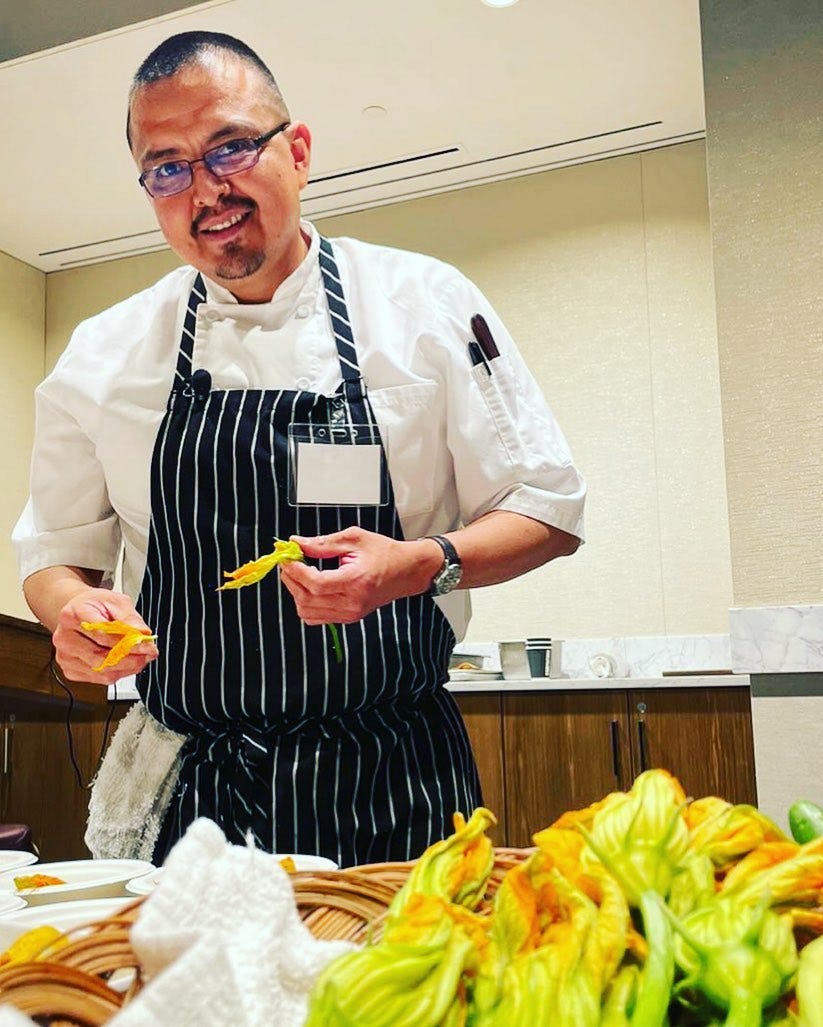
Landscape Is Destiny: Nephi Craig on Indigenous Food, Family, and Healing
Nephi Craig’s first book comes out today. It’s a memoir, Our Knives Will Save Us: Dispatches from a White Mountain Apache Chef, and the title is close to literal. There were long stretches of his life when cooking was the only thing holding him up.
He’s White Mountain Apache on his mother’s side and Diné on his late father’s, and he runs Café Gozhóó in Whiteriver, Arizona, a café and training kitchen built around recovery, where he coordinates a nutritional recovery program. He’s cooked all over the world, but the work he cares about most happens here, up in the mountains, a few hours northeast of Phoenix.
He started out baking with his mom and selling baked goods off a wagon. At eighteen, a judge gave him a choice between prison and work, and he ended up in a culinary program where an instructor told him Natives “cook, but it’s not cuisine.” He spent seventeen years in addiction, then stayed quiet about a decade of sobriety before he felt ready to talk about it.
Nephi’s connection to food, family, and his land is what brought him home, when he could have continued to travel the world as a chef after culinary school. He talks about feeding a family when you’re running on empty: cooking in survival mode, treating his kids’ snacks like medicine, and learning to see recovery as a human process rather than just an addiction story. This interview is only a small taste of his story; you can read more in his memoir. Trust us, you’ll definitely want more.
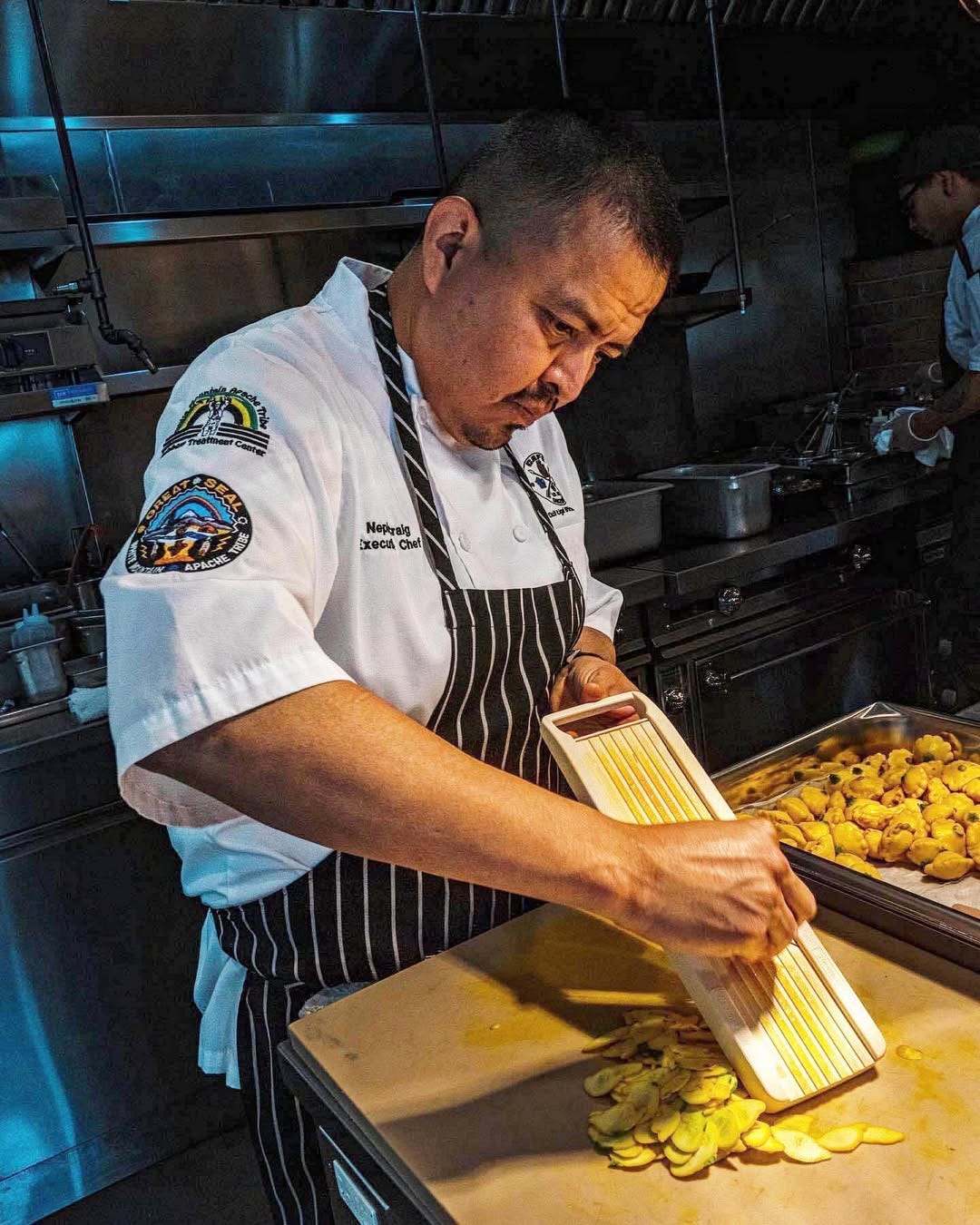
A Conversation with Nephi Craig, Creator/Chef of Café Gozhóó
Introduce Yourself: My name is Nephi Craig. I'm White Mountain Apache and Diné, coming to you from the White Mountain Apache Tribe, here at Café Gozhóó.
I've been cooking professionally for 28 years. I started straight out of high school in 1998. I have three kids: my oldest is 22, and I have a nine-year-old daughter and a seven-year-old son.
Who was feeding you growing up?
Mostly my mom. My dad was more of a utility cook. He was a Marine, a goulash master who’d throw whatever together. But my mom did a lot of cooking, and I learned through baking with her. We baked partly for treats, but also to sell and make a little extra money. People knew that when they saw me with the wagon, we had something for sale, and I loved their enthusiasm.
It was also an escape — one-on-one time with her when she had so much else keeping her busy. She’d tell me stories about growing up, about where she got her cookbooks. And a baking session made everyone in the house happy. Food really does bring people together.
Your mom is White Mountain Apache and your late father was Diné. Did the food traditions show up differently?
Very differently: culturally, linguistically, and in the kitchen. Up on Navajo land, the stews are based on mutton. Lots of mutton stews, fry bread, pozole and hominy. Hearty, homey cooking. Down here in Apache land, it’s more beef. Beef stews, beef gravies, fry bread, tortillas, cornbread.
What’s interesting is that nobody really talked about how we got sheep, or cows, or flour, or lard, none of which are indigenous to the Americas. My dad knew history and politics, so my parents would bring it up on the side. By the time I started thinking seriously about food, I already had those reference points. But there wasn’t really much education around it at all, not even as Indigenous kids. Two distinct styles of cooking, two distinct cultures.
You use the phrase “landscape is destiny.” What does it mean?
For Indigenous people, it means our ancestral landscapes are a mirror of who we are. For thousands of years, the land shaped our language, our diets, our clan system, our whole cosmology. Colonialism shattered that mirror and displaced people. And when you lose access to land, you lose the nutrition, the agriculture, the rivers, the hunting and fishing, all of it.
So when we reconnect to land, we have ‘access to care’. That’s how I frame it clinically. When you see the “land back” movement, that’s real, but to me it’s also access to care, because the land holds all the healing that was here before colonization.
And it applies to everyone. Wherever you live, if you dig into the true history of your region, not the American narrative but the real social history, you understand where you are much more deeply. Hopefully that changes how you treat the land, how you shop, how you build traditions with your family.
At 18, you were in trouble with the law, and a judge gave you a choice: prison or work. You chose culinary school. What made you stick with it?
I ended up going to school as a full-time culinary student and working full-time in a cooking job simultaneously, out of necessity. People usually expect a lovely “cooking with grandma” story, and part of that’s true for me. But I went out of pure necessity. My grades were bad. I was a rowdy skater, hip-hop, punk rock kid whose only plan was to land a skateboard sponsor. When that didn’t happen, I looked at it logically: I’d been cooking my whole life, so I’d try cooking school.
I ended up loving it. Everything was new: the language, the culture of the kitchen. I was blown away by the set of knives I had to buy. I’d carried a pocket knife my whole life up here in the mountains, but this was a different world. I didn’t know what a bistro was, or a risotto.
What I realized was that I was good at it. There were kids with nicer cars and more money than me (I didn’t even have a car, I got around on my skateboard and hopped rides), but I could cook, work hard, stay organized, and not complain. My knife skills were good. I loved the rigor: being fast, being tough, and still making this beautiful art you could eat.
When did you realize you were working with ingredients native to the Americas, like tomatoes, cacao, and amaranth?
It started in culinary school. They were force-feeding us French and Italian techniques, all very Eurocentric, and I’d grown up on two reservations where food was communal, out of necessity. Natives aren’t restaurant-culture people. The restaurant is a colonial construct.
So I asked my instructor, “Chef, is there such a thing as Native American cuisine?” His answer was dismissive: “I know you make fry bread and boil stew.” I took it as: you cook, but it’s not cuisine, it’s less than. I didn’t say anything, but my intuition knew otherwise. Our creation stories, our clan system, our ceremonies all involve food.
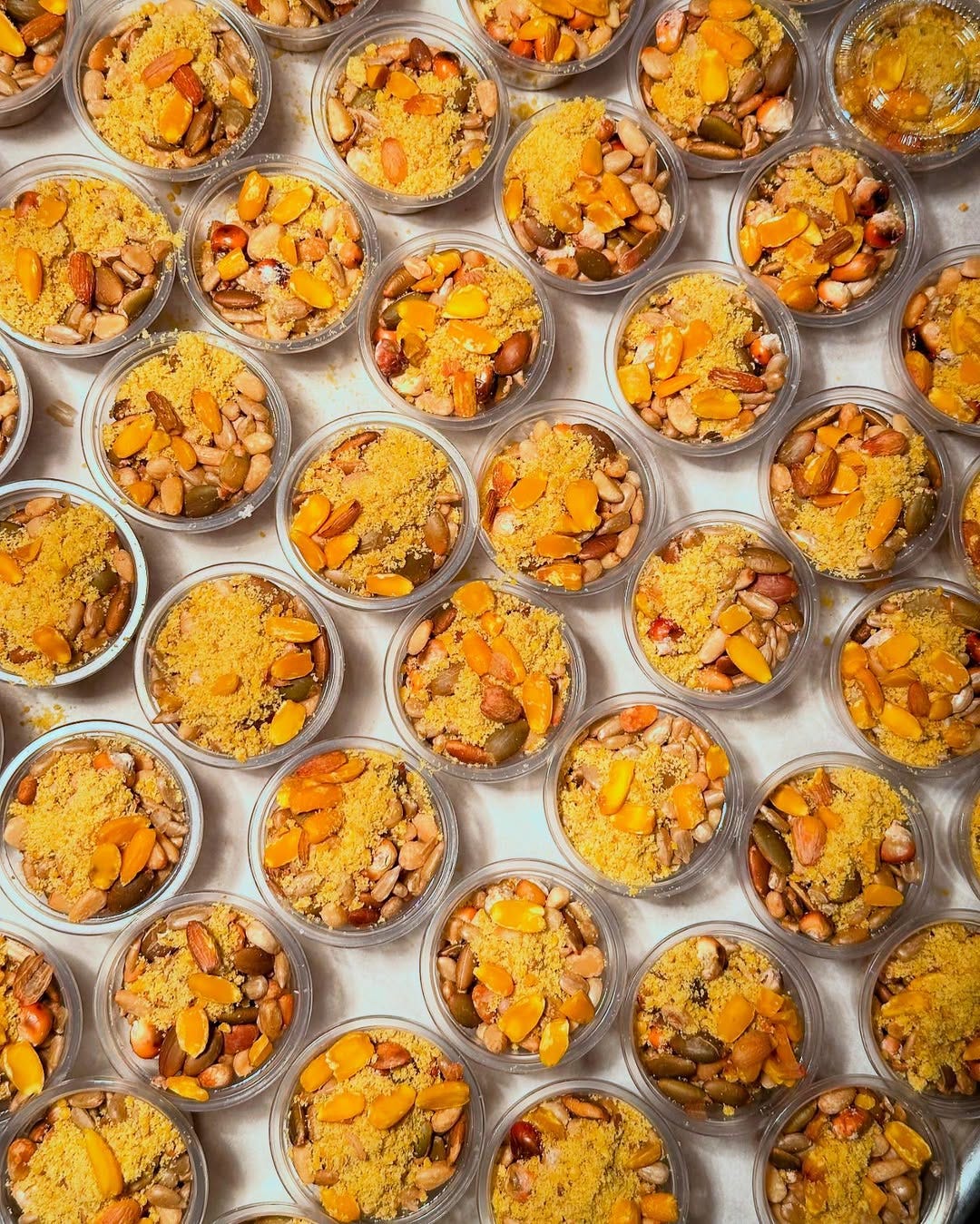
So I started asking my own questions. What did we eat before Americans came? Where does our food come from? I went to the library, asked family and friends, pieced it together. And when I found out that cacao, amaranth, quinoa, potatoes, and tomatoes are all indigenous to the Americas, it gave me a pride and strength I didn’t have before. Growing up here, we didn’t know that. The disconnect was that deep. It opened up doors of creativity and possibility. It gave me hope.
Café Gozhóó is a café and a training kitchen for people in recovery. Why did you start it?
For years I networked and promoted Native American cuisine, and helped run conferences for the Native American Culinary Association in the spirit of ceremony, so we could see each other and know we weren’t alone. As they grew, they got too commercialized, and the audience became more non-Natives consuming this ancestral knowledge than us. So I pulled back.
That came right as I got sober. From the time I was a kid until I was 31, I dealt with addiction, about 17 years of ups and downs. I’m a high-performing addict: I can do very well until it all crashes, and it crashed often. After my dad died, I decided to go down a path that mirrored my own life.
I remembered how many chefs dismissed addiction, stigmatized you, dehumanized you if they knew you were in recovery. And I’d seen firsthand how working with Native foods changed people. All of that distilled into the nutritional recovery program I coordinate now. When we launched the concept in 2017, we were already past the conversation everyone’s having now about racism, glass ceilings, and abuse in kitchens. I never set out to come home and work at my tribe’s treatment center. But following the foods brought me here, right into the heart of one of the toughest reservations in the country.
For parents stuck in survival mode, fighting picky eaters or feeling like nothing’s ever good enough, does any of this translate to family life?
It does. Survival mode means fight, flight, freeze, or disappear. In that high-stress state, our bodies can’t even absorb nutrients well, because the blood and energy go to our extremities. So the little food we feed our kids isn’t being maximized.
Creating safety at home and in the kitchen is our job as parents. Season the food with smiles, stories, and laughter. And when our kids help, it forces us to slow down. I get it. Sometimes I’m hungry too and just want them fed. But letting them help passes on the skills.
When I talk about recovery, I don’t just mean drugs or trauma. Recovery is human: psychological, spiritual, emotional, and hands-on. Getting out of survival mode is maybe 90% behavioral. The healing is in the doing, not the talking. Food is a great way to do it, because it equalizes everyone and makes the house feel warm. That’s powerful, and not just with Indigenous foods. It’s food for all of us.
You call yourself a practitioner and a student, not an expert. For parents who feel like they should know more about food, what would you want them to take away?
Cooking with your kids is something special. They’ll remember it for the rest of their lives, and cooking is a life skill, not just a profession. It lets kids feel independent, expands what they know, and lets them internalize a little of you. It’s literal, edible education that’s emotional, physical, and spiritual.
You don’t have to sit your kids down and explain all that. You just know it’s happening when you turn on the stove. Season the food with a smile and some humor, and for those couple of hours, keep it safe and peaceful. Turn off the TV, cut the distractions, enjoy it. They might not say anything when they’re young, but they’ll remember. And there’s a strong chance they’ll do the same with their own families.
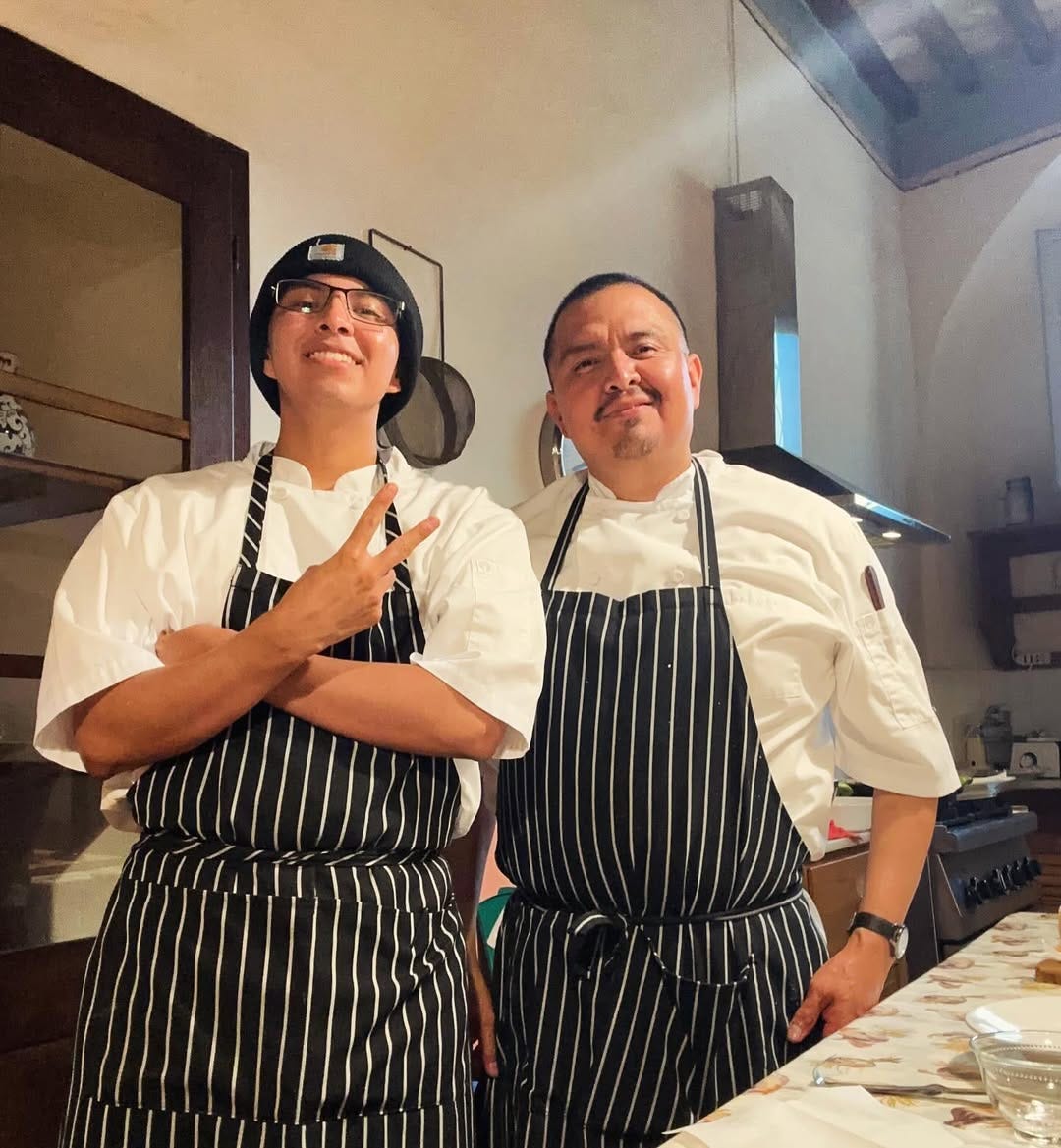
Does your oldest son cook?
He’s 22 now, and he grew up when I was still in active addiction, so it’s a night-and-day perspective for him. One of my proudest things as a dad is that he’s watched me make it through hard things with some dignity, without using pity as a crowbar, without “poor me, I’m a single dad.”
He’s out on his own and works at a ramen spot in Flagstaff. He never said he wanted to cook, but he’s gotten into it, and I’m happy with that. My dad never forced me to be like him, but I picked up a lot of him anyway. I hope it’s the same for my son. I told him I want him to teach me about different ramen broth techniques.
Is there a food tradition you’re passing down to all three of your kids?
Always blessing the food. Turning off the TV, no phones at the table. To me, prayer is the behavior of gratitude. It doesn’t matter what you’re praying to. Saying out loud what you’re grateful for matters. We bow our heads real quick at breakfast, lunch, and dinner.
It’s not about organized religion. It’s about nurturing our own sense of spirituality. My 22-year-old’s version will be different from mine, and I don’t want to force mine on him or on the little ones. But if they carry that behavior into their own families, it’ll bring them closer and make them healthier.

Your memoir is called Our Knives Will Save Us. Where did the title come from?
We threw around a lot of titles, but settled on this one because it’s the honest truth. Many times I used this chef uniform as an excuse to mess things up. But when everything fell apart and it got very dark, I knew at least I could cook. At least I knew how to use a knife. At least I could eat somewhere if I had a job. My training wasn’t just in restaurants. It was on the streets, in institutions, in recovery circles.
I use it in our recovery groups all the time: your mind is like a knife. Keep it sharp and take care of it, and it’ll last for years — you can feed your family, protect yourself, do a lot. But a knife can go dull, and your mind can become a weapon that destroys. Which side do you want to be on?
What was the hardest part of the book to write?
A lot of it. I’ve never felt this vulnerable in my career. For ten years, I never spoke about being sober, partly because I’d relapsed so many times, and partly because of the stigma. I wanted to prove to myself I could stay clean for a decade before I said it publicly. So that’s what I did.
I wanted the book to be about cooking and colonization and a chef’s life. It has my world travels, Navajo Code Talkers and Apache Scouts, the French Laundry, Michelin and other renowned restaurants in it. But at its heart, the hardest part was telling a story about addiction and recovery without glamorizing it. I wanted it to be a story of survival to survivance, because there were many times I was down and out and found a book that made me feel less alone. I wanted to leave that for someone else.
Is there one cooking skill you think every home cook should know?
Run the dishwater first. Clean as you go. If you let the dishes pile up, everyone’s miserable at the end. Work clean, and cooking gets a lot more enjoyable.