

🌭 Order Up! A Conversation with Noah Galuten, Cookbook Author, TV Host, and Chef-Dad Who Overthinks It So You Don't Have To
Noah Galuten on grilling for the family, why curiosity beats compliance, and the freedom of giving up on being the perfect food parent.

If you’re as excited as us about Noah’s new cookbook, Grill Time!: Why You Should Be Grilling for Better, Healthier, Easier, and More Delicious Meals, then make sure you see him on his book tour! See where he’ll be, and grab a ticket here!
Small Bites: This year’s #LifeSkillsNow camp goes places we did not see coming — there’s a three-part series filmed inside a suit shop teaching young gentlemen how to pick, wear, and care for a suit. Plus chivalry, table-setting, and writing a real letter on real paper. Free virtual camp from Raising Healthy Families. 👉 Register here
🥔 One Potato is a reader-supported newsletter - Subscribe for weekly Order Up! interviews delivered to your inbox!
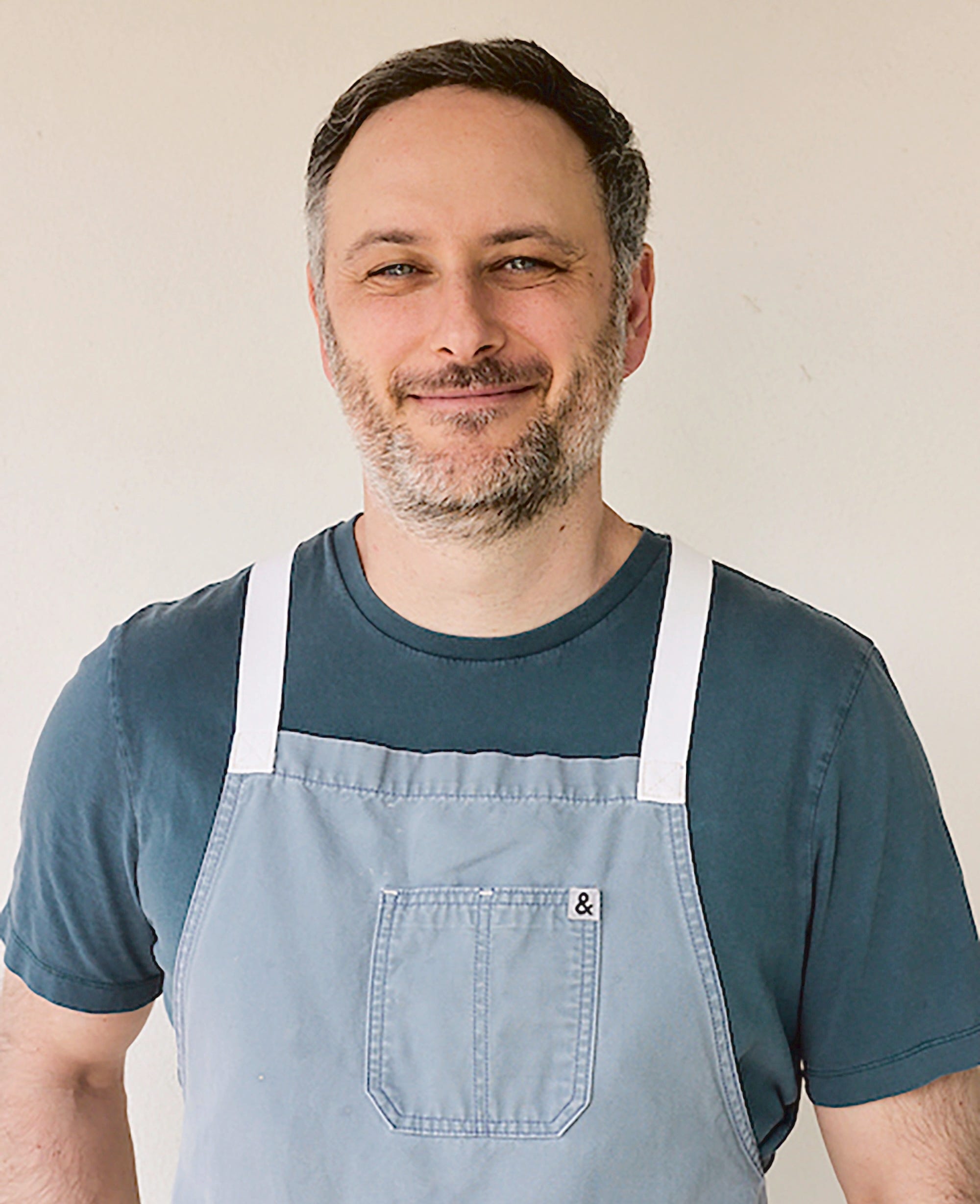
From Vegetables to BBQ to Bedtime: Noah Galuten on what changes when feeding a family becomes the lens for everything you cook
Noah Galuten is a cookbook author, TV host, and chef whose Substack bio reads “feeding my family and overthinking it so you don’t have to.” Reading him, you get the sense he’s not here to save you from anything. He just refuses to pretend it’s easy.
Noah trained under three of the best mentors in completely different worlds: vegetables with Jeremy Fox, barbecue with Kevin Bludso, pizza with Frank Pinello. He helped write On Vegetables, opened Bludso’s Bar & Que, wrote Don’t Panic Pantry, and now writes I’m Legally Required to Feed You on Substack. His new book, Grill Time: Why You Should Be Grilling for Better, Healthier, Easier, and More Delicious Meals: A Cookbook, lands in May, 2026. He also co-hosts the podcast “Food Parents” with Lesley Suter, hosts BBQ Smokeout on Tastemade, and is raising a two-year-old and a four-year-old with his comedian wife in LA.
It’s the reality of feeding a family while doing five million things simultaneously that really resonated with us at One Potato; he doesn’t pretend to have it figured out. He’s honest about the gap between knowing what’s nutritious and getting a four-year-old to eat it. He thinks about fiber. He thinks about why you should salt your steak two days before you cook it. This is a conversation about reordering your priorities once kids show up, and why a little planning ahead might be the most useful skill in the kitchen.
A special note from our friends at Raising Healthy Families:
The Skills That Schools Don’t Teach Anymore
Most parents we know are quietly carrying a list of things they wish their kids were learning — how to handle money, how to fix a hole in a sock, how to set the table for a holiday meal, how to talk through a hard conversation without shutting down. The list keeps growing, and the school day keeps shrinking. Katie Kimball built #LifeSkillsNow because she was watching the same gap.
Season 5 brings 100+ free workshops from over 70 experts, organized into tracks like Finance, Etiquette, Hands-On, and a brand-new Leadership lineup. Each workshop ends with an off-screen “mission” so the learning actually moves out of the screen and into the kitchen, the garage, the backyard. Camp officially opens June 8, but registering now opens up 15 early-access workshops you can start this weekend.
👉 Register free for #LifeSkillsNow Season 5
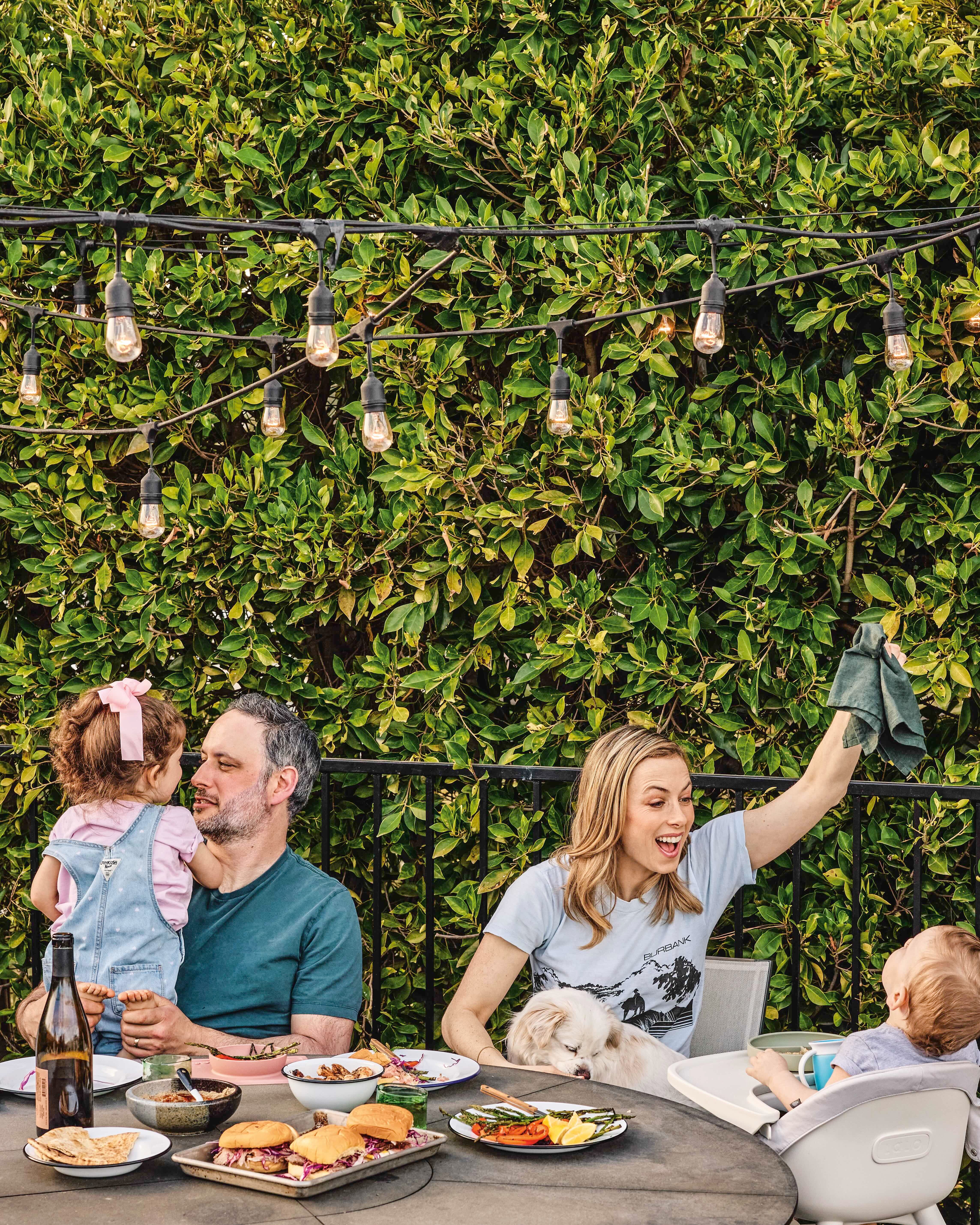
A Conversation with Noah Galuten, Chef, Restaurateur, & Cookbook Author
Introduce Yourself: I’m Noah Galuten.
I'm a cookbook author and writer, and now also a television food show host. I've got a two-year-old son, a four-year-old daughter, a dog of indeterminate age, and a wife who is my age.
What did food look like growing up, and how did you get into cooking?
My parents divorced young, so I bounced between two homes. My mom was the serious food parent; her mother was from Italy, making me one-quarter Italian. I grew up on this California–New York–Italian filter: turkey bolognese, beans and tomato sauces, minestrone.
Growing up in LA, the movie thing was demystified for me. But cookbook authors and PBS chefs like Lydia Bastianich — those felt like a different world. I studied literature and playwriting and cooked for everyone in the dorms. When writing didn’t take off, I ended up writing about food for local papers, $40 a blog post, while waiting tables.
How did I become a chef? I interviewed Kevin Bludso for LA Weekly, we hit it off, and decided we needed to bring real Compton BBQ to LA. I was originally going to be the GM, by the time we found a space I had been training for months on the BBQ; Kevin said I was the only person he trusted with his food…so I became the chef. Seventeen panic attacks later, it worked. After that I was culinary director for a restaurant group, then helped Jeremy Fox write On Vegetables. The pandemic hit, my book stuff started taking off, we had kids. Writing cookbooks from home felt better than being in a kitchen 110 hours a week.
You named Lydia Bastianich, Marcella Hazan, Edna Lewis, and Ming Tsai as early influences. Anything you didn't fully understand about their work until you started cooking for your own kids?
Once you cook for your own kids, the first instinct is to cook what you ate growing up. The food that’s loaded with memory. I did the homemade baby food thing because it wasn’t that hard for me — farmer’s market produce and chickpeas, blended, portioned, frozen. Once a week, done.
But I think about more than nutrition now. I want my kids to have a healthy relationship with food. I don’t want to be the dad yelling about broccoli, only for them to leave home and house Snickers bars in college. And I try not to be the dad who sneaks vegetables in. I want them to actually understand what’s in their food. The hard part is recipe development is hard to do with a four-year-old. It’s “Daddy, can I help you cook?” And that’s amazing, and also… not right now, Daddy’s working! Ha!
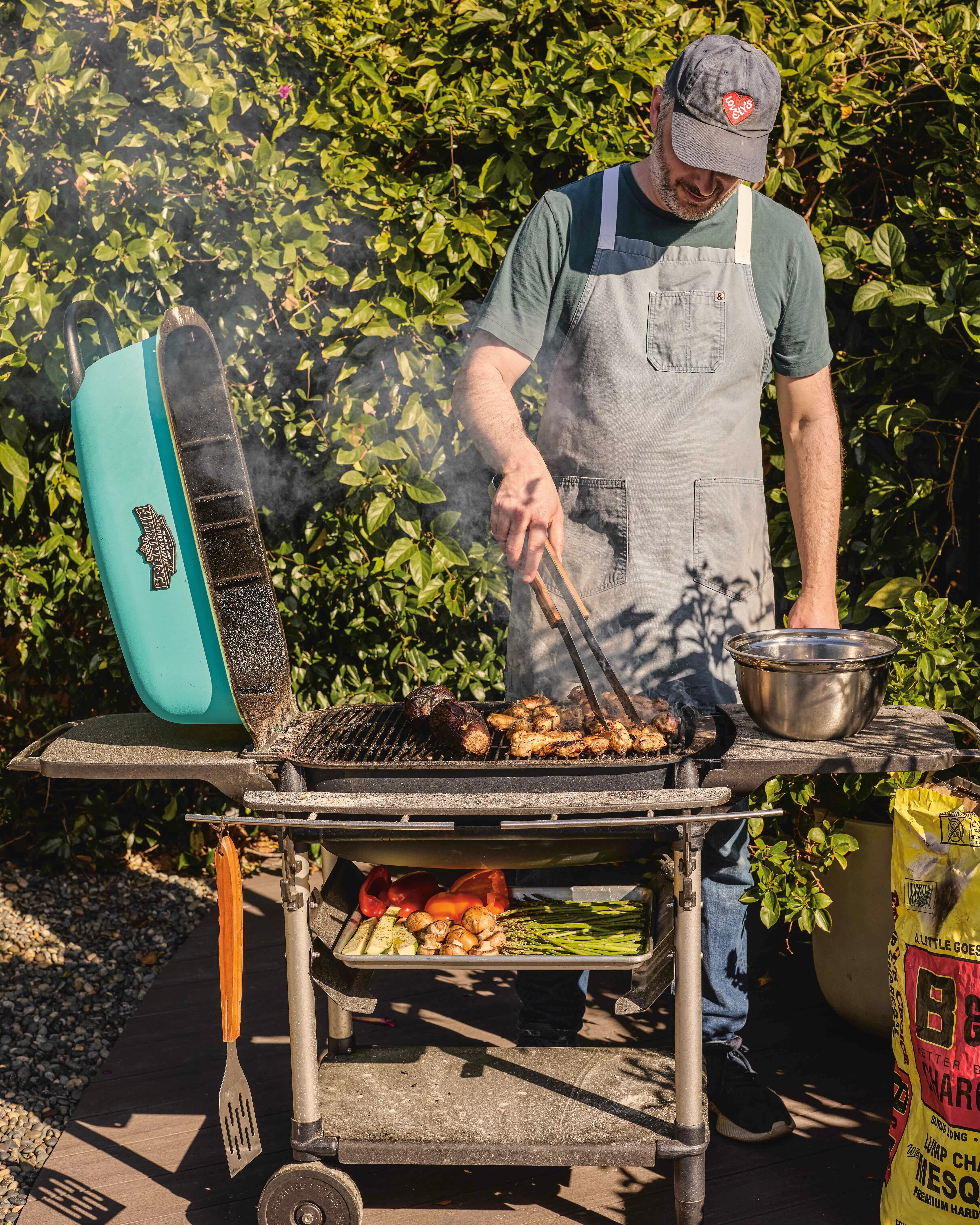
From On Vegetables to Bludso's to Don't Panic Pantry — what's the thread for you?
Curiosity really. That’s it. I’ve been incredibly lucky in the breadth of mentors: one of the best Michelin vegetable cooks, one of the best barbecue people, Frank Pinello on pizza, Ari Kollender on seafood. Now I’m writing about pizza and vegetables with Sarah Minnick in Portland, which is a dream.
You learn from incredible people, then filter it through your own taste and what you care about. Sometimes the journalistic side comes back in — I once spent a year and a half reporting on what’s in a box of chicken broth. Right now I’m reading a lot about ocean farming. Having kids focuses everything. The longer-term effects of what I do matter more now.
What inspired you to launch your Substack, I’m Legally Required to Feed You? To write about the dad side of the equation?
Part of it was wanting more autonomy with my writing and income; pitching less, doing what I want. But the subject was obvious. Once you become a parent, everything you do gets filtered through that lens. Speed, nutrition, sustainability, money — it all runs through what I’m making for my family.
Every once in a while you hit on a dish everyone in the house likes, and you think, now I get why people find three dishes and rotate them every week. But the moment you feel like you’ve figured out how it works with your kids, it changes. The parent thing where someone tells you, just wait, six is brutal; or just wait, pre-teens are coming. I think the real reason that works is nobody remembers what happened two years ago. They’re talking about what’s hard right now.
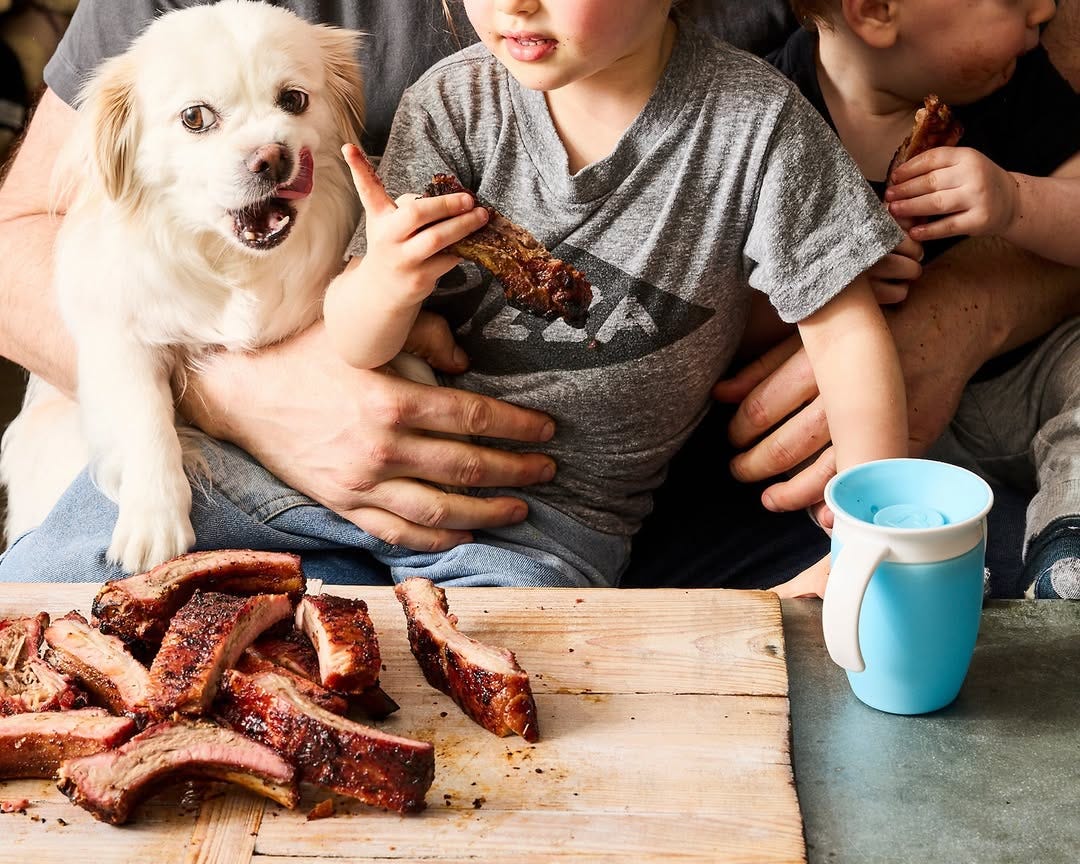
You've described the Substack as breaking down the trade-offs between pleasure, nutrition, sustainability, money, and time. How do you do that math on a Tuesday night when everyone's tired?
Set yourself up for success, or at least try to make things a little easier. Stock your freezer and pantry with things you can throw together in a pinch. The most dad thing about me happened before I was a dad: I got a reach-in freezer in the garage. When I make chicken stock, I make a lot. Same with tomato sauce and soups. I just made a giant pot of split pea soup, and of course nobody else wants to eat it. So it's me eating soup alone while feeding everyone else something else.
Your bio is “feeding my family and overthinking it so you don’t have to.” What’s one thing you’ve overthought and figured out, and one thing you’ll keep overthinking forever?
I’ve become a fiber acolyte. Long-term health, all-cause mortality, body function — fiber is one of the most beneficial things you can do. A lot of the highest-fiber foods — lentils, split pea soup — my wife and kids are not pumped about. Our house turns into a lot of bean work.
The thing I’ll keep overthinking is the balance. There’s a tipping point where you over-vegetable something and they eat none of it. In my twenties in New York, when I wanted pasta, I’d try to force a bunch of zucchini into a tomato sauce that didn’t need it. Eventually I figured out I’d just eat two raw zucchini while I cooked dinner. That doesn’t work the same way on kids. But I’ll catch myself saying things like, eat your garlic bread and then you can have more broccoli — which doesn’t totally make sense, and also does, because if they just eat the broccoli they’ll be starving later, and I’d like to sleep tonight.
On the Food Parents podcast, you’ve talked about your house rules: no short-order cooking, most dinners get made in the kitchen, shortcuts and store-bought are okay. Which has been hardest to hold the line on?
Short-order cooking. I gave up on it at breakfast — they want different things, I have it dialed in, I just make it. Dinner is harder. There’s a stress around it I’m still trying to handle better. You end up with the whole dinner being you telling people to eat their dinner, which is not a great way to eat dinner.
My son’s a monster who shoves food in his mouth. My daughter holds court and barely eats. My solution has been: do whatever you want, but if you’re hungry later, this is your food. The kitchen’s clean and she’s still nibbling one noodle. You can fit eight in your mouth. I promise. A lot of it is learning how to model the behavior I want from them. Your energy and your mood are the loudest thing at the table, and I’m not always great at that.
One of your pieces of parenting advice has been that it’s your job to say no — and to teach your child how to hear and live with no. How do you do that at the table without making dinner a fight?
Saying no to a treat is easy. You can be upset, we’re not going to fight about it, you’re just not having that. The harder one is fighting them into a yes. I don’t want to force them to eat anything. But I do want them to try. Our rule: you don’t have to like it, but you have to try it. A real bite — you can’t lick something and know if you like it. Chew, swallow. Now you have an opinion.
And the big one I’ve learned — don’t reinforce the things they say they don’t like. If a kid says, I don’t like mushrooms, and the next time you’re at the store you go, oh, we can’t buy these, you don’t like mushrooms — you’ve locked them in. I tell my kids taste changes. Things I didn’t like as a kid I like now. I keep reintroducing. They don’t have to like it. But it’s an open conversation, not a rule. My daughter didn’t like raisins for six months. And then she did.
You’ve talked about wanting to build a family food culture that protects a healthy body image. What does that look like in practice?
The truth is I don’t fully know yet — I’ve got tall, skinny kids with great metabolisms. For me it’s about balance and exposure. Sometimes the value isn’t nutritional, it’s cultural — going to a Korean restaurant and having them try something we’d never make at home. Trying things. Reintroducing things they didn’t like six months ago. Not making anything a permanent rule. That’s the conversation I want to keep open.

Your new book is Grill Time! What makes the grill faster for weeknight family cooking?
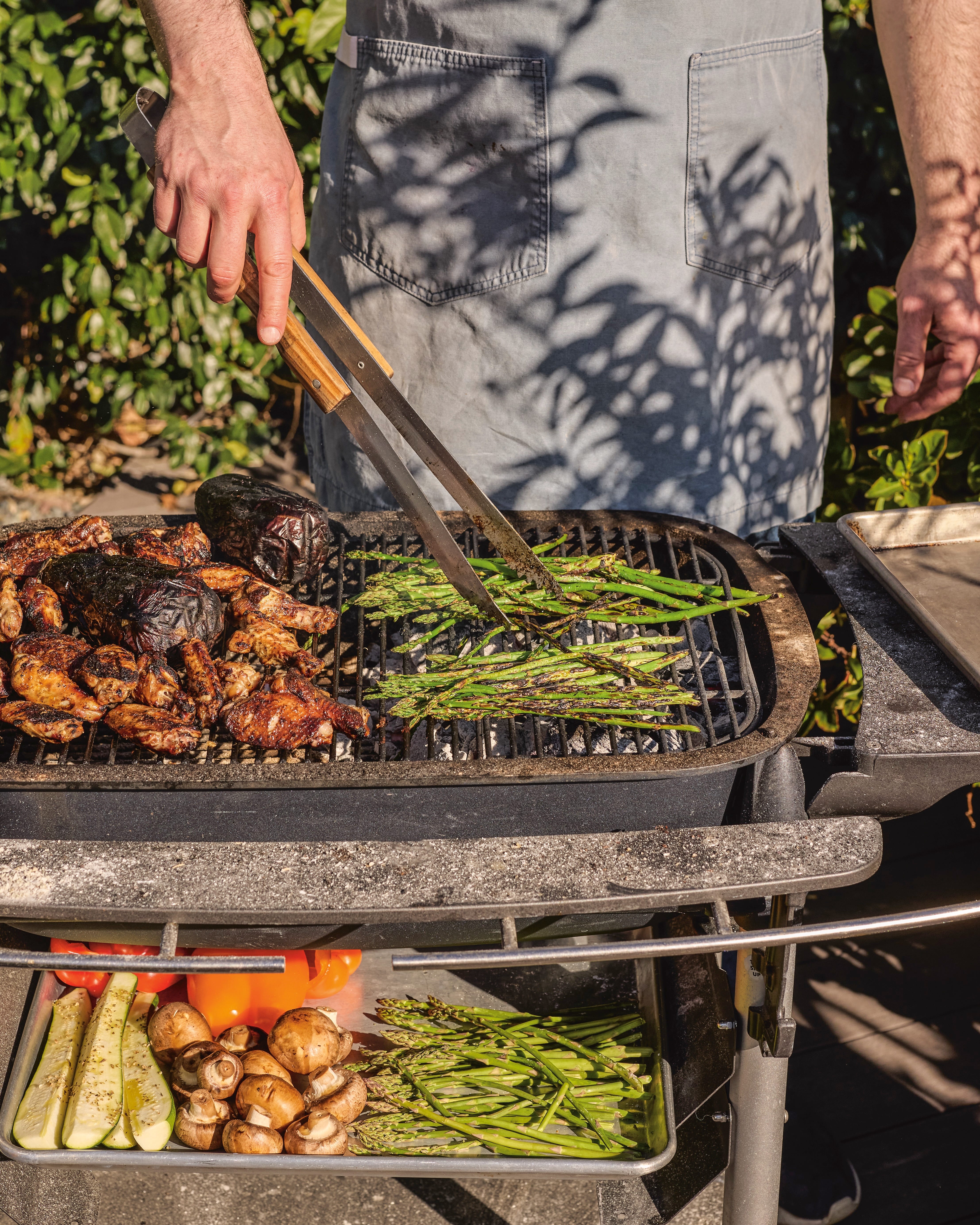
Two things. Cleanup — brush the grates and cleanup is done. No oil spatter, no four pans to wash. And you can cook multiple things for multiple tastes at once. Chicken, shrimp, and asparagus on the stove in three pans is a nightmare. On different sections of the grill, it’s nothing.
Pair the grill with a rice cooker. Put rice on, go outside, grill chicken or steak or mushrooms or asparagus or cauliflower, come back with a tray of food, hot rice waiting. That’s a huge move. Writing a grill book as my second book meant I got to draw on every technique and mentor I’d had my whole life. It poured out of me.
You’ve written that 40% of the recipes are vegetarian. Intentional, or did it just come together that way?
That’s just how I cook. I’m probably 60–70% vegetarian in my own life. With grilling, the lazy assumption is meat. You can have seven chicken recipes; you can also have seven vegetable recipes.
I’m a less-and-better person when it comes to meat at home. Higher quality, smaller amounts, used to accent a dish. Joking aside, there’s a version of this book that’s just put olive oil and lemon juice on things and throw them on the grill. My parents were hippies. My stepdad’s still vegetarian. My wife wants to be vegetarian but craves meat. I’m pretty sure mine is the only grilling cookbook in history with a split pea soup recipe.
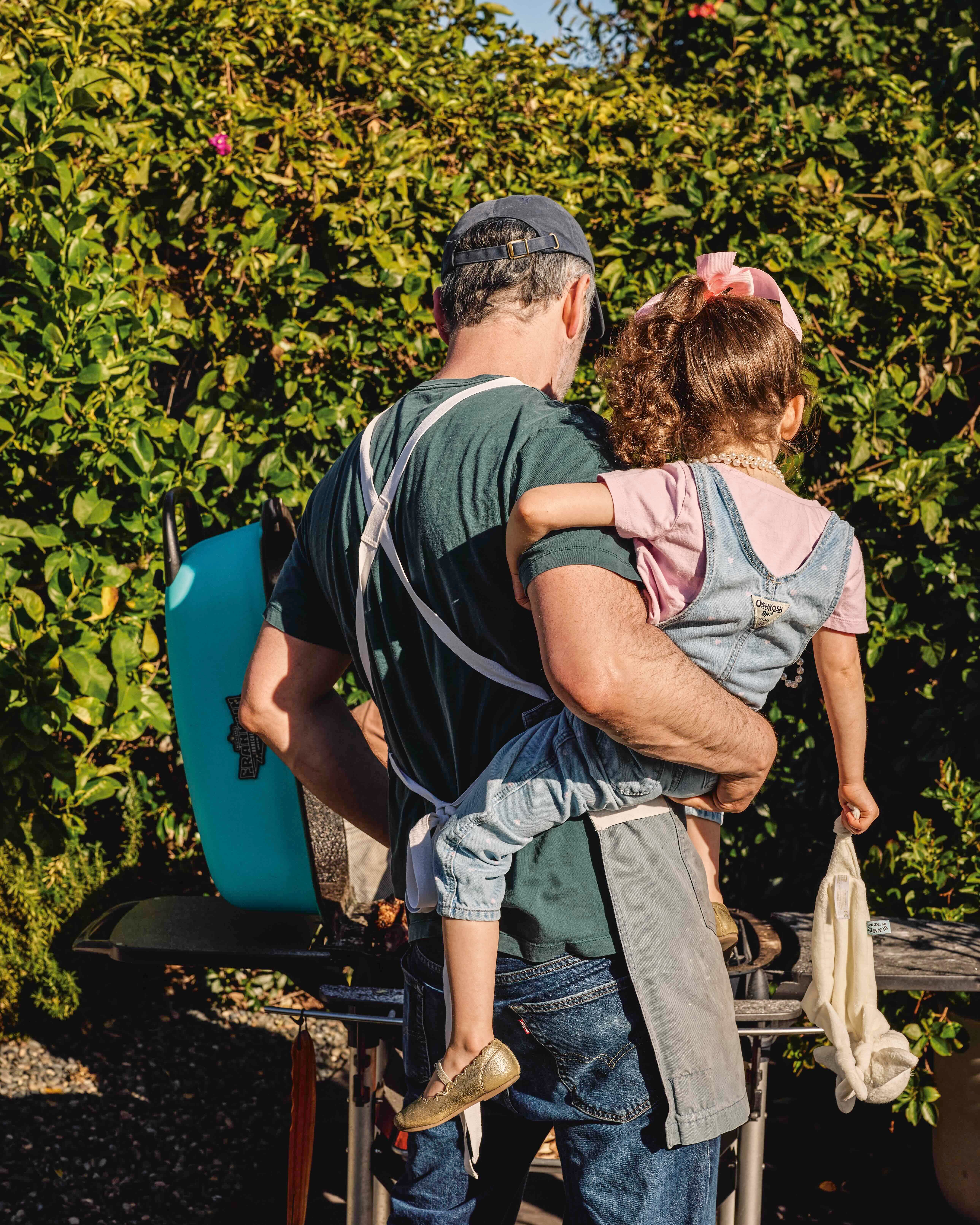
The book has a recurring feature called Dad Hacks. What’s in one, and what would you tell a parent who hasn’t really grilled before?
A Dad Hack is something practical that makes the whole thing more doable. Having a rice cooker going while you’re outside is one of the best moves you can make.
The grilling-specific one: most gas grills don’t get as hot as a restaurant grill or even your own stove. So if you try to get crust and char on both sides of a burger or asparagus or broccolini, you overcook it before the second side colors. The fix is to commit to one side. Let it go until it’s gorgeous, then flip it for 30 or 60 seconds just to finish. You’ll get the texture you want without overcooking.
Forethought is its own Dad Hack. If I have an hour while the kids are still asleep, I can throw a marinade together and dinner is mostly handled by noon.
You co-host Food Parents with Lesley Suter (though currently on pause for your book tour!). What have you only understood by interviewing other food-writer parents out loud?
That you have no control over what your kids do. Whenever I talk to parents of twins, I’m like — your kids are completely different. Maybe just let it all be what it is.
What I love about the show: Lesley was a hardcore food parent when her kids were the age mine are now. Then it gets beaten out of you, and you become Instacart McDonald’s mom. So she’s rooting for my failure to make her feel better. And I’m digging in to prove her wrong. That’s real parenting — turning parenting into a blood feud with a dear friend.
When your kids are adults and they think back on the food of their childhood, what do you hope they remember?
I hope some of the food I loved is the food they loved. But the bigger thing is I want them to know how to feed themselves. There’s a lot I can’t control, but if they can do their own laundry, cook themselves a meal, and say please and thank you, I’ll have done okay.
What’s one cooking skill or technique that every home cook should practice?
Forethought. Small steps in advance change everything.
If you’re cooking a steak in two days, salt it now and put it in the fridge. If you’re roasting or grilling a whole chicken, salt it and let it sit open-air. It seasons the whole thing through, dries the surface so you get better color, and preserves it a little longer. If you’re shopping Monday and cooking Wednesday and wondering whether you can buy it two days early — yes. Salt it, fridge it, you’ll have a better dinner.
The other: freeze things when they’re at their peak, not right before they go bad. A big pot of soup or sauce or ragù — freeze what you know you won’t eat that night. And don’t be afraid to freeze something and wait until you’re actually excited about it again. The fourth night of minestrone is a slog. Freeze it. Pull it out in two weeks. Dinner’s ready. You’ll feel like a hero.