

🍕 Pizza Pi Lab: A Hands-On Pi Day Kitchen Activity
Turn lunch or dinner into a Pi Day math lab that’s warm, practical, and actually doable!

Get ready for more of the One Potato recipes you love — delivered right to your inbox! Coming soon, we’ll be sharing weekly and daily recipes, complete with our signature substitution notes, dietary considerations, and small tips that make busy weeknights feel more doable.
Small Bites: Raising Healthy Families
“How can we help you be the intentional parent you want to be today?” That’s the question behind Raising Healthy Families — a new home for trusted programs from Katie Kimball and our favorite Kids Cook Real Food programs. Their new website makes it even easier to find the life skill and course that’s right for your family, including Kids Cook, Teens Cook, Healthy Parenting, Life Skills, and Picky Eating. It’s a thoughtful place to explore support that meets your family right where you are.
Revisit Last Year’s Pi Day Activity and Recipe: Pi Day Savory Fun: Sausage & Onion Pie with Cheddar Pastry 🥧✨

Most Pi Day “activities” feel like worksheets that live in backpacks, not the kitchen. But this activity takes your pizza (homemade, store-bought crust, or take-and-bake) and turns it into a simple kitchen math exploration. Today, you’ve got a built-in opportunity to make math feel real without extra fuss.
This activity meets kids where they are: curiosity + food. And it doesn’t require special supplies, just pizza and a little measuring tape or string.
🍕Pizza Pi Lab 3.14 Cooking & Learning Activity
Click the button below for a downloadable PDF worksheet for the Pizza Pi Lab Cooking & Learning Activity, and read on to set up the activity:
Tools You’ll Need:
A pizza crust (pre-made crust or ball of dough)
Pizza sauce and toppings (kid favorites)
A measuring tape or piece of string + ruler
Marker or small stickers (optional)
Plate or cutting board
Keep it relaxed: a little flour on the counter is part of the fun.
Use whatever pizza you have: homemade, store-bought dough, or even pita bread + sauce.
Check out One Potato’s homemade Pizza Recipe or veggie forward Pizza Sauce!
Learning Goals
Kids see circles everywhere — crust, sauce ladle, slices.
They play with geometry (diameter, radius) in a very tactile way.
They see fractions when slicing into 4, 6, or 8 pieces.
Older kids get a gentle introduction to π — the magic number that connects a circle’s across measure to its around measure.
This isn’t about memorizing 3.14, it’s about discovering why that number matters in the shapes they can see and taste.
Age Modifications
Younger Kids (Preschool–K):
Focus on big/small and whole vs pieces.
Let them help put stickers at the edge every time you cut a slice.
Middle Grade (Elementary):
Measure diameter and circumference with string/ruler.
Talk about what fraction each slice represents.
Count total number of slices together.
Older Kids (Upper Elementary–Middle):
Compare circumference vs diameter: estimate how many times the diameter goes around the pizza.
Ask: What do you notice about that ratio? (Introduce the idea behind π.)
Predict slice size if you made half the pizza or quarter it differently.
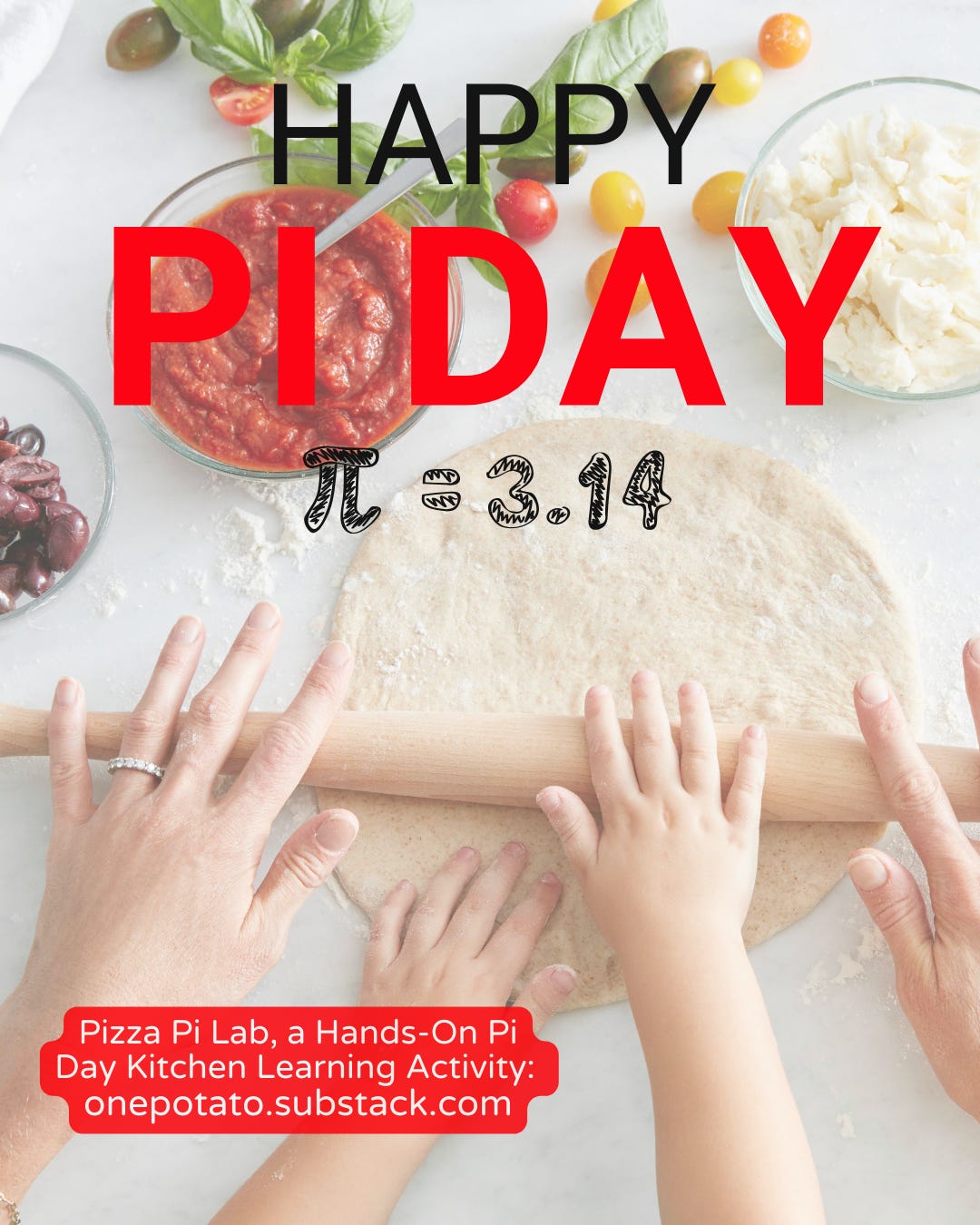
Activity Flow
Before topping the pizza, ask:
What shape is the pizza?
Let kids answer out loud.Use the ruler or string to measure all the way across the pizza (diameter) and write it down.
Wrap the string around the edge all the way around (circumference).
Compare the length of the string to the diameter measurement.
Ask: Is it bigger? Smaller? How many diameters long is it?Once the pizza is topped, talk about fractions as you slice:
4 slices = quarters
8 slices = eighths
Ask: If we eat 2 slices, what fraction of the whole pizza is that?
Eat pizza and talk about what shapes and numbers you noticed. For older kids, you can practice adding and subtracting fractions!