

🍞 The Breadcrumb Project
Community Voices X Pen Parentis - This Father's Day, Gordon Haber asks us all to think about what it means to be a good father. You'll want to read this one.

Happy Father’s Day to all the dads, granddads, and father figures in the One Potato community!
To mark the day, we’re sharing an essay from our Community Voices series — authentic stories about families and food. In this one, writer Gordon Haber turns a small kitchen habit (saving stale bread to make breadcrumbs) into a question he keeps circling back to: what does it actually mean to be a good father? It’s funny, honest, and a little tender, and it has almost nothing to do with breadcrumbs. We hope you love it.
🥔 One Potato is a reader-supported newsletter - Subscribe for weekly Order Up! interviews and other Specials delivered to your inbox!
Pen Parentis, a national nonprofit that helps writers stay on creative track after having kids, is proud to sponsor Community Voices X Pen Parentis. Their Cycle of Support includes membership, mentorship and accountability meetups for writers of any genre. Also explore the parent-writer experiences of famous authors on their YouTube Channel @PenParentis - More info at writerparentannex.com
You don’t have to be a member of Pen Parentis to share your story - send us a DM or click the button below to learn more on our Submission Guidelines page:
The Breadcrumb Project
By Gordon Haber
1. Keep the old bread
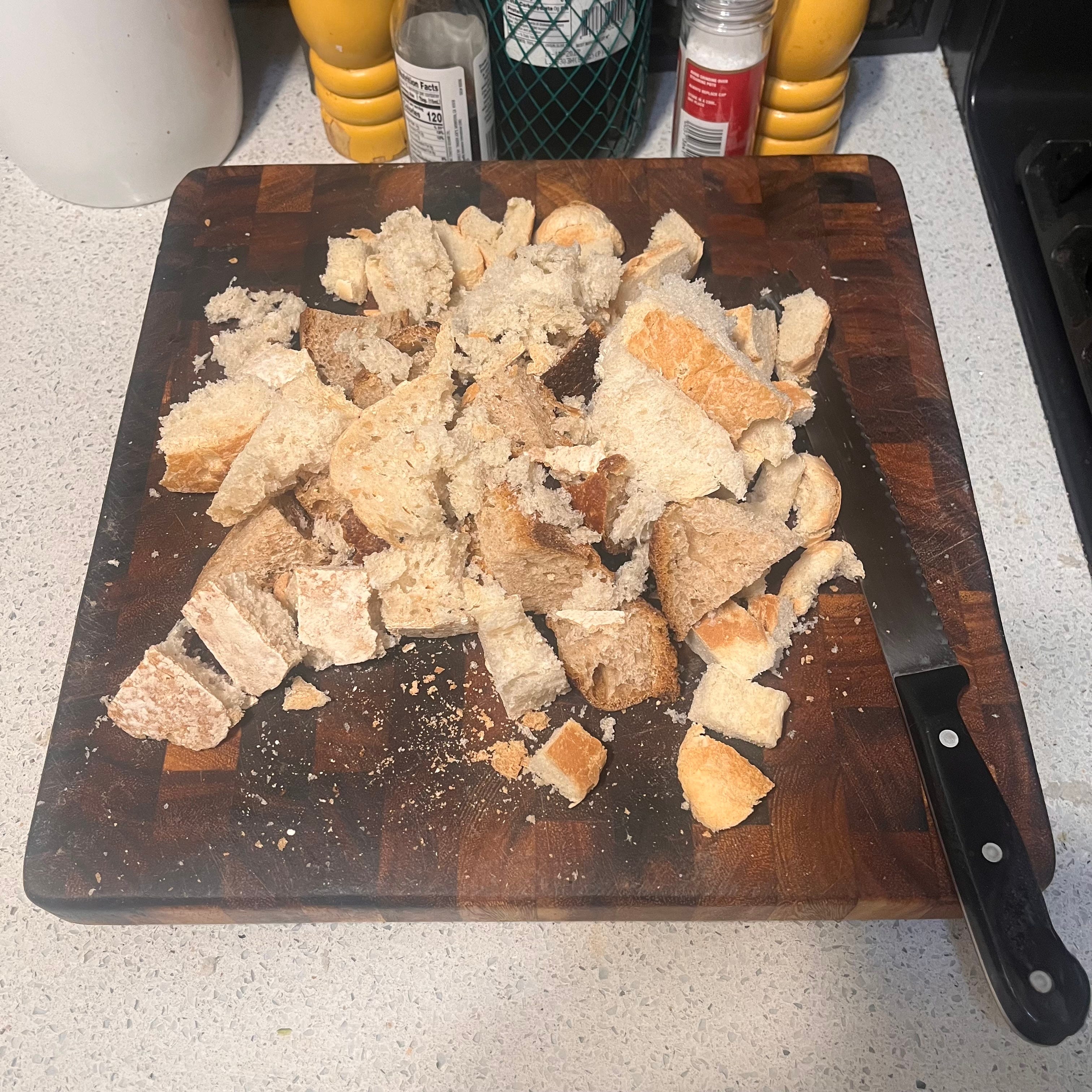
The rounded sourdough ends, the stale bits of challah. The hot dog buns from the back of the freezer. It all goes into a bag in the fridge, and when the bag is full, you make breadcrumbs.
My wife likes to hand me a leftover crust and say, “This is for your breadcrumb project,” as if I were a food artist. It’s a thing: I know an artist who raised, slaughtered, roasted, and consumed a pig. She got grant money to document the process.
My inspiration was more prosaic. I don’t like wasting food. I’d been cooking a chicken once a week and feeling weird about chucking the remains. It’s easy enough, if you have the time, to use the carcass to make soup, and I wondered what to do with all the bread we were throwing out.
Deeper associations do come up. Roasting the chicken, making broth the next day, freezing it in batches—it all makes me feel connected to my grandfather, who loved feeding his grandchildren.
Years ago, I’d spend a week or two with my grandparents every summer at their Catskills bungalow colony, where everyone spoke Yiddish. Every night, before bed, my grandfather asked me, solemnly, what I wanted for breakfast. When I visited him on breaks from college, he made a chicken and sweet potatoes and (best of all) the lightest, mildest gefilte fish you’ve ever tasted. It was how he expressed his love.
My wife tells me, “Food is your love language too.”
2. Preheat the oven and cut the bread into chunks
400º? 450º? I can never remember, so let’s say 425. Meanwhile, slice the bread into chunks an inch or two square. (The stale bits take a little elbow grease.) Then spread them out on a sheet pan, crumbs and all.
It’s good for a man to spend time in the kitchen. It’s good to clean as you go, so you don’t leave a mess. And it’s good for your son to see you doing it, cooking and cleaning, so he understands there is no division between “man’s work” and “women’s work.”
Out of curiosity, I recently read Scott Galloway’s Notes on Being a Man. He defines masculinity as a “three-legged stool”—a man “protects, provides, and procreates.”
This sounds great at first glance. At second glance, don’t women do that too?
I have mixed feelings about Galloway. Reading his book, I had the impression of a man striving for sincerity and kindness. And he has great advice. For instance, “success comes when you put in small, consistent amounts of effort, every day and every week.”
And: “The greatest, most specific skill a young man can develop is his willingness to endure rejection.” To that I’d only add “gracefully.” A girl doesn’t want to go out with you? Endure it, gracefully.
At the same time, Galloway is very concerned about testosterone, to the point where he gets injections. He reflexively discusses women in terms of hotness. Money is a preoccupation. For all his vulnerability, he’s unable to release himself from superficial versions of masculinity, which, to me, suggests he is actually insecure about his masculinity.
Also, Galloway never once mentions cooking.
3. Bake until crispy
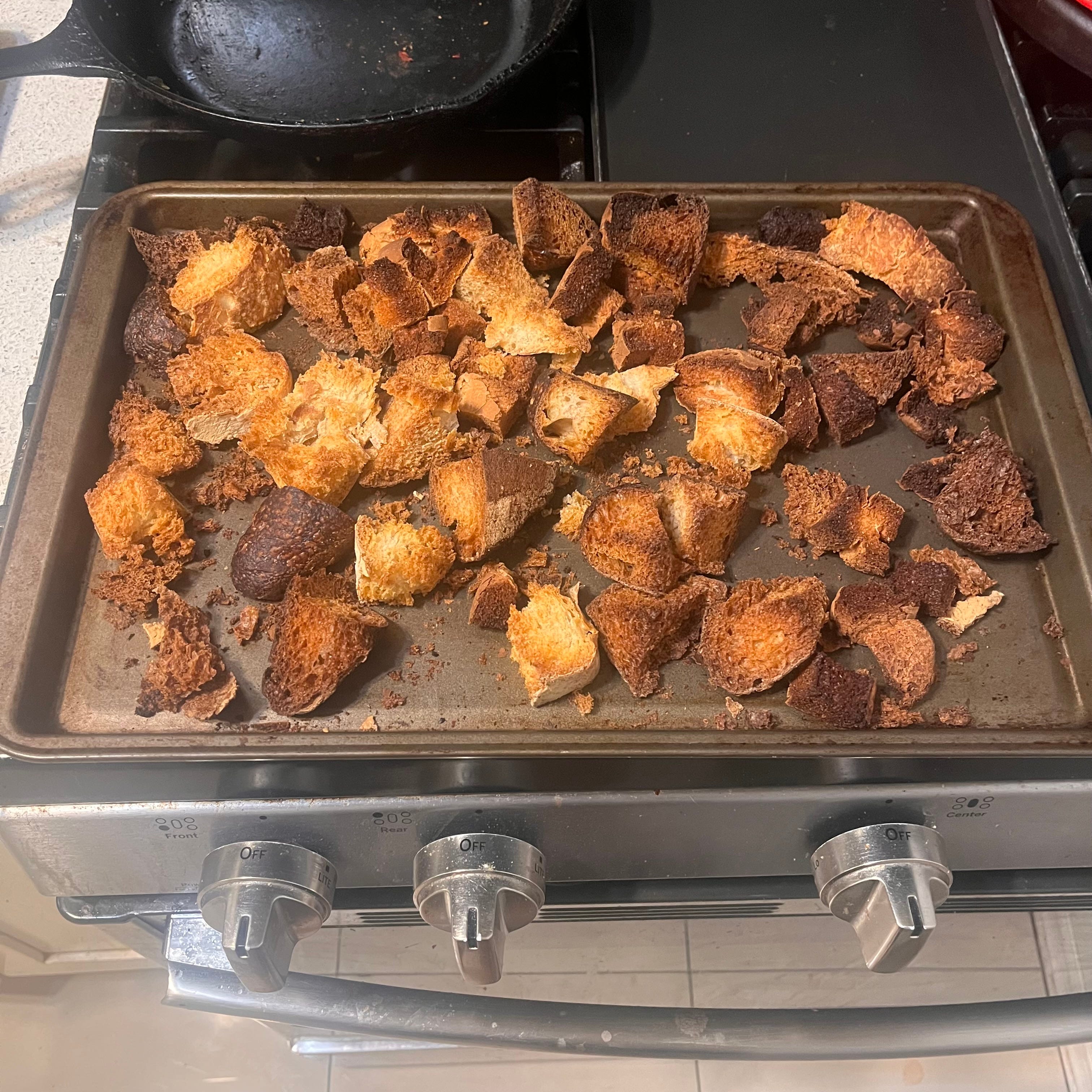
Somewhere between toasted and burnt. You might pull out a bigger chunk and slice it to ensure that it’s crispy all the way through. So maybe ten minutes? Fifteen?
Here is what occurred to me while working through this recipe. I’m not interested in masculinity, really. I care about being a good father. That is, in addition to protecting and providing for my son (which is my wife’s job too), I should be preparing him—for life, for work, to stand on his own.
When he started high school, he was nervous about the subway. I rode with him to help him get used to the route. One morning, I said, “You’re in charge. I’ll follow you.”
He was dicking around on his phone, and we got on the wrong train. When he looked up and realized the numbers were going up, not down, he was pissed.
“Why didn’t you tell me?”
“Because you’re in charge.”
For the rest of the ride, he kept muttering, “I can’t believe you wouldn’t just tell me.”
But the next week, he said, “I can do this on my own now.”
These days, he takes the subway all over the city with his friends. It’s a freedom that was unimaginable to me as a teenager, and I’m so glad he has that independence. But a few other situations are difficult for him. I won’t write about them, because that’s family business. I will say that at times, I wonder if I’m failing him.
I once asked my brother if he thought I was a good father.
He said, “The mere fact that you’re asking the question is a good sign.”
It was a helpful thing to hear at the moment, but lately I’m not so sure. Yes, it’s a good sign, but it’s only the starting point.
4. Grind the chunks in a food processor
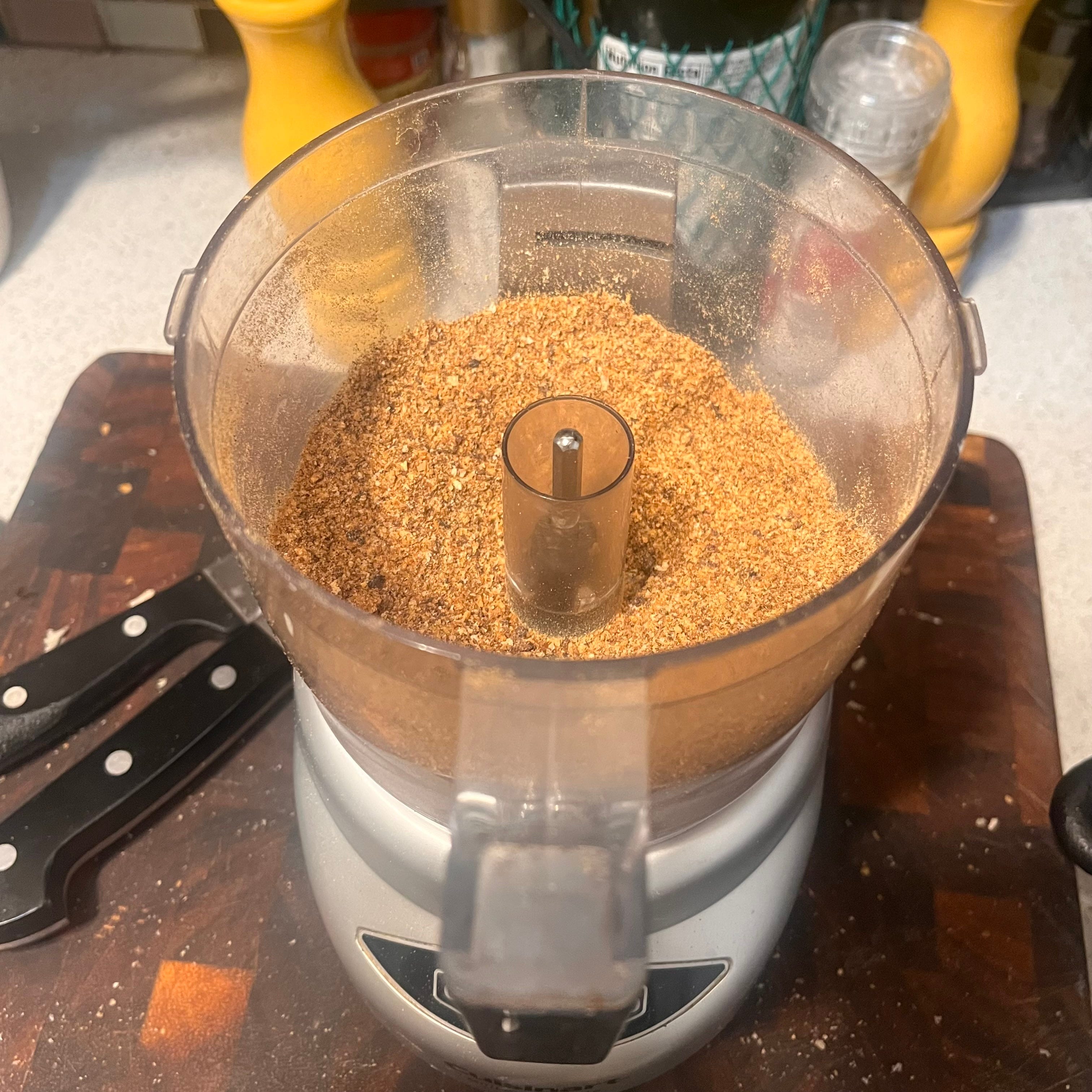
When all the bread chunks are nice and crispy, take them out of the oven and let them cool. Then stick them in a baggie and smash them with a kitchen mallet, because it’s fun. Get the food processor out and grind the bits in batches until you have, indeed, made breadcrumbs.
Finally, put them in a container in the fridge. How long will the breadcrumbs last in the fridge? Who knows? I usually use them all up in a few days anyway.
We recently watched that manosphere documentary with the boy, which left me astonished at the stupidity of human beings, especially men. I was also relieved that my son believes that all these influencers, and the young men who follow them, are idiots.
I did find it interesting that the influencers’ signifiers of masculinity pretty much align with Scott Galloway’s—women and money, self-mastery and power. There are important differences, though—Galloway truly wants to see young men better themselves in positive ways, and he hasn’t achieved his success through mockery and cruelty.
How exhausting, this alpha male business! The idea of feeling uncomfortable unless you’re dominating people. The constant lookout for challengers, the constant readiness for confrontation. Surely, the man striving to be an alpha is the most insecure and anxious person in the room. Because the true sign of confidence isn’t dominating the room; it’s not giving a shit about dominating the room.
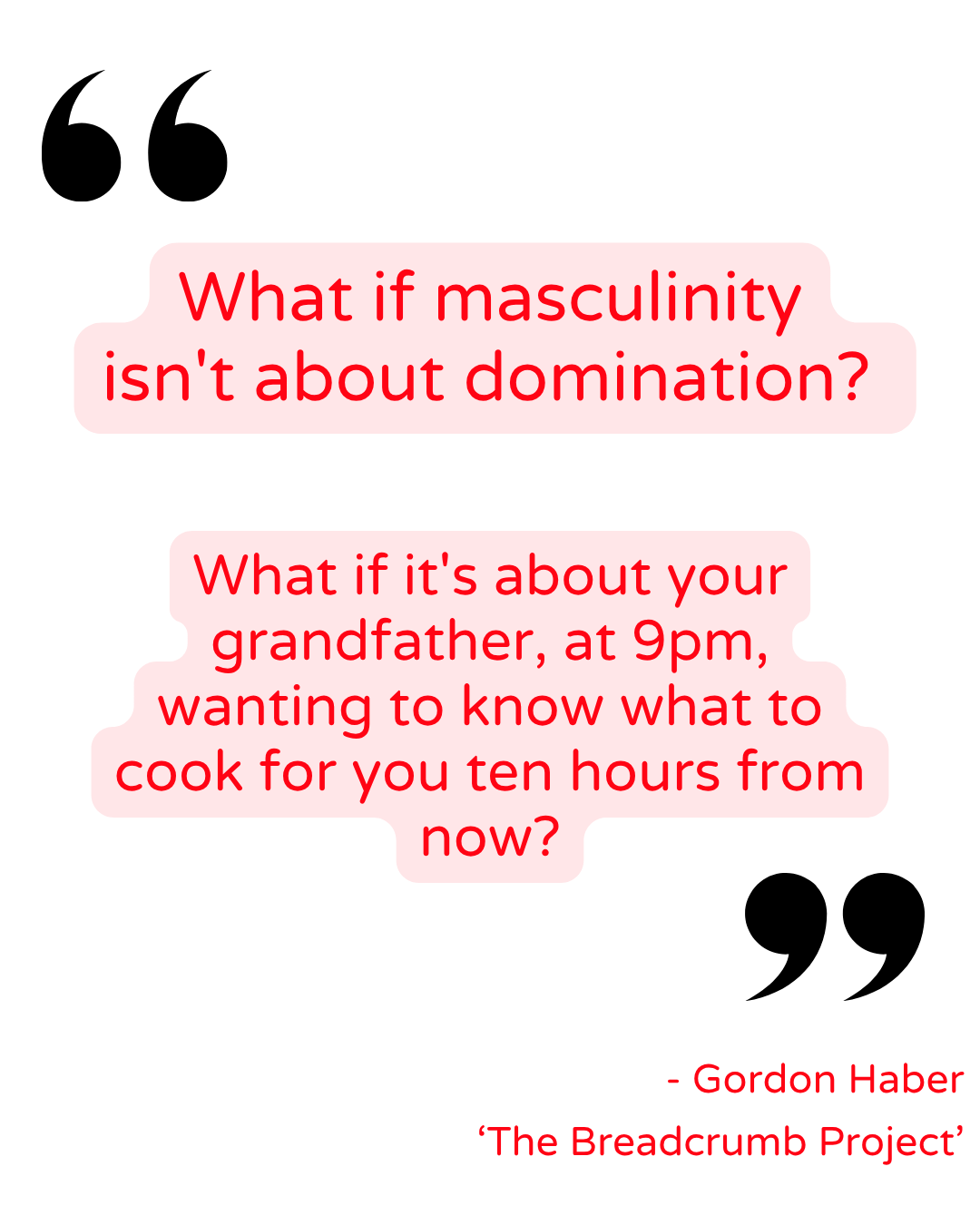
What if masculinity isn’t about domination? What if it’s about your grandfather, at 9pm, wanting to know what to cook for you ten hours from now? What if it’s about using the breadcrumbs to make meatballs while the spaghetti cooks and the marinara reduces in the cast-iron pan, and serving it all up for your family to impart a simple message: here, I made this, because I love you?
About:
Gordon Haber’s recent fiction includes the short story Home Economics, about high school in 1949, in Cagibi; and The Pikeman, about New Amsterdam in 1643, in Greyhound Journal. His novel about the Korean War is coming in 2027 from EnvelopeBooks.
His nonfiction writing on religion and culture has appeared in ARC, the Forward, and other fine venues. You can see his author pages here.
He does not live in Brooklyn.