

Order Up! A Conversation with Elkey & Will Zandstra, Home Cooks, Social Media Influencers, & Mom/Dad Duo
The couple behind "Breakfast Around the World" on raising kids between two food cultures, and why the magic is more attainable than it looks.

Small Bites: Watching a kid run a recipe start to finish is the whole point, and Raddish Kids Cooking & Baking Subscription Boxes make it easy by mailing the recipe cards, the tool, and the lesson that goes with it every month. Designed by educators, built for kids 4 to 14. Free apron with a 6- or 12-month subscription. 👉 Learn more here
🥔 One Potato is a reader-supported newsletter - Subscribe for weekly Order Up! interviews delivered to your inbox!
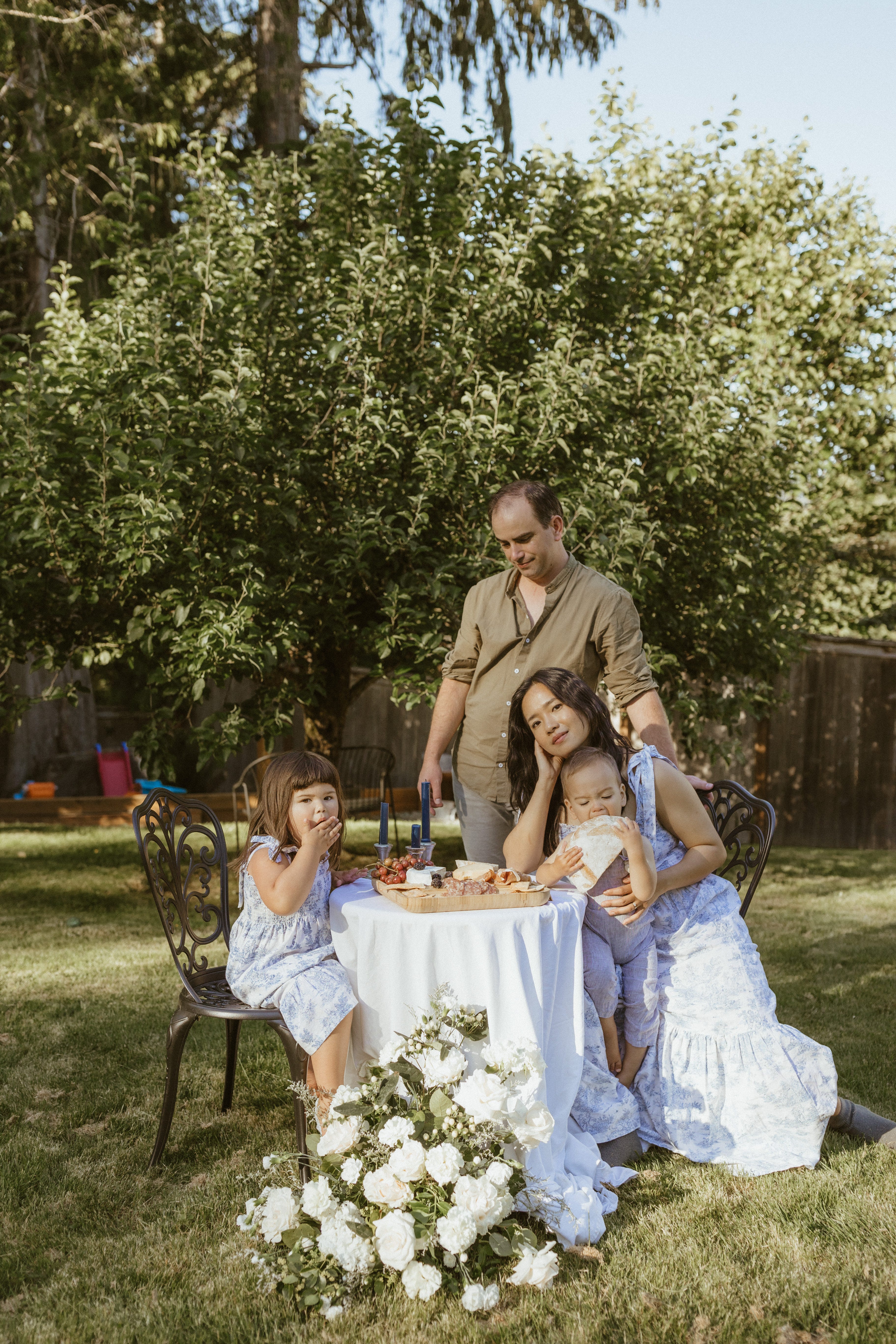
One Core Memory at a Time: Inside the Zandstras’ “Breakfast Around the World”
Every Sunday, a globe gets spun in a kitchen outside Seattle, and a five-year-old or a three-year-old calls out a country. By the next weekend there’s a flag drawn on the window, a passport waiting for its stamp, and a breakfast from somewhere new on the table.
That’s “Breakfast Around the World”, the ritual Elkey and Will Zandstra have now carried through 45 countries. Elkey grew up in Indonesia, where rice anchored every meal. Will grew up on American cereal, with Eggs Benedict reserved for holidays. Together they’re raising three kids: Emray, Ezrah, and an eight-month-old, in a household that’s part Indonesian, part American, where two food cultures meet on one plate.
What started as Elkey’s plan to give Will, who cooks nearly all their meals, a morning to rest turned into something the Internet fell for. But talk to them and the polish falls away fast. The big displays are the part they add for the camera, while the reality is about love, connection, and something that’s much more doable for everyone. Will gets lost in Indian supermarkets. The real magic, they’ll tell you, is taking food outside on a rare sunny afternoon.
We talked about feeding kids across two heritages, why they keep history out of breakfast for now, how to frame an unfamiliar dish so a kid will actually try it, and the one cooking skill Will swears most home cooks skip. Their anchor is the phrase that lives in their bio: creating one core memory at a time.
A special note from our friends at Raddish Kids:
A Whole Cooking Lesson, Delivered
Teaching a kid to cook is one of those things most of us mean to do and rarely find time to plan. Raddish Kids does the planning for you. Every month a themed kit arrives at your door already filled with everything a cooking session needs: two or three laminated, illustrated recipe cards, a real kitchen tool, a hands-on activity, table-talk cards, even a game on the folder.
Here’s the part that sets it apart: each recipe comes with its own skill lesson, written by educators, that folds a little math, science, and reading into the cooking itself. You’re not pulling up a video or working through an online course — the lesson is right there in the box, ready for kids 4 to 14 to follow at their own level. Ingredients aren’t included, so you can shop from the emailed list and adapt anything for allergies or preferences. Right now a 6- or 12-month subscription comes with a free Raddish apron. 👉 Subscribe Here
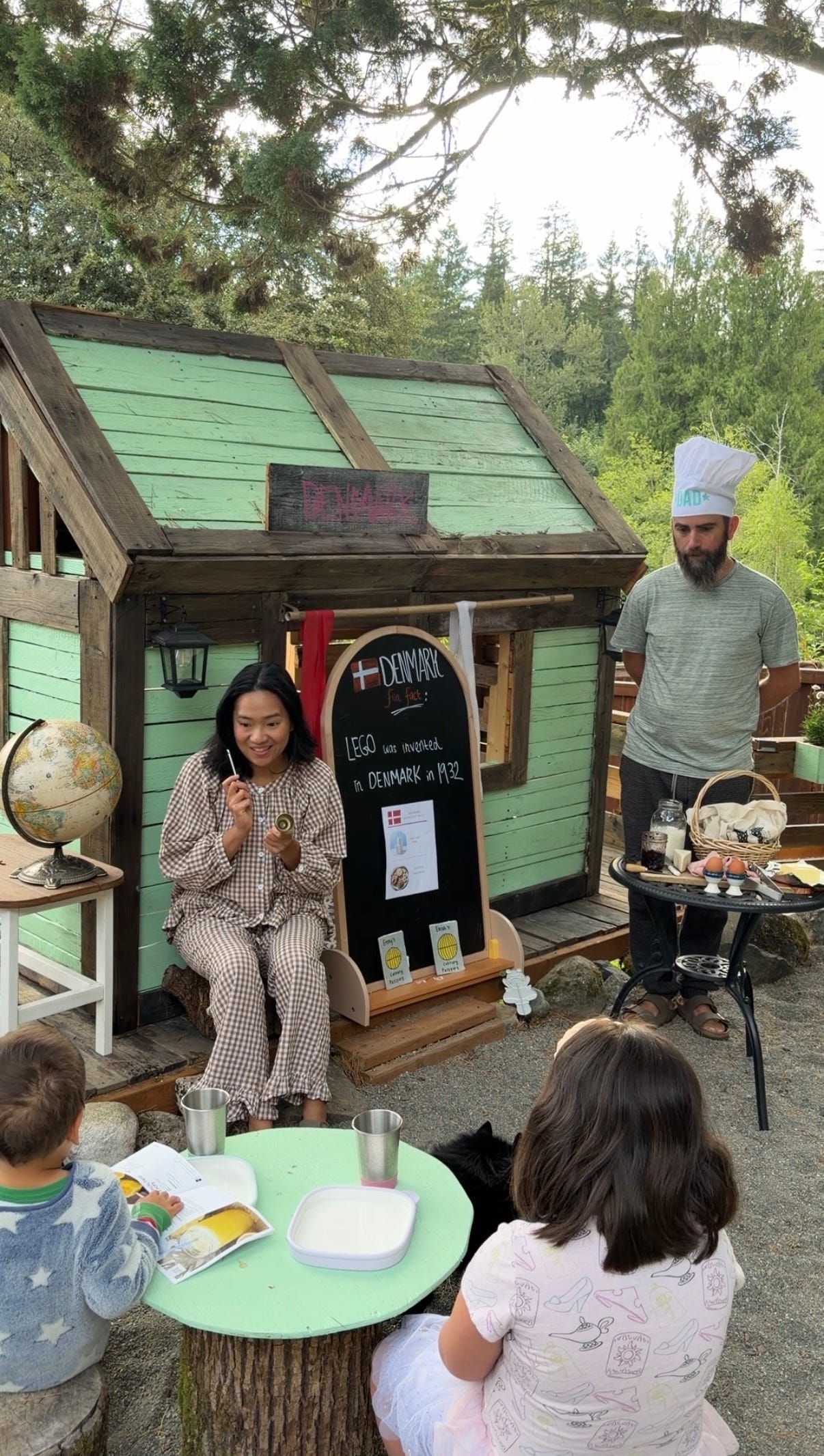
A Conversation with Elkey & Will Zandstra, Mom & Dad Creators of “Breakfast Around the World”
Introduce Yourselves: I’m Elkey, and this is my husband Will. I work full-time at a tech company, and for the past two years we’ve also been busy with posting on social media. We have three kids: Emray is five, Ezrah is three, and our baby boy is eight months.
Elkey, you grew up in Indonesia. What did breakfast look like in your house, both everyday and for special occasions?
Elkey: Almost always rice. If rice isn’t on the table, it doesn’t count as a meal. Rice, meat, eggs, and a lot of fried things, for better or worse. Or bubur, which is basically a rice porridge. Rice is the foundation of every meal.
And Will, what did food and family meals look like in your house growing up?
Will: Cereal. That was breakfast. A pretty classic, traditional American upbringing. Our pantry was always stocked with the parents’ cereal and the kids’ cereal, and you’d pick whatever you were feeling that day. Special occasions or holidays, we’d do something nicer. Always an Eggs Benedict for holidays.
When you started having kids and imagining your own table, what carried over from your upbringings, and what didn’t?
Elkey: I grew up with my grandmother in the house. My mom always worked, but both she and my grandmother loved to cook for the family; it was their love language. My grandmother would wake up at 3 a.m. with my mom and make an individual dish for each of us. I have three siblings, and we all liked different things. They spoiled us. I can still feel the love and the effort they put into those meals, and that’s how I want to feed my kids, homemade meals. Beyond the love, you can’t beat the nutrition of making things from scratch, where you know exactly what goes into every dish.
Now that you’re in Seattle raising kids in a household that’s part Indonesian, part American, how does that show up on a normal Tuesday, not the polished version?
Will: It really comes down to pre-thinking and pre-prepping. I’m always thinking at least a day ahead and keeping a rough routine. For example, the kids know oats are coming the next morning, it’s a reliable staple. Predictability helps them adjust. Our household blend leans more Indonesian. I grew up on cereal and was never a huge fan, so I’d much rather actually cook, especially Asian dishes. Rice is everything, and there are a lot of spices. The kids have different palates. Ezrah handles spice better than my oldest, so there’s some catering to each, but I still try to make sure they’re all eating roughly the same thing. I don’t go as far as their grandma making separate dishes! I want them to know this is what we made.
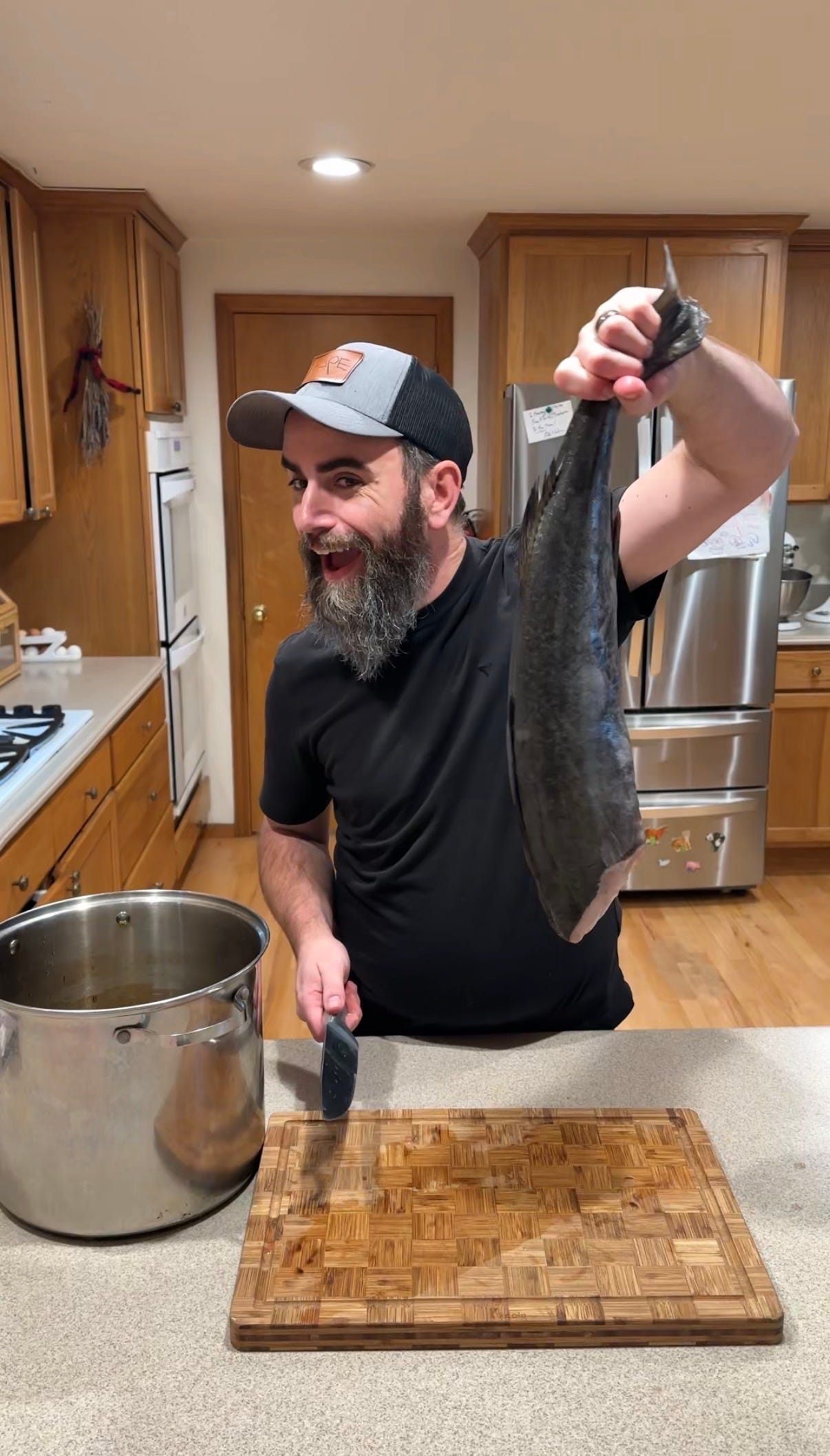
“Creating one core memory at a time” is in your bio. Where did that phrase come from, and when did you realize you’d build your content and your parenting around it?
Will: It’s been an evolution. We’d been doing these things for a couple of years, making content and adding a little glitz for social media, but keeping it uniquely us, stuff we’d actually do on our own. The core-memory part came from the reaction. People started commenting, “This is going to be such a core memory for your kids.” It resonated, it took off, and we realized how much people connected with it.
Elkey: It’s also a blend of who we are. I see Will as an artist. He likes to work with his hands, and a lot of our activities are things he builds himself. He made the Hobbit house from The Lord of the Rings out of a cardboard box, just because he loves doing activities like that. And for me, it goes back to my childhood. My parents did their best, but they worked a lot, so I don’t have many memories with them outside of everyday things. Part of this is healing the inner child in each of us. It’s also beautiful to watch. Will and I come from two different cultures, so we’ll ask each other, “What did you do as a kid?” He taught our three-year-old to fish, something I never experienced. Getting to see his childhood in how he’s raising our kids is a beautiful thing.
Beyond the big activities, are there small rituals you suspect will become your kids’ core memories, even ones you’d never make a video about?
Will: A hundred percent, though I remember the most random stuff from when I was a kid, so what sticks for them might be lost on me as the parent. Honestly, I think it’s our outside time. We live in a really special place, and we’re constantly outside, hanging out on the lawn or making little picnics. Any chance we get, we take food outside. That’s a Seattle thing too. We hibernate for months in the winter, and the summers are exceptional. It doesn’t get dark until 10pm, so you enjoy being outside while you can.
For someone meeting you through this interview, walk us through a “Breakfast Around the World” morning. Who spins the globe? Who’s cooking?
Elkey: Will usually preps the meal the night before, and I print the menu and set up the passports, with a stamp for each country. I set up the “classroom,” too. I draw the flag on the window, write the country, and look up a fun fact. Most of the prep happens the night before, so the morning is mostly heating up the dish and making tea, for example, if the country calls for it. Then we eat together. We talk about the country, the continent, the language, sometimes the colors of the flag, which is good for color recognition, and the fun fact. Then Will explains the dish: what it is, the background, how it’s traditionally served, whether you eat it with your hands or share from one dish. The kids take turns spinning the globe. One week it’s my son, the next it’s my daughter.
Why breakfast? Why not lunch or dinner?
Elkey: It started because Will cooks 99% of our meals, and I wanted to give him a chance to sleep in on a Sunday. I don’t really cook, so I wanted to make it special, maybe making up for not being the one who meal preps. It began with random things: a special bagel day where I’d make bagels from scratch, or pancakes on a train that circled the table so the kids could grab them. A couple of months in, I ran out of grand ideas, and finally thought, what if we just pick a country and go from there? The kids loved it, the internet loved it, and it evolved. We’re 45 countries in now. It started as a way to give Will a rest, but then I got pregnant with our third and was postpartum, so he took the meals back over.
Will: I don’t rest well. It feels awkward to me.
Was there a week that surprised you, something the kids really connected with?
Elkey: A few caught us off guard. It’s evolved over time, because now the kids know something different is coming every Sunday, so there’s real anticipation and eagerness to try new things. Ukraine did really well. We made syrniki, those cottage cheese pancakes. Anything with carbs, they love. For Italy we did biscotti and warm chocolate milk, and my daughter said it was “the most perfect breakfast in the whole wide world.”
Do you feel like you’re raising little world travelers?
Elkey: I hope so. Will and I traveled a lot before kids. I lived in six different countries, so we both come from a background of loving culture and travel. We can’t do as much now, so this is our budget-friendly way of introducing them to other cultures from home.
Will: To be fair, Emray and Ezrah have done a decent bit of traveling for their age. They’ve both been to Europe, Emray has been to Indonesia, and we’re traveling again next year. They do great, honestly fantastic for young kids, and I always see them wanting to do more.
Will, the Malaysian nasi lemak and teh tarik week got picked up by press in Malaysia, and it was your first time pulling tea.
Will: Most of the time I’m learning as I go. The biggest thing with this series is that I try my best to be as accurate as I can, but we don’t always have the right resources. The important part is getting the spirit of the culture. It might not be 100% authentic, but I want the kids to have at least a decent representation of the country, the dish, the culture. Sometimes the pressure’s on. Some of these are way out of my wheelhouse.
When I was shopping for the ingredients to cook Indian breakfast, I’d been to plenty of Asian supermarkets but never an Indian one. I was in that store for 45 minutes, wandering the aisles trying to find everything I needed, getting a lot of stares, probably because I looked so lost.
Elkey, you’re usually the one educating the kids, explaining the country and its background. Without an early-childhood-education background, how do you decide what to share, especially for a country with a complicated history?
Elkey: I keep it light and fun, at a level they understand. I research with AI assistance a lot, to be fair. I’ll ask for kid-friendly fun facts, it gives me ten, and I pick something fun they can relate to. They’re five and three years old right now. History can come later. Right now they’re in this magical early-childhood bubble where everything is fun and kind, and that’s what we need to nurture. I try not to get into the politics or the complicated history. That’ll come when they’re ten, maybe a separate “Breakfast Around the World” then. For now I’m just meeting them where they are.
When you’re filming, it’s rarely one-and-done. Kids make messes, things get complicated. Any breakfast with a crazy story behind it?
Elkey: After 45 weeks, the kids are so used to it. There are times they get wiggly. Right now it’s spring, so they’ve got a lot of energy, and they’ll start squirming and not listening. But this isn’t just a breakfast thing; it’s how we run our whole day. We pause and say, “Okay, take a chance to wiggle your body. Let me know when you’re ready.” Then we start again. Honestly, nothing too crazy has happened.
Some of these breakfasts are pretty far from what a typical American two-to-seven-year-old eats. How would you advise another parent on framing an unfamiliar dish so their kid will actually try it?
Will: Keep it high level. You don’t have to overcomplicate it or over-explain. For Myanmar I made mohinga, a fish soup over rice noodles with lots of vegetables. It’s a complex dish, probably the most complex one I’ve made in the whole series. But for the kids, it’s just a noodle soup. They know what noodles are, they know what soup is. Introduce it at a level they can associate with, keep it simple, and let them try it.
Elkey: It helps that we make one meal for everybody. We’re having what they’re having. And for something like mohinga, traditionally you mix everything together, but for the kids we separate it: dry noodles here, fish broth there. Taste the components. We give them the option. If they want to try the broth, great. If not, there’s a noodle for them.
Is there a country whose breakfast everyone secretly fell in love with that’s now in regular rotation?
Will: That’s tricky. There are ones where we said, “We need to make this more often.” But keeping a routine on the breakfast schedule matters with kids, so I don’t mix up their usual breakfast very often, which makes it tough to pull from the traditional ones. Panama was probably my favorite: salchicha guisada, a sausage stew, amazing. The kids loved most of the European ones. Anything with carbs. Burkina Faso was really good too.
So what’s your standard weekly breakfast?
Will: This morning they had avocado, eggs, fruit, and smoked cod. We do porridge or overnight oats, and one day a week I’ll make a teff-flour pancake for the kids, since we’re on a bit of a different diet these days. The carbs rotate, but the fruit and protein stay. There’s always fruit, and smoked cod is usually the morning protein, with whatever carb is in rotation.
In a bigger-picture way, when your kids grow up and someone asks what food was like in their house, what do you hope they say?
Will: That it was amazing. We do breakfast differently than a lot of people in America. We do a larger breakfast, always. Ever since Emray was little we’d almost do a full charcuterie in the morning: eggs, toast options, meat, cheese laid out. We’ve condensed it since, but it’s the same idea: a wide variety to round out the morning and fuel the day. And the effort matters. I get up at 5:30 every morning to start breakfast.
For a parent who feels like they don’t have the bandwidth for a weekly ritual like this, where’s a low-effort place to start?
Elkey: Honestly, it is low effort. The passport stamps and big displays are the extra we do for social media. What we always try to do is inspire people toward things that are attainable. You don’t need a massive display. You can pull out a map, pick a country, and talk to your kids. The whole thing happens over a week: they pick a country, and you’ve got a week to grab what you need and figure out what to make. None of it happens in a single morning. Once you have a system, it becomes low effort. I have a Canva template for the menu that takes two minutes, and Will’s dish takes an hour or two depending on how complex it is. It looks like a lot, but with a system in place, it isn’t.
As home cooks, what’s a cooking skill you use all the time that you think other home cooks should make sure they know how to do?
Will: The number one thing most home cooks skip is properly preheating the pan. People throw a pan on and immediately crack an egg. You want the pan hot before anything goes in. I’ll let it sit on the heat for about two minutes, then add my grease right before the eggs. Especially with fish: always start with a hot pan. That’s a home-cooking sin. People don’t realize what they’re doing wrong when things don’t come out right.