

🍝 Order Up! A Conversation with Danny Freeman, Cookbook Author, Stay-at-Home Dad, & the Voice Behind Danny Loves Pasta
Danny talks to us about his grandmother, second careers, and quietly teaching his kids to love vegetables in their own right.

Small Bites: Books, Books, Books - by Danny Freeman
Danny Loves Pasta [Bookshop, Amazon]
Italianish: Modern Twists on Classic Italian Flavors [Bookshop, Amazon]
🥔 One Potato is a reader-supported newsletter - Subscribe for weekly Order Up! interviews delivered to your inbox!
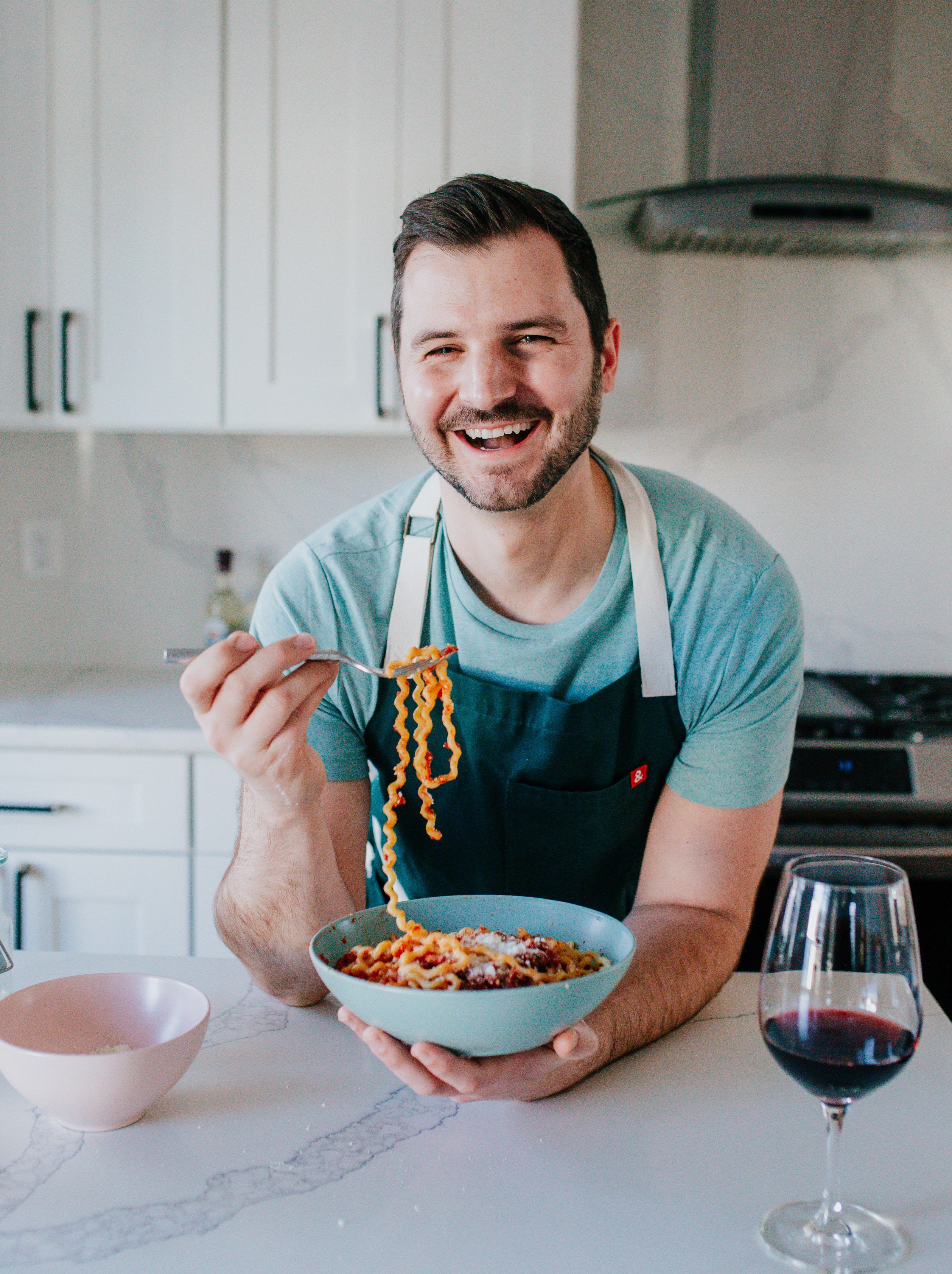
The Pasta That Started It All: How Danny Freeman Turned Grief Into a Cookbook Career
As we close out Pride Month and a June (Father’s Day month) full of conversations with dads we admire, we’re honored to share our final Pride 2026 Order Up! with cookbook author and stay-at-home dad Danny Freeman, the voice behind @dannylovespasta on IG and TikTok and YouTube. (And if you missed our first Pride interview this month, you’ll want to check out that interview too: Order Up! A Conversation with Justin Burke, Pastry Chef, Queer Food Writer, and Author of Potluck Desserts.)
Before Danny was Danny Loves Pasta (before the cookbooks, the TikTok account with millions of followers, the colorful Peppa Pig ravioli), he was a picky little kid in his grandmother’s kitchen in upstate New York, watching her quietly hand him a bowl of cavatelli she’d made just for him. That bowl, in a lot of ways, is where his whole story begins.
Danny was a housing attorney at a nonprofit when his first daughter was born in July 2020. His Italian grandmother died a few months later, in early January, the same week his paternity leave ended. So at night, after the baby went down, he started making fresh pasta using his grandmother’s recipe. Kneading dough was the thing that kept her close. When he finally posted a video about why he was really making pasta, the response wasn’t about the dough. It was about the grief: other people were trying to learn their grandmothers’ recipes too, even when their loved ones were no longer with them.
What followed was a slow pivot: out of law, into a full-time creative career, into two cookbooks (Danny Loves Pasta and Italianish), and into the dad life upstate with his husband and two young daughters. In this conversation, Danny talks about coming out to a loving Italian-American family that stayed close, the chosen family of his twenties in New York, why he doesn’t sneak vegetables, and what he hopes his girls will one day remember about family meals.
Danny isn’t trying to preserve his grandmother’s exact recipes for his daughters. He’s trying to preserve the feeling of being fed by someone who loved you, and pass that feeling on, one slightly imperfect kitchen night at a time.
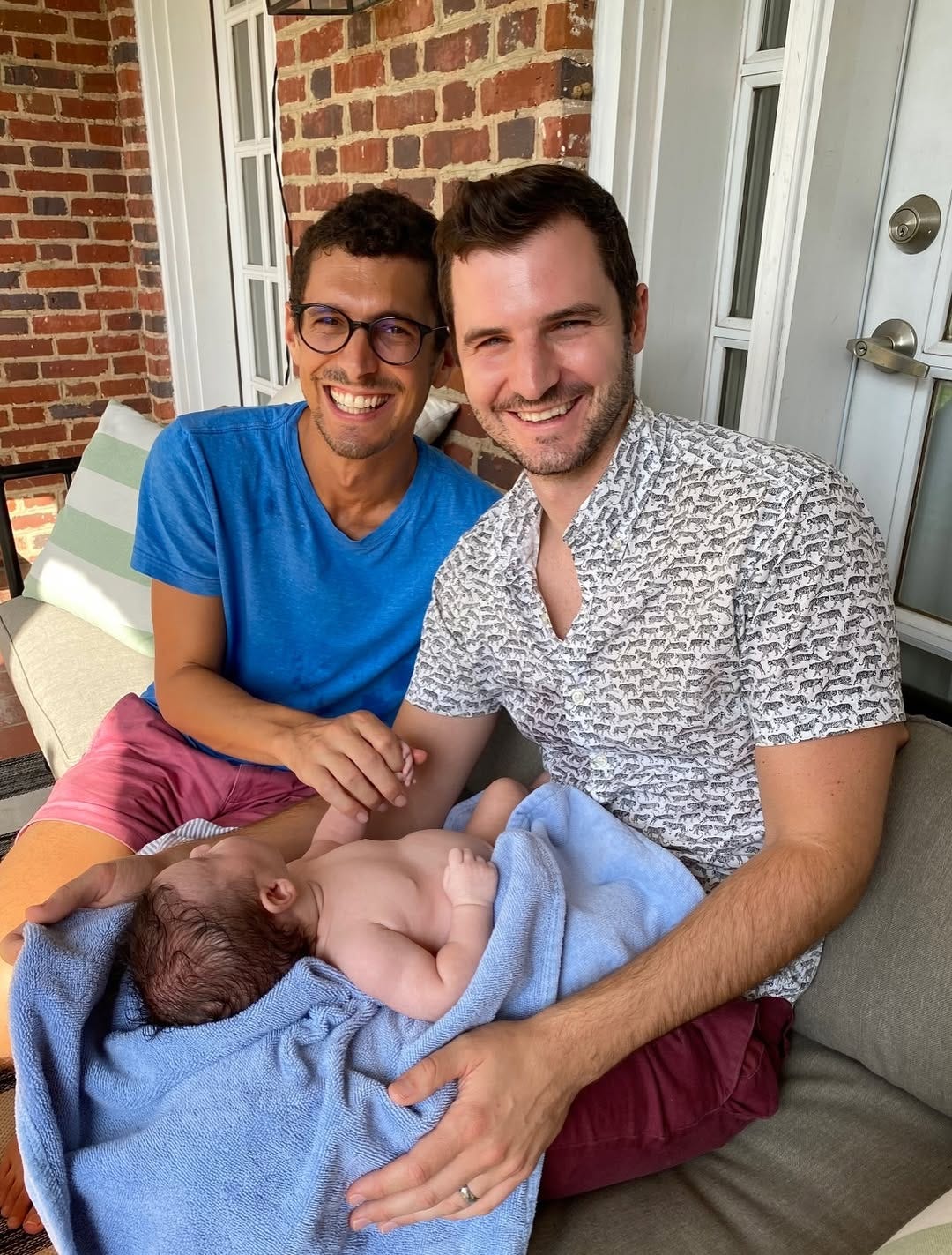
A Conversation with Danny Freeman, Cookbook Author and Stay-at-Home Dad
Introduce Yourself: I'm Danny Freeman. Online, I'm Danny Loves Pasta. I'm a stay-at-home dad, a cookbook author, and a content creator. My husband and I have two daughters: a five-year-old and a two-year-old
I've written two cookbooks, Danny Loves Pasta and Italianish, and done a bunch of TV cooking segments. But most of the time, I'm home with my kids, developing recipes and making videos.
What’s one memory of cooking with your grandmother?
I was a picky kid. My mom’s a great cook, my grandmother was a great cook (Italian side of the family, lots of food), but I didn’t eat much of it. Holidays were big at my grandparents’ house. Christmas Day, all this seafood and meat. The kids sat at the kitchen table, and right before dinner, my grandmother would pull me into the corner by the fridge and hand me a bowl of cavatelli with marinara. “This is for you. Don’t let anyone see this.”
It was handmade pasta, made just for me. I felt sneaky and special at the same time. Looking back, that was her considering me, putting something extra on the table because she knew I wouldn’t eat the rest. It made me feel really loved.
Your daughter was born in July 2020. Your grandmother passed away in early January. How did sharing recipes online come out of that time?
We didn’t go home for Christmas that year because of COVID, the first Christmas of my life away from family. So I made fresh pasta at home, just for me and my husband, using my grandmother’s recipe. A couple weeks later, in January, she died. The same week, my parental leave ended and I had to go back to work. New baby, no sleep, couldn’t see anyone. It was a lot all at once.
Making fresh pasta was the thing that helped. It’s meditative (kneading the dough, working with my hands), and it made me feel close to her. After my daughter went to bed, I’d go to the kitchen and try different doughs and shapes. I started posting pictures on my personal Instagram, then made a TikTok account just for me. I didn’t tell anyone. I didn’t show my face. It was just, “This is the dough I made today, this is the shape I tried.”
About six months in, I posted a video where I talked about my grandmother and why I really started making pasta. That was the video that went viral. People commented that they were trying to learn their own grandparents’ recipes, or had lost someone and wanted to keep that food alive. That’s when it took off in a different direction. Less novelty, more story.
You grew up in an Italian-American family that didn’t moralize food. What carried over into how you feed your own kids?
I never thought about this until you asked, but my parents didn’t do the “eat your yucky vegetables first, then you can have dessert” thing. They didn’t talk about food as good or bad. But we still ate well: always a salad, baked chicken cutlets, my mom made pasta sauce every Sunday. Very little takeout, almost no frozen meals.
I try to do the same. I don’t say “three more bites of broccoli and then you can have cake.” Food isn’t junk. Some things are just sometimes foods. Before dinner, I’ll put out a plate of cut-up vegetables and let the kids snack on those. I picked up the neutral framing from my mom without realizing it.
You moved to New York after college, came out, and spent your twenties in a different food world. Did any of that shape how you think about food and family now?
Yeah. I wasn’t cooking a ton in my twenties (we had a tiny kitchen), but food and community went together. Happy hours after work. Dinners at a friend’s apartment. My husband and I would each meet our own people and sometimes converge later. The point wasn’t where we ended up. It was being with people.
When I was a kid, food was family. In my twenties, it was chosen family. Now I’m back to family, living the dad life upstate. I appreciate that whole arc more now than I did at the time.
Your grandmother got to meet your older daughter once. What was your coming-out like in your family, and how did that shape what you wanted to pass down?
My coming-out was relatively smooth compared to a lot of stories. The harder part was internal. My grandmother was always loving and accepting; she got to know me as a whole adult. Both my grandparents spoke at my and my husband’s wedding. My grandfather turned 101 this year!
When my grandmother died, it hit me so hard that my daughter would never know her. She met her once at about a month old, in masks, outside. There’s a picture. That’s it. There was a little desperation early on: how do I keep her alive for my kids? Over time, that’s shifted. It’s less about her specifically and more about the feeling she gave me. The values, the traditions. When my kids look back at holidays and gatherings, I want them to feel something like what I felt.
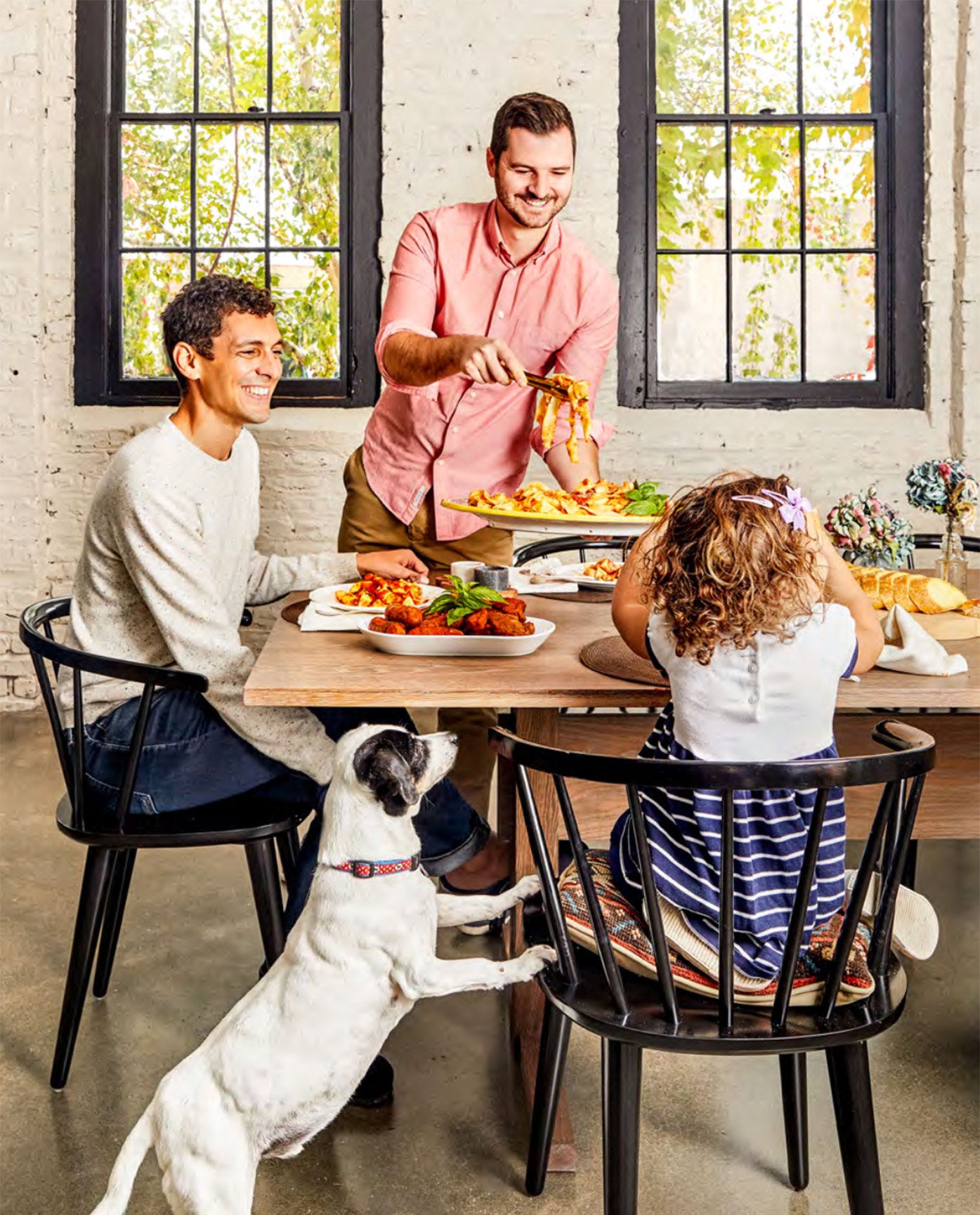
You were a housing attorney at a nonprofit before any of this. Does any of that show up in how you cook or talk to families online?
I used to think of those as two separate lives, but nothing really is. The court work helped me get more comfortable speaking. I’m a shy person, but standing in front of a judge every day forces you to just go and do. I’m actually more comfortable doing live TV than recording myself at home. On TV you can’t second-guess yourself.
The other thing is empathy. All my clients were low-income families facing eviction. For us as attorneys, court is our day-to-day. For them, it’s terrifying. I had to learn to slow down and see people outside their worst moment. That carried into everything: being a parent, being a person online, remembering that everyone is dealing with something.
Was there a moment you knew you weren’t going back to law?
I went back after parental leave on Zoom courts, juggling my daughter’s nap schedule with hearings. Steve and I tried not to schedule meetings at the same time, which was basically impossible. I took a year of unpaid leave to figure it out. By the end of it, I’d had my first brand deal (Hidden Valley Ranch, a thousand dollars) and thought, “Okay, maybe this can be something.”
Even when I told them I wasn’t coming back, I was nervous. But if it didn’t work out, I could always apply for legal jobs later.
What’s been the hardest part of being a stay-at-home dad?
Practically, the sleep. My daughters are not great sleepers and I’m the one who gets up with them, multiple times, every night. But the bigger thing is how fast it goes. I look at pictures of my daughter at three and she’s five now. I love who she is at every stage, but I want the old ones back too.
I carry some guilt around the cookbook years. We had part-time help, and I’d spend that time writing instead of with her. Even though I’m with her 80% of the time, I look at the 20% I wasn’t and wonder if that was the trade I wanted. I try to stay present now, because I know I’ll feel this way about right now, eventually.

Your first book, Danny Loves Pasta, is full of colorful, playful pasta: Peppa Pig ravioli, tie-dye dough. How much of that came from your older daughter?
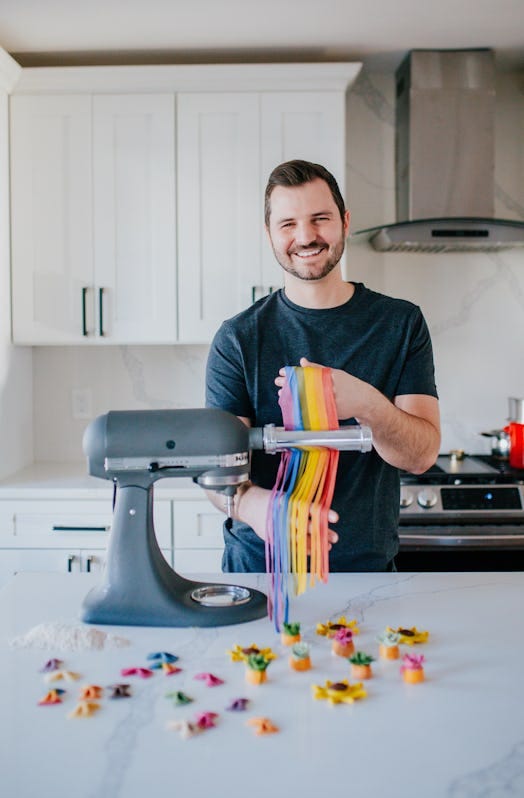
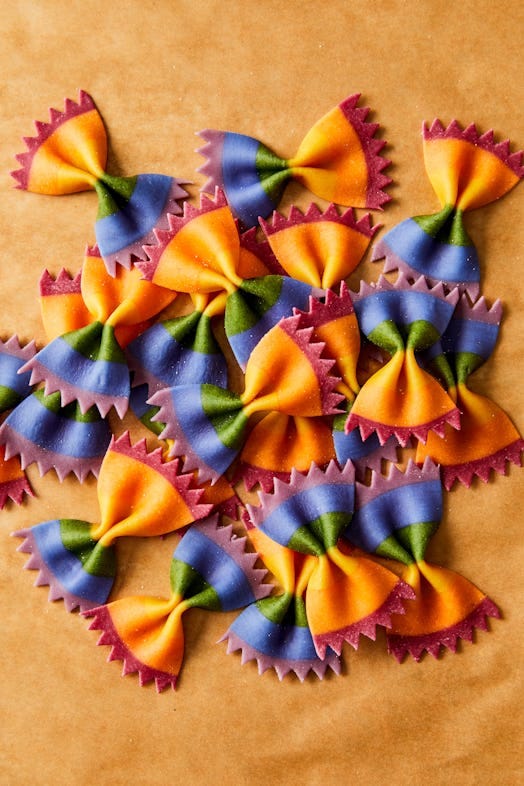
A lot of it. I wrote the first book during her nap time, back when she wasn’t in school. When she woke up, I’d give her a ball of dough on one side of the counter while I tested recipes on the other. The Peppa Pig ravioli was the first character one I made for her. That started a whole run of playful shapes.
She still makes pasta with me. I give her colors and a rolling pin and she rolls out animals, and then she always wants to cook them. They come out as thick, weird blobs. We cook them and try them anyway.

The second book, Italianish, came out of a stretch with a colicky baby and a picky toddler. What did writing that book teach you that the first one didn’t?
After my second daughter was born, I didn’t have nap time to work with. She only slept on my chest. We survived on takeout and vegetables out of the fridge for a while. When I started cooking again, I needed quick meals that still felt fun for me. I get bored making the same thing every night, even if my daughter wouldn’t.
Italianish merges that creative energy with real, everyday cooking for kids. Things my mom would make. Flavors my older daughter likes (spaghetti and meatballs, basically), twisted just enough that I’m not bored. A quick bread with meatballs on top instead of pasta with meatballs. Same flavors, one step sideways.
The book has separate indices for sauces and meatballs. Was that always the plan, or did it emerge?
My original plan was to organize the book by cook time: 15-minute meals, 30-minute meals, weekend projects. We didn’t end up doing it that way, but I kept some of that practicality: a time index up front, plus a sauce index and a meatball index with five different meatballs, including a vegetarian one for my husband. People can mix and match without flipping through the whole book.
There’s a lot of “kids will only eat this if you sneak it in” content online. What’s a feeding hack you’d actively warn parents away from?
Neither of my kids is especially picky, so I’m not going to come for parents doing whatever it takes. Hidden veggies are fine. I have one recipe that blends vegetables into a cheese sauce, and I’ve recommended pureeing a red pepper into pasta sauce when a friend’s kid is really struggling.
But I don’t lean on it. I want my kids to absorb quietly that vegetables are good in their own right. I remember when I was a kid, on a lot of kids’ TV shows, the bit was “ew, yucky broccoli.” The good thing is, I don’t see that being done anymore. I don’t want my kids absorbing that. We do a lot of vegetable plates with balsamic to dip. My older daughter eats cherry tomatoes for a snack. After school they want ice cream. Sometimes we get ice cream, but I bring a bag of cut vegetables or blueberries too. The bet is that if vegetables aren’t framed as the gross thing, they’ll just be part of the rotation later.
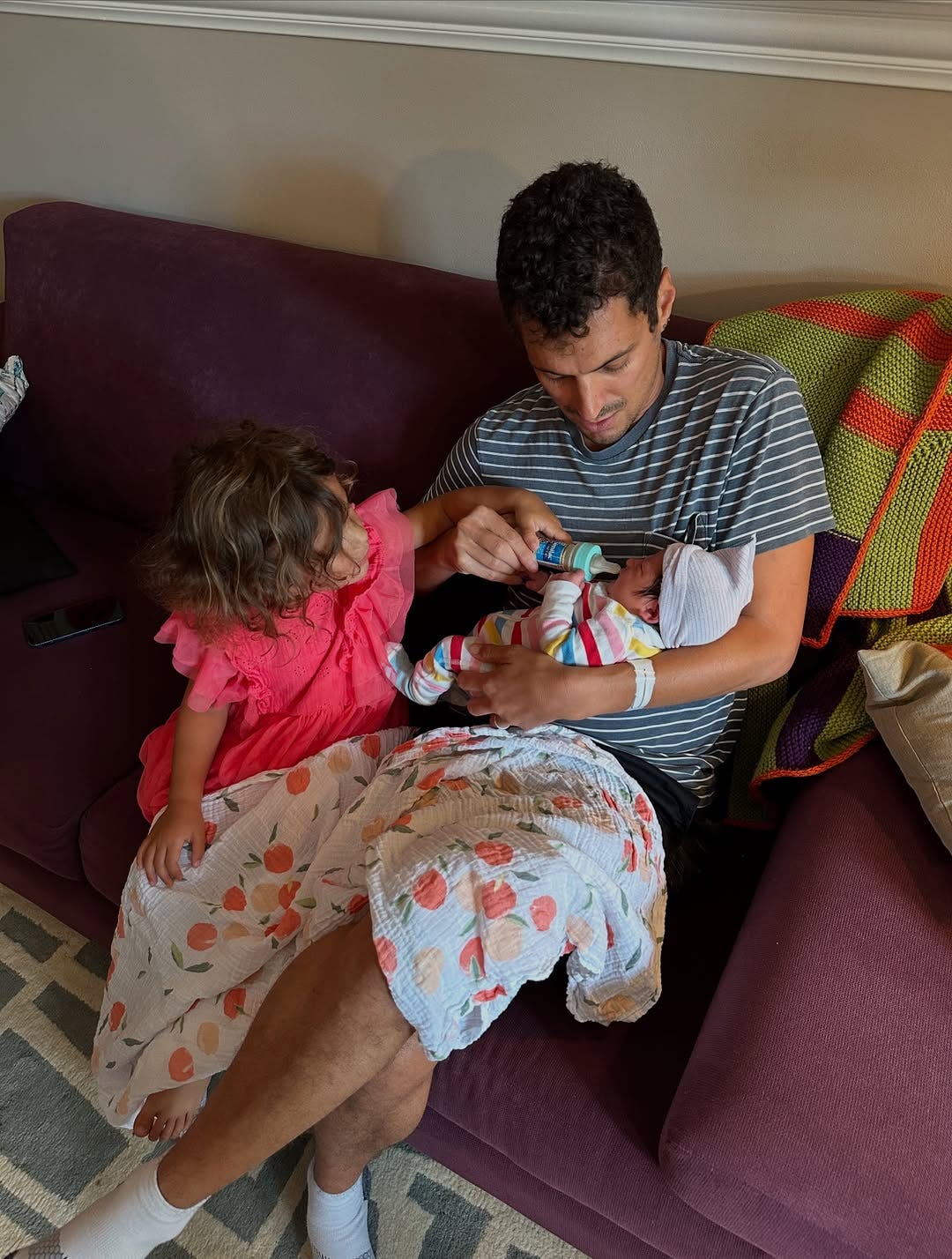
If both daughters are in the kitchen at the same time, is it total chaos, or managed?
It’s managed chaos when we’re baking. My five-year-old cracks the eggs (pretty good hit rate) and the two-year-old adds the flour. When I’m cooking something hot, they’ve invented this thing where they pull baking ingredients out of the pantry and make their own “dough.” Half a box of baking soda, some tapioca balls from the back of the shelf, anything they can talk me into. They roll it out, shape it into cookies, ask me to bake it. 100% failure rate.
Steve will sometimes say, “Why do you let them do that?” because it’s a giant mess. But they’re occupied, they’re being creative, and I can keep an eye on them. I’m probably more lenient with kitchen mess than most.
What’s one cooking skill you think every parent should have in their back pocket?
A simple stovetop mac and cheese. The boxed kind is great (my daughter loves Annie’s), but stovetop mac is a dump-everything-in-the-pot meal. Whatever cheese needs to be used. Whatever quarter-box of pasta is left from another night. My daughter loves it with peas or broccoli. You can add pepperoni or leftover meat. It’s cheesy, so kids will go for it, and it cleans out the fridge at the same time.