

Order Up! A Conversation with Kris Dovbniak, chef, recipe developer, and mama behind the Healthy Mama Meals app
Healthy Mama Kris helps us kick off 2026 with practical advice for real-life kitchens and families.

Happy New Year, One Potato Family! It’s the first interview of the month, which means that this delicious full-length interview is available for all of our readers! One Potato is a reader-supported newsletter - paid subscribers have access to the full archive of Specials, Interviews, Recipes, and Community Voices for $5/month or $45/year.
Small Bites:
This new year, we’re looking forward to reset, not overwhelm; so we’re looking to Hungryroot to start off on the right foot. They send quick, good-for-you groceries and meal ideas that make getting something on the table feel so much easier.
👉 Check it out here, and get 30% Off Orders of $99 →
Healthy Mama Kris on Feeding Families with Heart
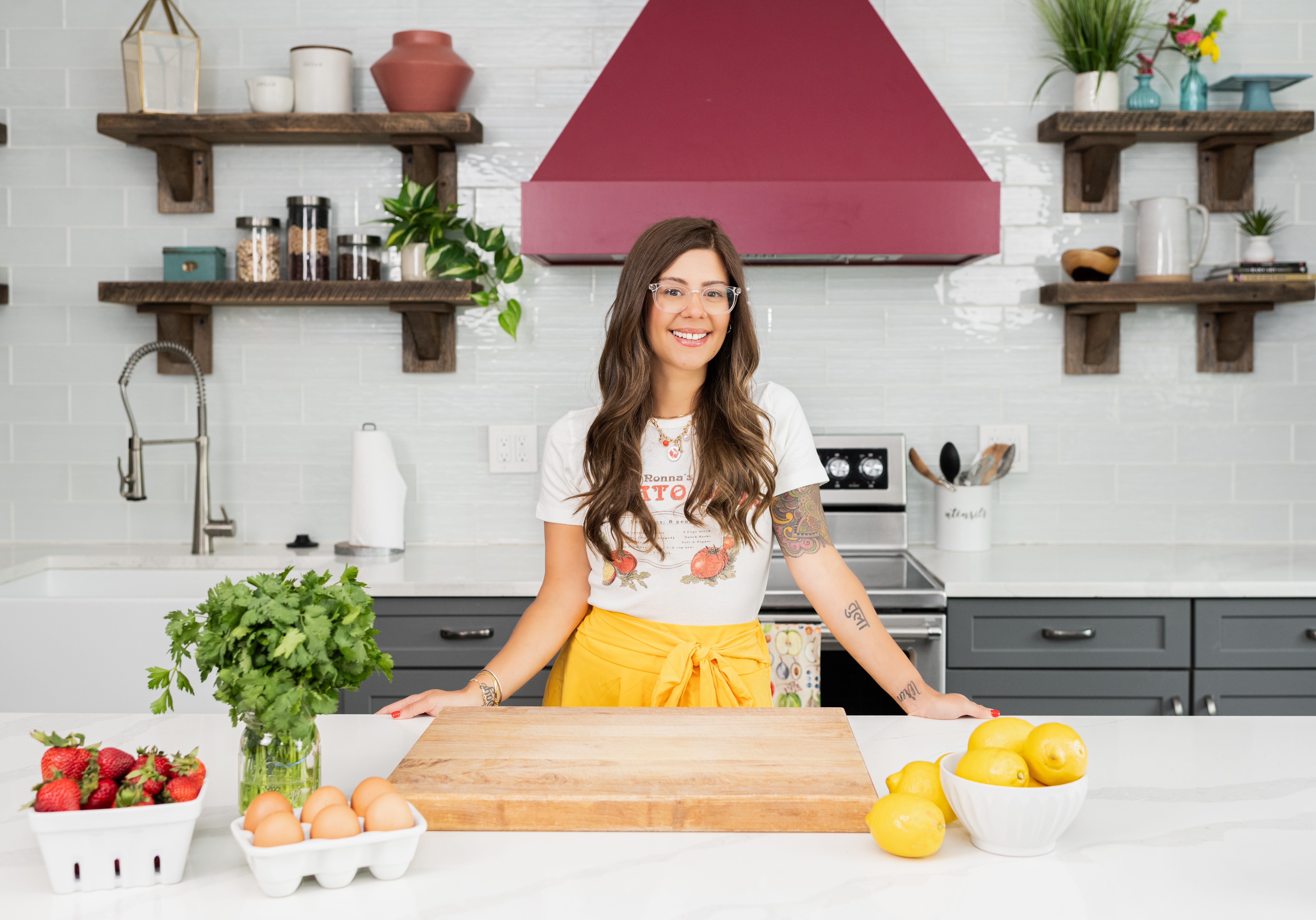
This week, we’re chatting with someone who feels like the internet’s big sister for busy parents trying to get dinner on the table—Kris Dovbniak, the professionally trained chef, recipe developer, and mama behind Healthy Mama Kris and the Healthy Mama Meals app. If you’ve ever watched one of her lunch-prep reels and thought, Wait…that looks doable, that’s exactly her magic. Kris has spent the last decade helping moms feed their families with less stress and more balance, rooted in real life, not perfection.
Kris’s story is such a good one: she studied nutrition and fell in love with cooking while studying abroad in Italy, trained in Canadian culinary schools, cooked in professional kitchens, and ultimately found her calling cooking for families and creating recipes. These days she’s raising two daughters on Florida’s sunny Gulf Coast, testing recipes between sailing regattas (her husband is a pro sailor, and her daughter sails, too!) and school pickups, and reminding all of us that healthy family meals don’t have to be overwhelming.
In our conversation, Kris shares the kind of grounded, practical advice that immediately makes you exhale: like why starting small is the most realistic path toward any New Year food routine, and how one hour of prep each week can genuinely change the mood in your house. We also get into the big parenting questions, including how she talks to her girls about food as fuel, pleasure, culture, and connection, plus the one piece of feeding-kids advice she’s carried with her since she was 19 that every parent needs to hear.
This Order Up! interview is full of heart, sanity-saving tips, and the reminder we all need: balance counts more than perfection.
A message from Hungryroot:
The best simple recipes for you and your family.
Some weeks, feeding your family feels like its own full-time job — juggling groceries, planning meals, and hoping everyone actually eats what you make. If you’re craving a little more breathing room, Hungryroot can help simplify the whole routine. They deliver fresh groceries and mix-and-match meal ideas that come together fast, which means fewer “what’s for dinner?” spirals and more nights that just… work.
What we love most is how flexible it is: you can build meals the way your family actually eats, whether that’s veggie-heavy bowls, easy kid-friendly options, or quick lunches you can grab between everything else. If you’re looking to make dinner feel a bit lighter and a lot more doable, Hungryroot is a great place to start.
✨ 30% Off Orders of $99 plus Choose Your Own Free Gift for Life! → hungryroot.com
A Conversation with Kris Dovbniak
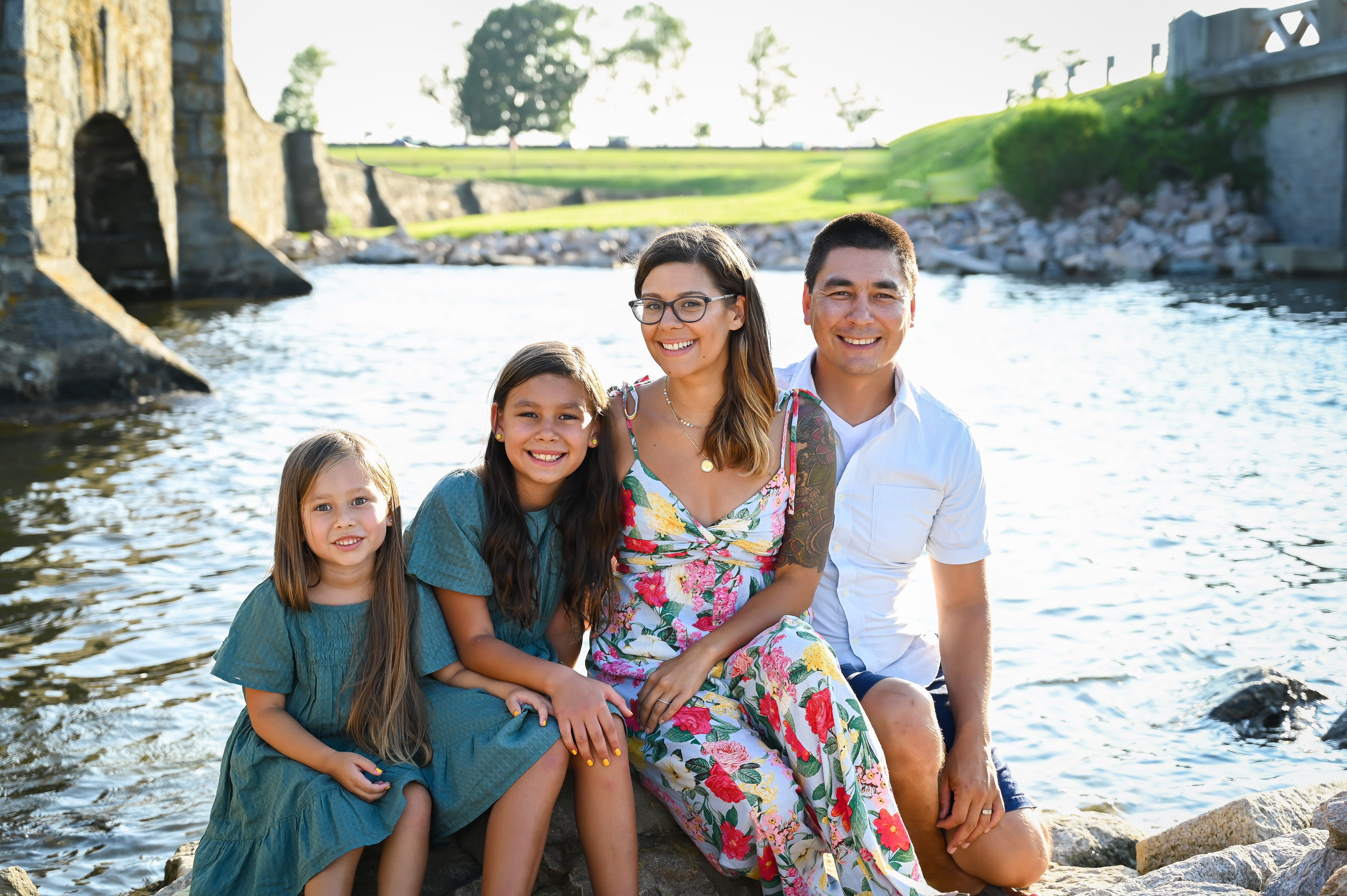
Introduce Yourself: I’m Kris, the founder of Healthy Mama Kris and the Healthy Mama Meals app, where I help busy families eat delicious, nutritious meals without the overwhelm. I’m a trained chef, wife, and mom of two girls (they’re 8 and 12).
I’ve worked as a personal and private chef for about 15 years, and I work as a healthy recipe developer. I also have a background in nutrition, which is what originally led me to food. I went to nutrition school first, then realized I didn’t just want to hand people meal plans; I wanted to help them learn to eat well through actual cooking. My daughters love helping in the kitchen, and my older daughter is a sailor like her dad, so we do a lot of travel for that, too. Life is busy, chaotic, and very full, but it’s filled with great food, and I wouldn’t have it any other way.
What’s a formative food memory that made you fall in love with cooking in the first place?
Most of my earliest food memories are with my great-grandmother, who immigrated from Syria as a young child. She was a lunch lady by profession, but in her home kitchen she cooked all of these beautiful, traditional Middle Eastern dishes, with no recipes, ever.
I remember standing beside her while she mixed together her own Syrian spice blend. I’ve recreated my version based on smell and taste, but we’ll never know her exact ratios. And one of the dishes I remember most is her kibbeh and how she made it in a big pan with layers of bulgur and ground lamb, served with yogurt. It is still pure comfort food to me. She passed away when I was about 12, but those memories stayed with me.
Is there a dish or recipe from your childhood that you’re passing down to your own kids?
Kibbeh is still close to my heart, but you know, I’ve only actually made for my kids a couple of times. Every Middle Eastern region and every family probably has their own version or specific way of making kibbeh, but I make mine the same way my great-grandmother did, baked in a pan, of course recreating her spice blend and the flavors the best I can from memory, smell, taste, and feeling.
But the funny thing is the first dish that popped into my head wasn’t Middle Eastern at all… it was my barbecue sauce. I developed the recipe in a professional kitchen when my older daughter was about a year old, and I’ve never shared it with anyone. I give away every recipe except that one. It’s the one I make for gifts, the one people always ask me for, and the one I say, “Sorry, that’s my secret.”
So I guess I do have a secret family recipe after all, and that’s probably the one I’ll pass down to them someday.
As a chef and a mom, what helped you most when you started feeding little kids?
Honestly, the biggest shift was realizing that cooking for families requires flexibility. In professional kitchens, dishes are consistent and controlled. At home, with little kids? Not so much. I learned quickly that feeding my girls wasn’t about creating “kid food” — it was about creating meals full of flavor, color, and whole foods, and then letting them explore at their own pace.
That mindset is what shaped Healthy Mama Meals: meals that are simple, adaptable, and rooted in real ingredients. Whether on my app or on my Instagram account, my goal has always been to show how I’m creating recipes and meal prepping and cooking, to help families eat real, nourishing food in a way that fits into a very busy life, not an imaginary perfect one.
Where do you see parents getting overwhelmed around mealtime—especially when they’re juggling multiple kids and different palates? What’s your best advice for simplifying that?
I learned really quickly as a mom that kids just have preferences. My older daughter, Sage, has always been an adventurous eater. My younger daughter, Wren, not so much. And we introduced food to them in the exact same way. It was eye-opening for me that these tiny humans are their own people!
One of the biggest places I see families overcomplicating things is making multiple meals. I get why it happens—we want our kids to eat well, and we want dinner to be peaceful—but making totally separate dinners for the adults and the kids is just overwhelming. And I say that as someone who literally cooks for a living.
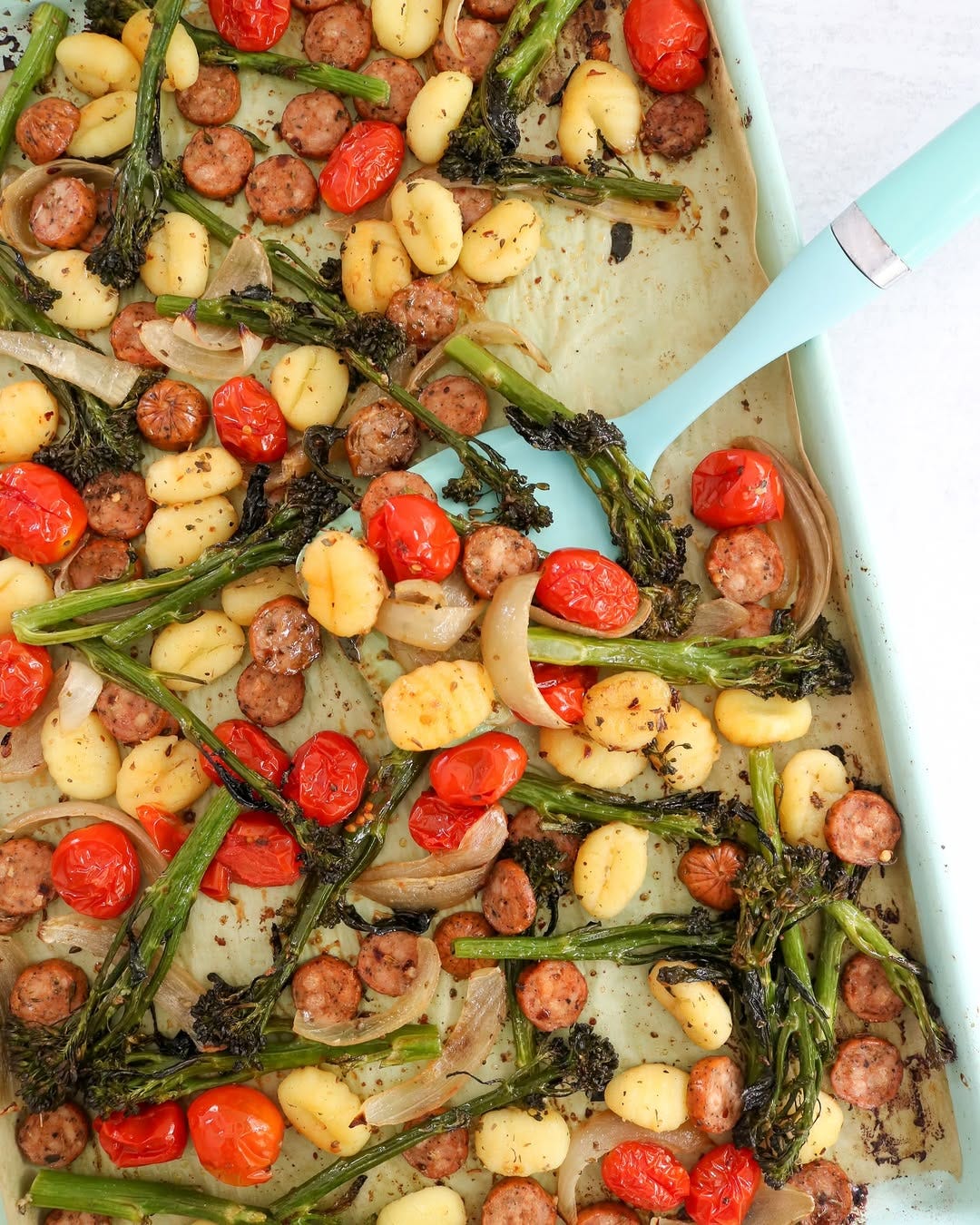
What I encourage instead is what I call base meals. It’s not a technical term, it’s just something that works really well in real life. You start with one shared base: a grain like rice or quinoa or pasta, a protein like chicken or chickpeas, whatever works for your family. Then you offer a few mix-and-match toppings or sauces.
This is also a great way to keep exposure going for selective eaters. Even if they’re not ready to try the broccoli or the pickled onions today, seeing them again and again as a topping or on offer makes a difference.
For a busy parent who wants to cook more at home, what does a realistic “good week” look like?
I’m a huge believer in meal prep, but probably not the kind people immediately picture. I’m not talking about spending all of Sunday cooking for eight hours. I don’t even do that for myself, and cooking is my job.
What I teach is customizable meal prep. Whether you have 30 minutes or two hours, anything you do ahead will make your week smoother. If mornings are chaotic for your family (like mine!), meal-prepping healthy breakfasts is a great place to start. But if mornings are easy, maybe focusing on prepping dinner components is a better use of your time.
I’ll often prep myself a lunch too, but if I don’t get to it, that’s okay. The non-negotiable part of my week is prepping fruits and veggies for school lunches. Sometimes that’s just washing and storing them in good containers so they last all week. It takes minutes and saves so much time later.
But here’s the key: prep only works if you have a plan. I recommend planning four to five dinners a week. Leave space for leftovers, unexpected schedule changes, or the night you really do want takeout. Life happens. Then prep the ingredients based on the meals you’ve already chosen.
I’m all about starting small. When life is busy, deciding you’ll “meal prep everything” is just setting yourself up to feel defeated. But choosing one area — breakfasts, lunches, whatever part of the day is the most chaotic — gives you a concrete place to start.
If you can take an hour on a Sunday or during nap time to prep just that one thing, you’ll feel the difference immediately. And once you’ve built consistency there and it feels doable, then you can add on. That’s how real routines are created.
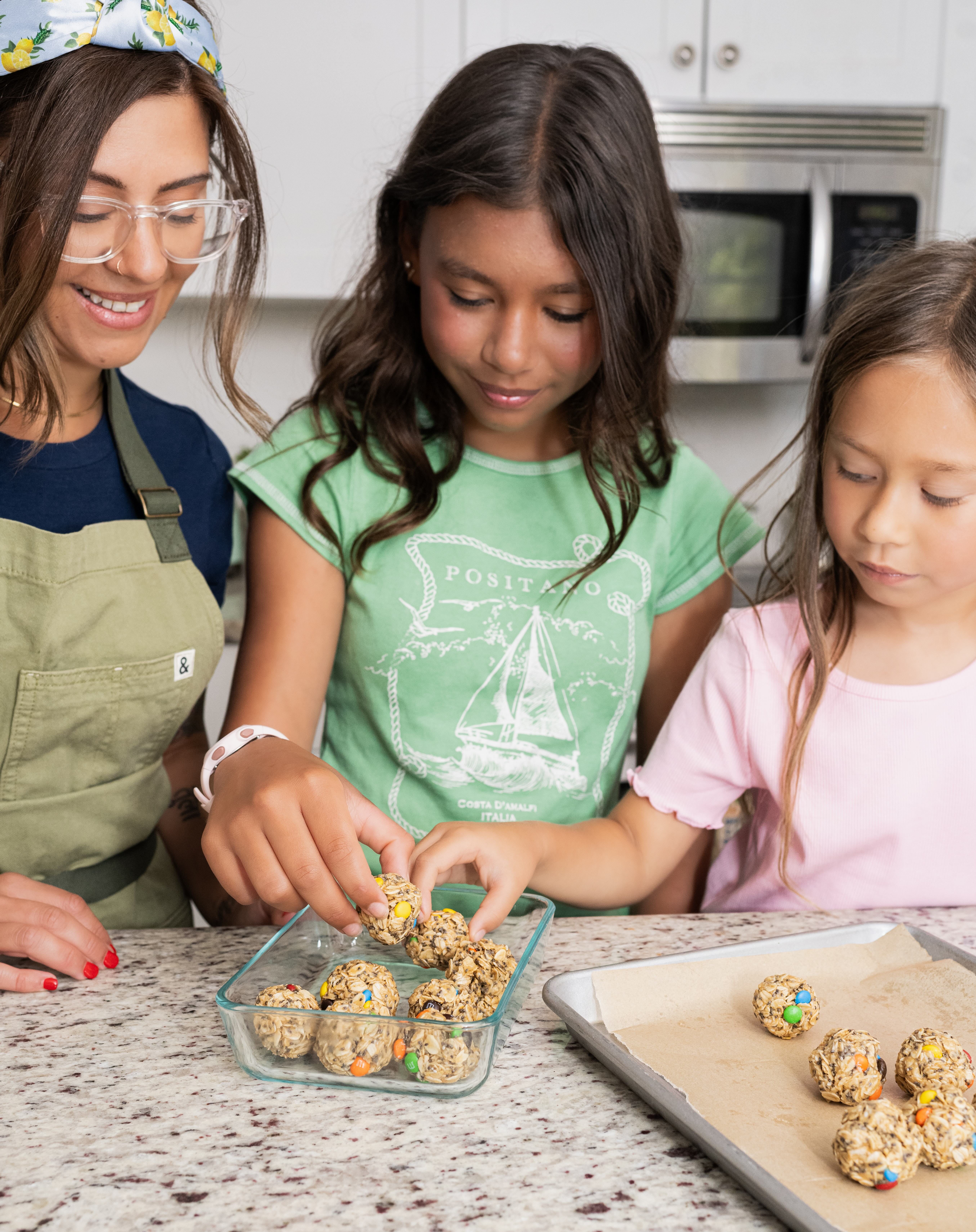
What do you hope your girls remember about growing up in the kitchen with you? Especially in a world of social media and impossible body standards, what impact do you hope this time together has?
My biggest hope is that they grow up with a genuine love and appreciation for food. I had a history of disordered eating in high school, and because of that, I’m really intentional about how we talk about food in our home. I want them to have a healthy, grounded relationship with it.
With my older daughter being an athlete, she’s naturally become curious about how food fuels her body. So we talk about fuel. We talk about energy. We also talk about joy, tradition, and pleasure because food is all of those things, too.
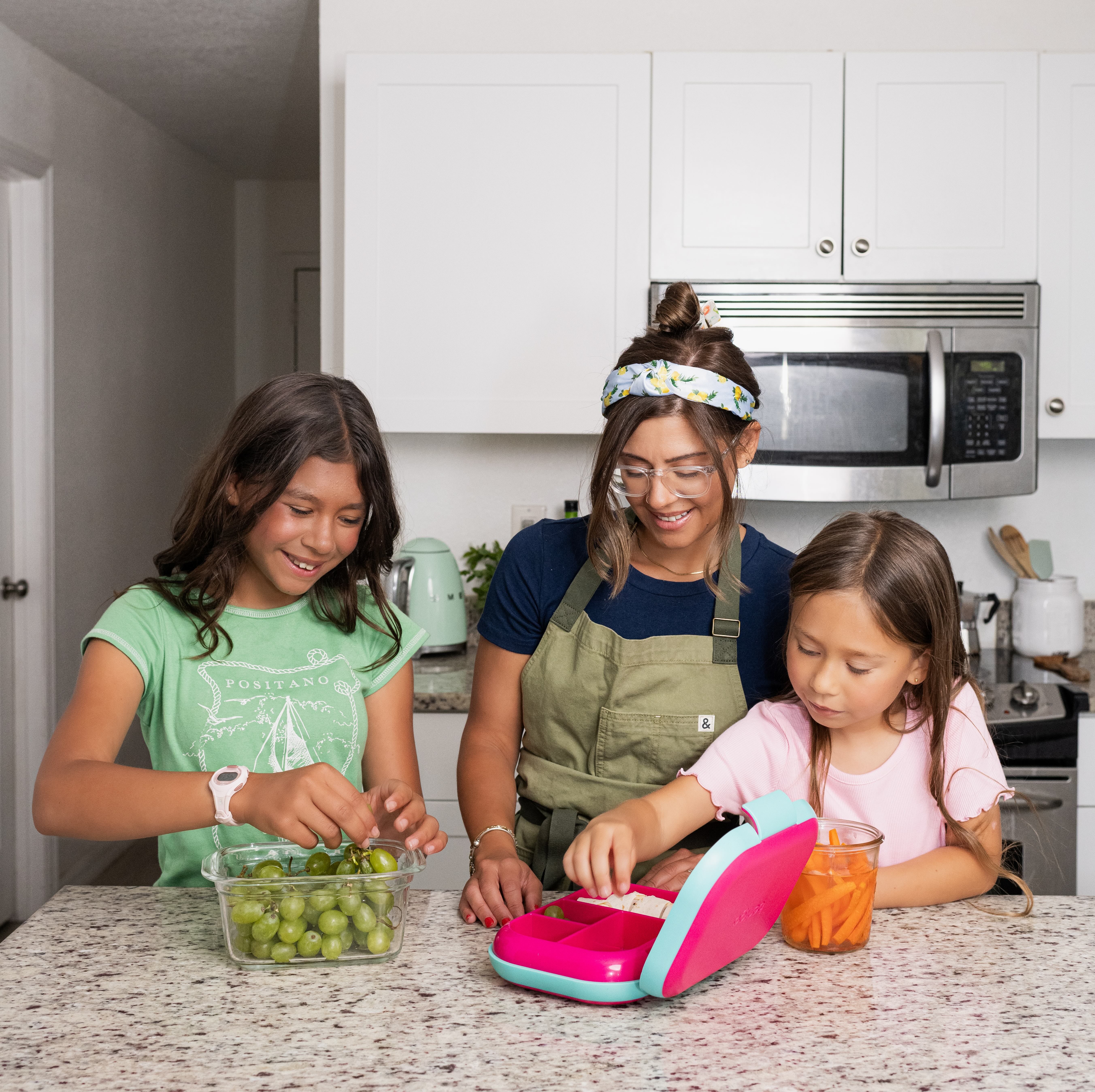
We involve the kids in planning meals, especially for holidays. My eight-year-old makes the cinnamon rolls every Christmas morning: full-on flour, butter, sugar. It’s all about balance. We cook from scratch when we can but we also grab Trader Joe’s chicken meatballs when life is full and busy. Both are fine.
More than anything, I want them to see where food comes from, understand the joy in preparing it, and know that all foods can fit into a healthy, happy life.
As a busy parent yourself, what’s one piece of feeding-kids advice you wish someone had given you earlier?
I actually did get this advice early on, and I’m so grateful I did. In a lifecycle nutrition class when I was 19 (before I even knew I wanted to have kids!), the professor said (and I’m paraphrasing here): children really only need about three solid, balanced meals a week to meet their core nutrient needs.
Now, obviously kids need to eat more often than that but the point was that you don’t need to obsess over perfection at every meal. Kids go through phases, and it’s okay. Picky eating due to sensory needs, development, growth spurts, who knows what, but every kid is different. The best advice I was ever given, and now share with every new parent I meet, is this: everything is a phase. Nothing lasts forever. Just keep offering a variety of foods, without pressure, and most kids will eventually try them, like at least some of them, and move out of whatever phase they’re in.
What’s one cooking skill you use constantly that you think every home cook should practice?
Knife skills. Good, basic knife skills completely change your time in the kitchen.
You don’t need to chop fast like someone on Top Chef. You just need to know how to hold the knife properly so you have leverage. And please keep your knives sharp! I’m forever sharpening my family’s knives because a dull knife is actually more dangerous.
If you’re trying to cook more vegetables, a sharp chef’s knife and a comfortable grip will make everything easier, faster, and way less stressful. And you don’t need a whole knife block, one good chef’s knife is enough.